Former President Donald Trump announced on his Truth Social platform that Morocco has named the Tiznit-Dakhla highway after him, a claim that has generated significant attention given the geopolitical complexities surrounding the route and Morocco’s strategic interests. The announcement, made Monday, expressed Trump’s gratitude to Moroccan King Mohammed VI and his anticipation of traveling the "Great Highway one day." However, official confirmation from Rabat has been conspicuously absent, adding a layer of intrigue to the declaration.
The Tiznit-Dakhla highway, a monumental infrastructure project linking southern Morocco with Mauritania, represents a significant development for the Kingdom. Its designation, if confirmed, would underscore the deep and often strategic relationship between Morocco and the United States, particularly during the Trump administration. Experts suggest that such a tribute would align with Morocco’s long-standing efforts to solidify its position and international recognition, especially concerning the disputed territory of Western Sahara.
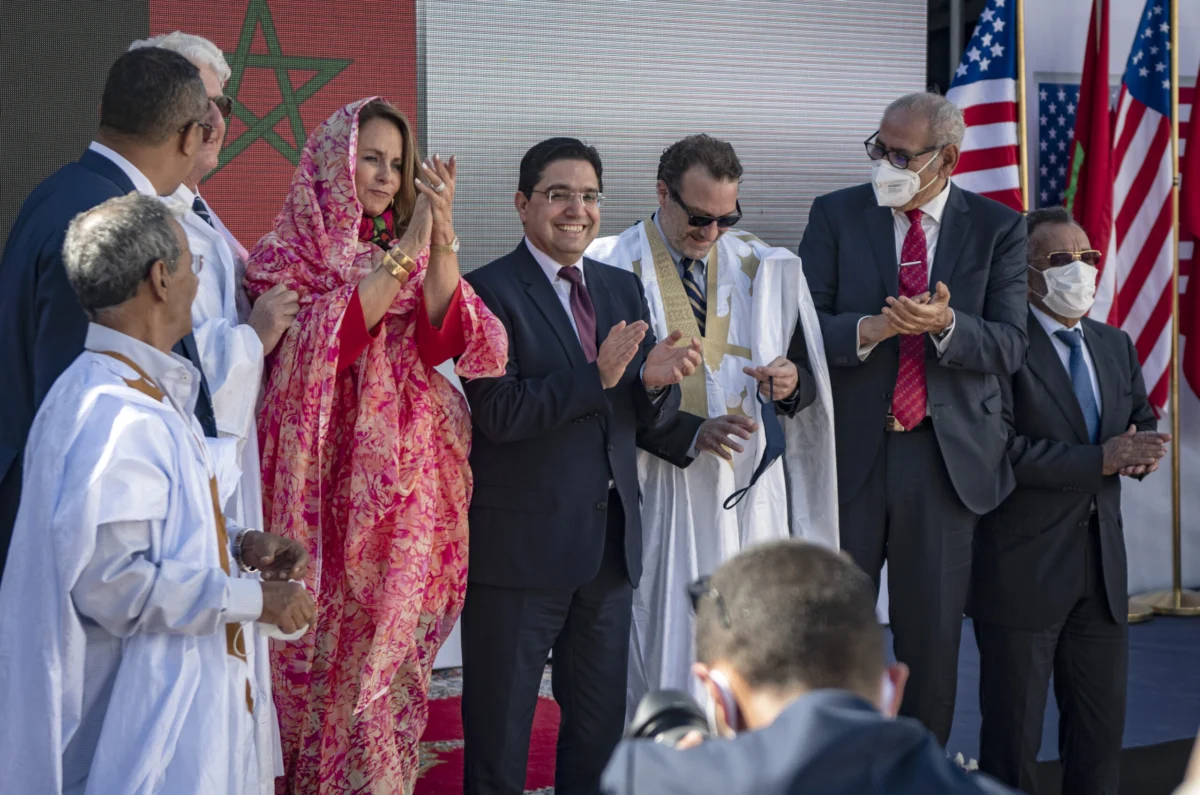
The Trump administration’s tenure was marked by a pivotal shift in U.S. policy towards Western Sahara, a move that profoundly benefited Morocco’s long-held aspirations. In a significant diplomatic maneuver in December 2020, the U.S. officially recognized Moroccan sovereignty over Western Sahara, a groundbreaking decision that marked the first time a Western nation had done so. This recognition was a substantial victory for Rabat, which considers the former Spanish colony its "southern provinces."
This U.S. endorsement was a cornerstone of the broader Abraham Accords, a series of normalization agreements brokered by the Trump administration between Israel and several Arab nations, including Morocco. In exchange for Morocco normalizing relations with Israel, the U.S. provided crucial diplomatic backing at the United Nations and through bilateral channels, bolstering Morocco’s claims over Western Sahara. Analyst Intissar Fakir of the Middle East Institute highlighted the significance of this support, stating that the Trump administration "single-handedly moved that case forward" by providing Morocco with "much clearer support on Western Sahara," something the country had consistently sought.
The Strategic Significance of the Tiznit-Dakhla Highway
The Tiznit-Dakhla highway, now reportedly bearing Trump’s name, is more than just a transportation artery; it is a critical component of Morocco’s ambitious infrastructure development plan. Completed after a decade of construction and fully operational since January, this 1,055-kilometer (655.5-mile) route cost approximately $1 billion. It stretches from Tiznit in northern Morocco through key cities like Guelmim and Tan-Tan, culminating in Laayoune, the principal city in Morocco-controlled Western Sahara, and extending further south to the Dakhla Peninsula.
This highway serves a dual purpose: enhancing internal connectivity within Morocco and bolstering its role as a vital regional trade gateway. Morocco envisions itself as a bridge between Europe, Africa, and the Sahel, leveraging its strategic location along the Mediterranean and Atlantic coasts. The highway facilitates the movement of goods and people, reinforcing Morocco’s economic and strategic influence in the region.
Furthermore, the highway’s path through Western Sahara is particularly noteworthy. This UN-designated non-self-governing territory has been the subject of a protracted dispute for decades. Morocco’s substantial investments in infrastructure, including roads and ports in Western Sahara, are widely seen as a strategy to solidify its control and integration of the territory. The Tiznit-Dakhla highway is a prime example of this sustained development effort.
Western Sahara: A Contentious Geopolitical Landscape
The Tiznit-Dakhla highway cuts directly through Western Sahara, a territory with a complex and deeply contested history. Morocco claims sovereignty over this resource-rich former Spanish colony, citing historical ties and administrative control. Conversely, the Polisario Front, supported by Algeria, advocates for the independence of Western Sahara, having declared the Sahrawi Arab Democratic Republic (SADR) in 1975 following Spain’s withdrawal.

A protracted war ensued between Morocco and the Polisario Front from 1975 to 1991, resulting in a significant Sahrawi refugee population settling in camps around Tindouf, Algeria. The United Nations brokered a ceasefire in 1991, with the intention of holding a referendum on self-determination for the Sahrawi people. However, disagreements over voter eligibility and the terms of the vote have consistently stalled the referendum process, leaving the conflict in a frozen state.
Critics and Sahrawi advocacy groups have frequently accused Morocco of exploiting Western Sahara’s natural resources, including significant phosphate reserves and fisheries. Western Sahara Resource Watch (WSRW) has documented extensive investments in sectors such as renewable energy, agriculture, and infrastructure, underscoring the economic stakes involved in the territory. In 2025, approximately 2 million tonnes of phosphate rock were reportedly mined in Western Sahara, according to WSRW data.
The Trump Administration’s Role and Moroccan Ambitions
The U.S. recognition of Moroccan sovereignty over Western Sahara in December 2020 marked a dramatic shift in international diplomacy. This move was reinforced in October 2025 when the U.S. sponsored a UN Security Council resolution advocating for negotiations on Western Sahara to proceed based on Morocco’s autonomy proposal. This proposal suggests a framework of self-governance for the territory while maintaining Moroccan sovereignty, a model often compared to Spain’s autonomous regions.
The timing of Trump’s announcement regarding the highway, and the potential naming itself, has also drawn scrutiny. Analyst Intissar Fakir suggested that the recognition might be linked to Morocco’s aspirations to co-host the 2030 FIFA World Cup alongside Spain and Portugal. Morocco’s significant infrastructure investments, including the Tiznit-Dakhla highway, are crucial for its bid to host such a prominent global event. Alternatively, Fakir noted, the highway section potentially named after Trump may have only recently been completed, explaining the timing of the acknowledgment.
Regional Dynamics and Diplomatic Maneuvers
Morocco’s assertive stance on Western Sahara and its burgeoning ties with the U.S. have long strained relations with Algeria, its regional rival. Algeria views its support for the Sahrawi people as a fundamental tenet of its foreign policy, rooted in its own history of independence struggles. The competition for influence in the Maghreb region further exacerbates these tensions, with Algeria’s backing of the Polisario Front providing it with considerable leverage over Morocco’s security considerations.
The normalization of relations between Morocco and Israel in 2020 further deepened the rift between Rabat and Algiers, leading to a severance of diplomatic ties. France’s endorsement of Morocco’s autonomy plan for Western Sahara in 2024 also provoked a strong reaction from Algeria, prompting it to recall its ambassador from Paris.
Amidst this complex geopolitical landscape, there have been recent indications of renewed diplomatic engagement. In February, Washington announced its facilitation of discussions in Madrid involving Morocco, the Polisario Front, Algeria, and Mauritania, aimed at implementing a UN Security Council resolution on Western Sahara. U.S. Africa envoy Massad Boulos reportedly led these talks, expressing optimism that the conflict was "on the path to resolution." Analysts suggest that Algeria’s willingness to participate in these discussions might signal a softening of its opposition, especially as its relations with Washington have stabilized.
Zine Labidine Ghebouli of the Arab Reform Initiative commented that "Algiers does not necessarily see the Rabat-Washington relationship as threatening to Algerian interests." He further noted that the U.S. has managed to maintain diplomatic ties with both Morocco and Algeria, a feat that has eluded other major global powers.
Adding another dimension to the evolving situation, the U.S. Department of Commerce announced this week its funding for the initial stages of an ammonium project in Western Sahara. This marks a significant economic development in a conflict historically defined by diplomacy, security concerns, and competing territorial claims, suggesting a new phase in the international approach to the region.