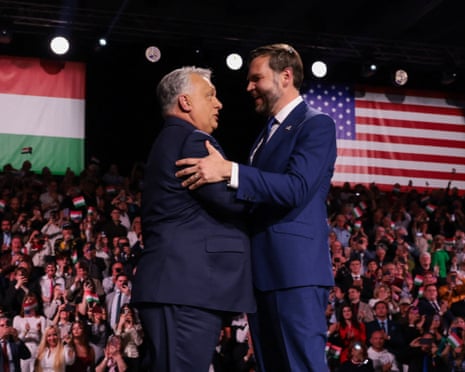
U.S. Vice President JD Vance confirmed in a televised interview that while he remains personally disappointed by the electoral defeat of long-time ally Viktor Orbán, the United States is prepared to maintain a productive diplomatic relationship with the incoming Hungarian administration led by Péter Magyar. The remarks follow a historic shift in Hungarian politics where the opposition Tisza party secured a landslide victory, ending sixteen years of rule by Orbán’s Fidesz party. Vance, who traveled to Budapest in the final days of the campaign to show support for the incumbent, emphasized that the U.S. interest in Hungary transcends individual leaders despite his personal affinity for the outgoing Prime Minister.
The transition comes at a delicate moment for trans-Atlantic relations, as the U.S. administration had cultivated a unique and often controversial partnership with Orbán. Speaking on Fox News, Vance defended his decision to intervene in the closing stages of the Hungarian election, describing his visit as an act of loyalty to a leader who frequently aligned with American interests against the European Union’s regulatory framework. The Vice President’s comments signal a pragmatic, if reluctant, pivot toward Péter Magyar, the center-right challenger whose "stunning" win has reshaped the political landscape of Central Europe.

Vance ‘sad Orbán lost’ but says US will work with new Magyar government in Hungary as transition begins
The diplomatic community in Budapest is now bracing for a series of high-stakes meetings as the government-formation process officially commences. On Wednesday, Péter Magyar is scheduled to meet with Hungarian President Tamás Sulyok to discuss the logistics of the transition. The meeting is expected to be fraught with tension, as Magyar has publicly called for Sulyok’s resignation on multiple occasions. Magyar has characterized Sulyok, a staunch Orbán loyalist, as a "rubber stamp" official whose primary function was to authorize Fidesz legislation without scrutiny.
"He was appointed to sign everything; every document that he is presented with—whether it’s the menu or the constitution or the laws—so we don’t need people like that," Magyar stated in a recent press briefing. "To me, he is not the president." Despite this rhetoric, constitutional protocol requires the two men to cooperate to ensure a peaceful transfer of power. The incoming Prime Minister’s Tisza party now holds 138 of the 199 seats in the Hungarian Parliament, a supermajority that grants them the power to amend the constitution and dismantle the institutional "illiberal" pillars erected by the previous government.
Defending the Budapest intervention and the ‘America First’ alignment
Vice President Vance’s recent defense of his pro-Orbán campaign visit highlights the ideological overlap between the current U.S. administration and the outgoing Hungarian leadership. Vance argued that Orbán was a rare European leader willing to challenge the "bureaucracy in Brussels," which he claimed has been detrimental to American corporate interests. He cited instances where Orbán served as the "only vote to protect American interests" when EU regulators targeted U.S. technology and manufacturing firms.

"He’s one of the few European leaders we’ve seen who’s been willing to stand up to the bureaucracy," Vance said during his Fox News appearance. While acknowledging he was "sad that Orbán lost," he insisted that his support was a gesture of gratitude for a partner who had "stood by us for a very long time." Vance further described Orbán’s 16-year legacy as "transformational," noting that the country had been fundamentally changed under his watch. However, in a move intended to reassure the new leadership, Vance added, "We will work very well, I am sure, with the new Prime Minister of Hungary."
Restoring the rule of law and unlocking frozen EU funds
In Brussels, the reaction to the Hungarian election has been one of cautious optimism. Tineke Strik, a Dutch Green MEP and the European Parliament’s lead coordinator on Hungarian affairs, suggested that the incoming Magyar government has a unique opportunity to restore democratic norms. Strik noted that the overwhelming mandate given to the Tisza party provides the political capital necessary to reverse years of judicial capture and systemic corruption.
The new government faces an immediate challenge in negotiating with the European Commission to unlock approximately €17 billion in frozen EU funds. These assets were withheld due to concerns over breaches of EU law and the erosion of the rule of law under the Orbán administration. Furthermore, Hungary remains under the Article 7 sanctions procedure, which was launched in 2018. Strik indicated that the EU might show flexibility regarding deadlines, particularly concerning the €10.4 billion in COVID recovery funds that Hungary risks losing if an agreement is not reached by August 2026.
Public sentiment and the end of the 16-year Orbán era
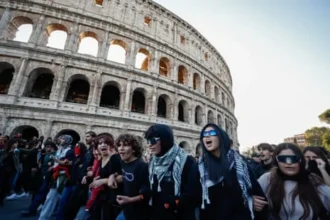
The atmosphere on the streets of Budapest remains electric following the Sunday election. A record voter turnout, driven largely by a mobilized youth population, was the catalyst for the opposition’s victory. Many young Hungarians, who have spent their entire adult lives under Orbán’s governance, cited the country’s decline in press freedom rankings and its reputation as the most corrupt nation in the EU as primary reasons for their vote.
In public squares near the Nyugati train station and along the banks of the Danube, citizens have been seen celebrating what they describe as a "new morning" for the country. "I partied all night," said Gabor, a 40-year-old resident of the capital. "It was crazy; I thought Fidesz was going to win. Now I’m really hopeful." This sentiment of disbelief mixed with jubilation is common among the electorate, many of whom feared that the entrenched power of the Fidesz party would be impossible to overcome through the ballot box.
Broader European implications: Ukraine and the German-Ukrainian consultations
While Hungary navigates its internal transition, the broader European security landscape continues to shift. In Berlin, Ukrainian President Volodymyr Zelenskyy is set to meet with German Chancellor Friedrich Merz for critical intergovernmental consultations. This meeting takes on added significance as Germany has emerged as Ukraine’s most substantial military and financial supporter in its four-year conflict with Russia.

The shift in the European hierarchy of support comes as the United States, under the leadership of President Donald Trump, has significantly scaled back its direct aid to Kyiv. The consultations between Zelenskyy and Merz are expected to focus on joint defense ventures, specifically the development and production of advanced drone technology. Several high-ranking Ukrainian ministers, including Foreign Minister Andrii Sybiha and Economy Minister Oleksii Soboley, are participating in the talks, highlighting the urgency of maintaining strong ties with Berlin as American foreign policy pivots elsewhere.
The road ahead for the Magyar administration
The first major test for the new Hungarian government on the international stage will occur on June 16, when it is scheduled to face a hearing under the Article 7 procedure in the EU Council. Historically, these hearings were used by the Orbán administration to launch aggressive rhetorical attacks against "EU overreach." However, MEP Tineke Strik suggested that this upcoming session would be the "perfect occasion" for the Magyar government to present concrete timelines for legal and judicial reforms.
Péter Magyar is expected to be represented by his EU Affairs Minister at the hearing, which occurs just days before his first official EU summit on June 18-19. The ability of the new government to translate its domestic popularity into diplomatic progress in Brussels will determine how quickly Hungary can reintegrate into the European mainstream. While the U.S. Vice President’s admission that he is "sad Orbán lost" reflects the loss of a key ideological partner for the White House, the focus has now shifted to whether the "transformational" legacy of the past 16 years can be dismantled as quickly as it was built.