The Victorian government has announced that tourists visiting the iconic Twelve Apostles on the Great Ocean Road will be required to pay an entry fee starting in late 2026. This decision, aimed at preserving the fragile coastline and funding significant infrastructure upgrades, marks the first time a mandatory charge will be applied to one of Australia’s most famous natural landmarks.
Victorian Environment Minister Steve Dimopoulos confirmed the new policy on Monday, stating that the revenue generated from the fee would be reinvested directly into the surrounding region. The move coincides with the planned opening of the $126 million Twelve Apostles Visitor Experience Centre, a state-of-the-art facility designed to manage the millions of people who travel to the Shipwreck Coast each year. According to government officials, the fee is a necessary step to ensure the long-term sustainability of a site that faces increasing pressure from both human activity and environmental degradation.
Minister Dimopoulos emphasized that the Great Ocean Road is a 240-kilometer stretch of coastline currently under threat from several fronts, including climate change, coastal erosion, and the sheer volume of foot traffic. He told reporters that the government could not be the generation that allows the site to deteriorate. The goal is to ensure the natural wonder remains intact and accessible for the next century, requiring a stable and dedicated funding stream.
A New Funding Model for Twelve Apostles Visitors
The proposed entry fee for Twelve Apostles visitors is expected to be set at less than $20 per person, though the final amount will be determined following extensive consultation with local stakeholders. This group includes tour operators, regional councils, and residents who live in the immediate vicinity of the Port Campbell National Park. The government’s intent is to create a "user-pays" model that aligns with other major natural attractions across Australia and the world.
Officials noted that charging for entry to high-profile national parks is a standard practice elsewhere in the country. Locations such as Uluru-Kata Tjuta National Park in the Northern Territory, Kakadu National Park, and Cradle Mountain in Tasmania all utilize entry fees to maintain facilities and protect ecological integrity. By bringing the Twelve Apostles into this framework, the Victorian government aims to close a funding gap that has historically relied on general taxpayer revenue.
The funds collected will be managed by the Great Ocean Road Coast and Parks Authority. This organization will oversee the distribution of the money toward repairing historic landmarks, upgrading local caravan parks, and improving public amenities. Planned projects include the restoration of bushwalks, trails, and lookouts, as well as the maintenance of barbecues and picnic tables that serve the millions of tourists who stop along the coastline.
Addressing Coastal Erosion and Infrastructure Demands
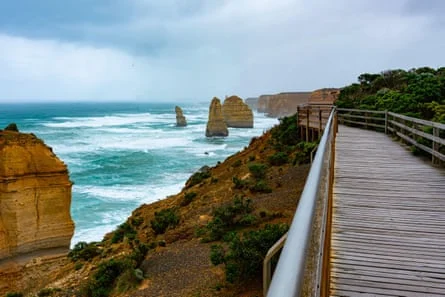
Environmental preservation is at the heart of the new fee structure, as the limestone stacks that make up the Twelve Apostles are notoriously fragile. Geologically, the stacks were formed by the constant erosion of the mainland cliffs, which began roughly 10 to 20 million years ago. The Southern Ocean’s harsh waves and winds gradually carved caves into the cliffs, which eventually became arches and then collapsed into the isolated stacks visible today.
Currently, only seven of the original limestone stacks remain standing. Erosion is an ongoing process that continues to reshape the landscape; several stacks have collapsed in recent decades, most notably a 50-meter-tall stack that disintegrated in 2005. Scientists warn that as sea levels rise and storm surges become more frequent due to climate change, the rate of erosion could accelerate, putting both the natural formations and the visitor infrastructure at risk.
Beyond the environmental impact, the sheer number of visitors has created significant logistical challenges. In 2019, approximately 2.8 million people visited the site. Recent forecasts from Development Victoria suggest that number will surge to 4 million by the end of this year. This influx has led to severe congestion, particularly during peak holiday seasons when "busloads of tourists" arrive simultaneously, overwhelming the narrow walkways and local road networks.
The $126 Million Twelve Apostles Visitor Experience Centre
The centerpiece of the government’s redevelopment plan is the $126 million Twelve Apostles Visitor Experience Centre. Set to open in late 2026, the center will serve as the primary gateway for all Twelve Apostles visitors. It is designed to provide a more immersive and educational experience, detailing the geological history of the stacks and the cultural significance of the land to the Indigenous traditional owners.

A key feature of the new center will be a sophisticated booking system. This system is intended to stage the arrival of visitors throughout the day, preventing the mid-day bottlenecks that currently frustrate both tourists and locals. By distributing the flow of people more evenly, the government hopes to reduce the physical impact on the environment and improve the overall safety of the area.
Safety has become a paramount concern for regional tourism boards. Lisa Patroni, the chief executive of the Victoria Tourism Industry Council, noted that the current infrastructure was never intended to handle four million visitors annually. She pointed out that many tourists are forced to park on narrow road shoulders and walk along the highway due to a lack of formal footpaths and parking spaces. The revenue from the entry fee is expected to fund the construction of safer pedestrian links and expanded parking facilities.
Political Debate Over the Entry Fee Implementation
The announcement has sparked a lively political debate in Victoria. Opposition Leader Jess Wilson criticized the move, characterizing it as a "tax on nature" and a sign of a government that has mismanaged its budget. Wilson argued that iconic tourism sites should remain free for all Victorians to enjoy and that the entry fee would place an additional financial burden on families during a cost-of-living crisis.
In response, Minister Dimopoulos pointed out that several local members of the Liberal Party had previously expressed support for a visitor contribution model. He argued that the opposition’s current stance is inconsistent with their past recognitions of the need for sustainable funding for the Great Ocean Road. The government maintains that the fee is a pragmatic solution to a growing infrastructure deficit that cannot be ignored.
The Corangamite Shire Council and the Great Ocean Road Regional Tourism board have also been vocal supporters of the change. In a joint statement released prior to the official announcement, they urged the state government to adopt a user-pays model. They argued that a modest fee of $10 to $20 is a small price for international travelers to pay to help preserve a world-class natural wonder, especially when compared to the costs of similar attractions globally.
Impact on Regional Tourism and Local Communities
While international visitors are the primary target of the new fee, the government has built in protections for the local community. Residents living in the immediate vicinity of the Twelve Apostles and members of the Eastern Maar Indigenous community will be exempt from the charges. This ensures that those who have a historical or geographical connection to the land can continue to access it without financial barriers.
The Eastern Maar people, the traditional owners of the land, have a deep spiritual connection to the coastline. Their involvement in the management of the site is a central component of the new visitor center project. The government has stated that the fee will also help support programs that highlight Indigenous heritage and provide employment opportunities for the Eastern Maar community within the tourism sector.
Local businesses are also expected to benefit from the new booking system and infrastructure. By encouraging visitors to stay longer and explore more of the region rather than just stopping for a quick photograph, the Great Ocean Road Coast and Parks Authority hopes to boost the local economy. The goal is to transform the Twelve Apostles from a "drive-through" attraction into a destination where tourists spend more time in neighboring towns like Port Campbell, Princetown, and Apollo Bay.
A Global Shift Toward Sustainable Tourism
The decision to charge Twelve Apostles visitors reflects a broader global trend in tourism management. Cities like Venice and islands like Bali have recently introduced visitor fees to combat "over-tourism" and fund environmental protection. As global travel continues to rebound and expand, many jurisdictions are finding that free access to fragile ecosystems is no longer a viable long-term strategy.
Industry experts suggest that for most international travelers, a fee of under $20 will be seen as a minor expense. In the United States, entry to popular national parks like Yellowstone or Yosemite can cost up to $35 per vehicle. By comparison, the proposed fee for the Twelve Apostles remains relatively low. Supporters of the policy argue that tourists are generally willing to pay for access to natural wonders if they can see that the money is being used to improve facilities and protect the environment.
As the 2026 deadline approaches, the Victorian government will continue its consultations to finalize the fee structure and the operations of the booking system. The success of the program will likely be measured by its ability to balance high visitor demand with the urgent need for conservation. For now, the move marks a definitive end to the era of free access to one of Australia’s most treasured landscapes, signaling a new chapter in the management of the Great Ocean Road.