United Nations Secretary-General Antonio Guterres has issued a stark warning, urging Israel to immediately reopen Gaza’s vital border crossings, which have remained sealed since the commencement of its intensified military campaign against Iran, a conflict that has exacerbated an already dire humanitarian situation in the Palestinian enclave.
Urgent Plea for Reopening of Gaza Crossings
The closure of key entry points into Gaza has crippled the flow of essential supplies, pushing the displaced and war-weary population to the brink. Guterres’s spokesman, Stephane Dujarric, stated on Tuesday that "it is imperative that all crossings be reopened… as soon as possible." He detailed the severe consequences, noting that humanitarian partners have been forced to ration fuel and prioritize life-saving operations, albeit at a significantly reduced capacity due to dwindling local stocks.
Even with existing stockpiles within Gaza, the prolonged shutdown of crossings means these resources are being stretched to their absolute limit, a situation Guterres’s office described as unsustainable. The dependency of Gaza’s population on a consistent influx of humanitarian aid underscores the critical nature of these border points.
The Vital Lifeline of Gaza’s Crossings
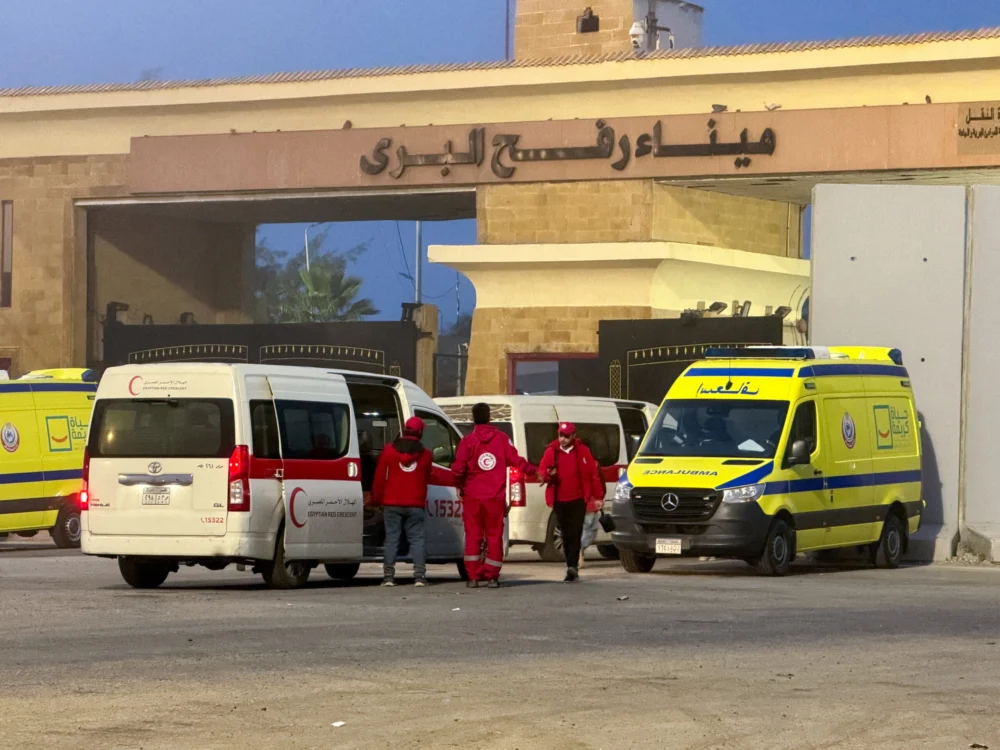
The Rafah crossing, connecting Gaza to Egypt, represents the sole gateway for Palestinians to the outside world that bypasses Israeli control. While it had briefly reopened on February 2nd, allowing a limited number of individuals to depart and return, its subsequent closure on Saturday by Israeli authorities has once again severed this crucial link. Israel cited "security adjustments" in response to its military actions against Iran as the reason for the shutdown, a justification that has drawn significant international criticism.
This closure has immediate and devastating implications for thousands of Palestinians requiring urgent medical attention outside Gaza, who are now unable to leave for treatment. The Rafah crossing is not only essential for the movement of people but also for the delivery of humanitarian aid and the evacuation of critically ill patients.
Kerem Shalom Reopening Offers Limited Hope
In a development announced late Monday, Israeli authorities indicated their intention to reopen the Karem Abu Salem crossing, known as Kerem Shalom to Israelis. This crossing, situated at the nexus of the Gaza Strip, Israeli, and Egyptian borders, is also considered vital for humanitarian logistics. Its closure on Saturday, alongside Rafah, had compounded the crisis.
The World Food Programme (WFP) expressed cautious optimism regarding the Kerem Shalom announcement. Samer Abdel Jaber, the WFP’s regional director for the Middle East, North Africa, and Eastern Europe, stated on Tuesday, "The crossings will be opened, and that is timely for us, and we need to get in aid as fast as we can." However, the extent and speed of aid delivery remain a significant concern.
The Deeper Roots of Gaza’s Humanitarian Crisis
Gaza’s complete reliance on fuel delivered via trucks from Israel and Egypt means that any disruption to these supply lines directly jeopardizes hospital operations, water purification systems, and sanitation services. The ongoing conflict, which began in October 2023, has seen Israeli border restrictions severely deplete stocks of essential medicines, reconstruction materials, food, and water. These shortages have exacerbated conditions that were already dire due to years of an Israeli blockade.
The designation of Israel’s actions in Gaza has become increasingly contentious. A UN inquiry in September found "genocidal intent" in Israel’s war on Gaza, a significant finding after nearly two years of conflict. This followed South Africa’s filing of a case at the International Court of Justice in The Hague in 2023, accusing Israel of conduct in Gaza that amounted to genocide. The case remains ongoing, highlighting the gravity of the international legal scrutiny surrounding the conflict.
Escalating Tensions in the West Bank
Concurrently, the situation in the occupied West Bank has seen a marked increase in tensions. Israeli forces have maintained the closure of the Al-Aqsa Mosque in occupied East Jerusalem for the fourth consecutive day as of Tuesday. Palestine’s Jerusalem Governorate reported that worshippers were being denied entry, with Israeli authorities citing a state of emergency.
The sealing of the Al-Aqsa compound, Islam’s third holiest site, began on Saturday morning, mere hours after the initiation of the Israeli-U.S. military offensive targeting Iran. This action has further inflamed religious and political sensitivities in the region.
In another concerning development, Israeli forces conducted raids on the Askar refugee camp, located east of Nablus, for a second consecutive day. Entrances to the camp were shut down, and multiple homes were searched, contributing to an atmosphere of heightened fear and instability among the Palestinian population.
Land Confiscation and International Condemnation
The Israeli government’s recent approval of a plan to claim large swathes of the West Bank as "state property" if Palestinians cannot prove ownership has sparked widespread condemnation. This move has been decried by regional actors and international observers as "de facto annexation" and a violation of international law. More than 80 UN member states have officially condemned this decision, urging Israel to reverse its policy, which they argue contravenes its international legal obligations. The implications of such land appropriation for the future of Palestinian statehood and the broader peace process are profound and deeply worrying.
The Ripple Effect of Blockades and Conflict
The interconnectedness of the humanitarian situation in Gaza with broader geopolitical events is starkly evident. The closure of border crossings, ostensibly linked to military operations against Iran, has a direct and devastating impact on a civilian population already enduring immense hardship. The reliance on aid, the lack of basic necessities, and the constant threat of further escalation paint a grim picture of the humanitarian catastrophe unfolding.
The international community’s response, ranging from calls for humanitarian access to legal challenges at the ICJ, underscores the severity of the crisis. However, the immediate concern remains the reopening of essential lifelines for Gaza’s population. The current trajectory, characterized by severe restrictions and ongoing conflict, risks further entrenching a man-made humanitarian disaster with long-lasting consequences for regional stability and human well-being. The prolonged denial of access for critical supplies and medical evacuations highlights a systemic failure to prioritize civilian lives amidst escalating regional tensions. The prolonged closure of these vital arteries for humanitarian aid and human movement poses an existential threat to the already fragile population of Gaza.