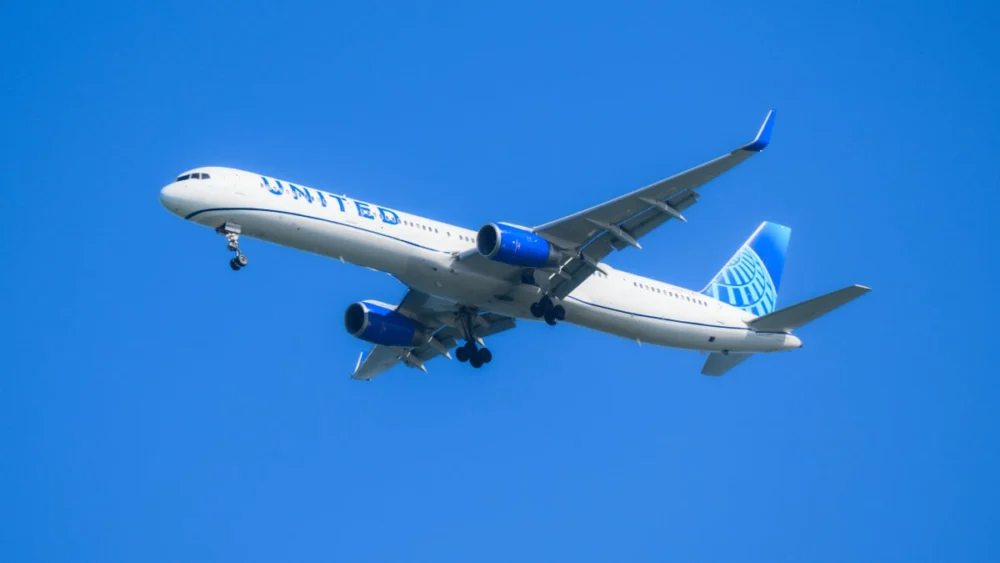
United Airlines has updated its official legal terms to state that the carrier reserves the right to remove and ban passengers who refuse to use headphones when consuming audio or video content on its flights. The Chicago-based airline recently modified its Contract of Carriage—the binding legal agreement between the airline and its ticket holders—to include specific language regarding noise disruptions and personal electronic device usage. This policy shift marks a significant escalation in how major carriers manage the cabin environment, moving from general courtesy suggestions to enforceable contractual mandates.
Under the revised "Refusal of Transport" section of the contract, United Airlines explicitly lists the failure to use headphones as a grounds for removal from an aircraft. The airline now categorizes this behavior alongside other serious violations, such as carrying prohibited items or failing to comply with safety instructions. By placing this requirement within its primary legal framework, United has granted its staff the authority to not only deplane non-compliant travelers at any point during a journey but also to issue temporary or permanent bans on future travel with the airline.
The update comes as part of a broader industry-wide effort to address a perceived decline in passenger decorum and an increase in in-flight disruptions. While many airlines have long maintained informal policies regarding noise, United is among the first to codify these rules with such explicit penalties. The new language is situated within Rule 21 of the contract, which outlines the conditions under which the airline may deny boarding or remove an individual from a flight for safety or conduct reasons.
Strengthening the Legal Framework to Remove and Ban Passengers Who Refuse to Use Headphones
The decision to integrate headphone requirements into the Contract of Carriage provides United Airlines with a more robust legal standing when dealing with unruly or inconsiderate travelers. Previously, flight attendants often had to rely on general "failure to comply with crew member instructions" clauses to manage noise complaints. Now, the specific mention of audio and video content provides a clear, unambiguous standard for both passengers and employees.
United spokesman Josh Freed addressed the policy change in a public statement, noting that the airline has always encouraged the use of headphones through its Wi-Fi landing pages and onboard announcements. According to Freed, the airline determined it was the appropriate time to clarify these expectations by cementing them into the formal contract. The move is designed to ensure that all passengers can enjoy a quiet environment, particularly as the use of personal electronic devices for social media and streaming services has reached an all-time high.
The "Refusal of Transport" rule is a comprehensive list of behaviors that the airline deems unacceptable. It includes traditional safety concerns, such as being under the influence of drugs or alcohol, as well as behavioral issues like inappropriate attire or offensive conduct. By adding the failure to use headphones to this list, United is signaling that noise pollution is no longer viewed merely as a nuisance, but as a significant disruption to the orderly operation of a flight.
Comparison of In-Flight Noise Policies Across the Aviation Industry
United’s move to remove and ban passengers who refuse to use headphones sets it apart from its primary competitors, many of whom still rely on less formal guidelines. While the majority of U.S. carriers have long-standing rules requesting that passengers be mindful of their volume, the enforcement mechanisms vary significantly. United’s approach is currently the most aggressive among the "Big Three" U.S. legacy carriers, which also include Delta Air Lines and American Airlines.
Southwest Airlines, for example, maintains a policy that lists headphones as a requirement on its website’s Frequently Asked Questions page. However, this requirement is not as prominently featured in its legal contract of carriage with the same level of specific punitive detail as United’s. Similarly, Frontier Airlines includes headphone usage requirements within its baggage and onboard policies, but these are often framed as courtesy guidelines rather than grounds for a permanent travel ban.
Industry analysts suggest that United’s decision may prompt other airlines to review their own legal language. As passengers increasingly use devices to watch short-form video content on platforms like TikTok and Instagram—often without realizing how the sound carries in a pressurized cabin—the number of complaints regarding "noise wars" has surged. By establishing a clear legal precedent, United is attempting to mitigate these conflicts before they escalate into physical or verbal altercations.
Addressing the Rise of Cabin Disruptions and "Main Character Syndrome"
The aviation sector has seen a sharp increase in reported passenger disruptions over the last several years. Data from the Federal Aviation Administration (FAA) indicates that while the total number of "unruly passenger" reports has fluctuated, the intensity of cabin conflicts remains a primary concern for flight crews. The phenomenon often described on social media as "main character syndrome"—where individuals act without regard for those around them—has become a frequent source of friction on long-haul and domestic flights alike.
Loud audio from movies, games, or social media feeds is frequently cited as a trigger for larger arguments between travelers. In a confined space like an airplane cabin, repetitive or high-volume noise can increase stress levels and lead to confrontations. United’s policy to remove and ban passengers who refuse to use headphones is a direct response to the reality that flight attendants are increasingly being asked to mediate these interpersonal disputes.
Flight attendants’ unions have generally been supportive of clearer conduct rules. Crew members often find themselves in difficult positions when a passenger refuses to lower their volume, as there was previously a lack of specific "teeth" in the rules regarding non-safety-related noise. With the new contract language, flight attendants have a specific policy to point to when a passenger becomes defiant, allowing for a standardized escalation process that can involve law enforcement or security personnel if necessary.
The Role of Technology and the Shift in Passenger Behavior
The proliferation of high-speed in-flight Wi-Fi and the ubiquity of smartphones have fundamentally changed the onboard experience. In the past, passengers were limited to the airline’s seatback entertainment system, which required a wired connection to function. Today, the majority of travelers bring their own devices, many of which do not have traditional headphone jacks, leading to situations where passengers "forget" their Bluetooth headphones or choose to play audio out loud because their batteries have died.
Furthermore, the rise of "silent" cabins and premium experiences has increased passenger expectations for a quiet environment. Travelers who pay for upgraded seating or Wi-Fi access often expect a level of tranquility that is disrupted by a nearby passenger playing video games or watching movies on speakerphone. United’s policy aims to protect the "peace in the air" that the company promised in its internal communications regarding the rule change.
This shift also reflects the changing demographics of air travel. As more younger, tech-savvy travelers take to the skies, the norms of public device usage are being challenged. What one generation considers a blatant violation of social etiquette, another may view as a minor convenience. By codifying the rule, United is removing the ambiguity of social etiquette and replacing it with a hard-and-fast legal requirement.
Consequences of Non-Compliance and the Enforcement Process
The enforcement of the rule to remove and ban passengers who refuse to use headphones will likely follow a multi-step escalation process. Typically, a flight attendant will first issue a verbal request or warning to a passenger who is using their device without headphones. If the passenger complies, the matter is usually resolved immediately. However, the new contract language is specifically designed to handle those who are "unwilling" or "refuse" to comply with the request.
If a passenger becomes combative or repeatedly ignores the directive, the flight crew now has the documented authority to classify the individual as a disruptive passenger. In extreme cases, if the plane is still at the gate, the captain can order the passenger to be removed. If the flight is in the air, the incident can be documented and reported to corporate security, which can then initiate the process of placing the individual on an internal "no-fly" list.
A permanent ban from a major airline like United is a severe penalty that can significantly impact a person’s ability to travel, especially in regions where United is the dominant carrier. The airline’s legal team will likely review cases of removal to ensure that the policy is being applied fairly and consistently, but the message to the public is clear: the use of headphones is no longer optional.
Public Impact and the Future of In-Flight Conduct Standards
The public reaction to United’s policy change has been largely positive among frequent flyers, many of whom have expressed frustration with the lack of "phone etiquette" in public spaces. On travel forums and social media, users have shared stories of "noise battles" where multiple passengers play different audio sources simultaneously, creating a chaotic environment. Many see United’s move as a necessary step toward reclaiming a sense of order in the skies.
However, some consumer advocacy groups have raised questions about how the policy will be enforced regarding children or individuals with certain disabilities. United has not yet released specific guidance on how flight crews should handle a toddler watching a cartoon without headphones, though existing protocols usually allow for some level of discretion. The primary target of the policy appears to be adult passengers who willfully disregard the comfort of those around them.
As the industry moves forward, it is possible that other major carriers will adopt similar language in their own Contracts of Carriage. If the policy proves successful in reducing cabin friction and improving passenger satisfaction scores, it could become a standard feature of modern air travel. For now, United Airlines remains at the forefront of this movement, prioritizing a quiet cabin environment over the individual preferences of those who refuse to plug in.
Final Implications for the Modern Traveler
The updated terms from United Airlines serve as a reminder that the Contract of Carriage is a powerful document that governs nearly every aspect of the flying experience. Travelers are encouraged to review these terms periodically, as they can change without direct notification to every individual ticket holder. The inclusion of headphone usage as a mandatory conduct rule highlights the evolving nature of what is considered "safe and orderly" in a modern, tech-heavy society.
For the average passenger, the new rule should have little impact on their daily travel habits, as the vast majority of flyers already use headphones as a matter of course. For the small minority of passengers who have resisted this social norm, the risk has now escalated from a dirty look from a neighbor to a permanent ban from one of the world’s largest airlines. United’s commitment to enforcing these rules suggests a new era of accountability for passenger behavior, where the collective comfort of the cabin is prioritized through strict contractual enforcement.