The United States aircraft carrier USS George Washington has commenced its departure from the western Pacific, leaving its port in Da Nang, Vietnam, for an anticipated deployment to the Middle East. This significant naval movement signals a potential rotation of forces amid mounting questions surrounding the prolonged and arduous deployment of the USS Abraham Lincoln, which is currently engaged in operations related to the US-Israeli war against Iran.
The repositioning of the USS George Washington comes at a critical juncture, as reports detailing deteriorating conditions aboard the USS Abraham Lincoln have intensified. These dispatches have raised alarm bells, particularly concerning incidents of sailors reportedly attempting to jump overboard, alongside allegations of critical supply shortages and a significant strain on the mental well-being of the crew. The USS Lincoln has been at sea for an unprecedented 266 days without a port visit, a record duration for the U.S. Navy, carrying approximately 5,000 sailors and Marines.
The prolonged deployment and reported hardships on the USS Lincoln have prompted responses from high-level officials. President Donald Trump and acting Secretary of the Navy Hung Cao have publicly indicated that a rotation of the vessel was under consideration. However, the Pentagon has maintained its standard policy of not officially confirming or denying the movements of key military assets, citing national security protocols. This official silence leaves a void in public understanding regarding the specifics of the USS Lincoln’s situation and the precise timeline for any relief.
The departure of the USS George Washington from the Pacific theater has also drawn the attention of defense analysts, who note that this leaves the strategically vital region without a U.S. aircraft carrier. For decades, the United States has leveraged its carrier presence in the western Pacific as a cornerstone of its security architecture, serving as a critical bulwark against the growing military and economic influence of China. The absence of such a potent symbol of American power could have significant geopolitical ramifications.
Back-and-Forth Over Crew Conditions and Operational Strain
Members of the Trump administration have been actively engaged in addressing and, in some instances, downplaying reports concerning the conditions aboard the USS Abraham Lincoln. U.S. media outlets have published accounts detailing not only the alarming incidents of sailors attempting to leave the vessel but also broader issues related to hygiene supplies, food quality, and systemic problems with plumbing and waste disposal. These reports have galvanized several U.S. senators to publicly demand greater transparency regarding the ship’s operational status and the rationale behind its record-breaking deployment.
The USS Lincoln embarked on its current deployment from San Diego, California, last November. Its mission initially involved supporting military operations in Venezuela before it was redirected to the Middle East. The vessel’s operational period was originally slated to conclude in May. However, the commencement of the US-Israeli war against Iran in February led to an indefinite extension of its mission, placing an immense burden on its crew and operational capacity.
The conflict with Iran, though characterized by periods of subdued fighting in recent days, has shown no immediate signs of de-escalation. Ongoing diplomatic efforts have stalled on critical issues, including the strategic control of the Strait of Hormuz, a vital chokepoint for global trade and energy transport. This persistent regional instability directly impacts naval operations and the sustainment of deployed forces.
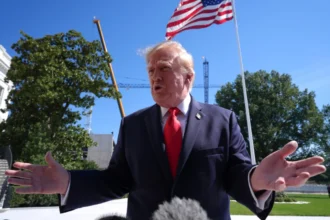
President Trump, addressing reporters on Friday, characterized the duration of the USS Lincoln’s deployment as "not nearly enough," suggesting a belief in the necessity of sustained naval presence in the region. This perspective contrasts with the growing unease among some lawmakers and the public regarding the human cost of such extended deployments.
Pentagon chief Pete Hegseth offered a different assessment on Thursday, stating that the conditions on board the USS Lincoln had been "completely misrepresented." He asserted that the narrative being presented did not accurately reflect the reality of the situation.
In a separate statement released on Friday, acting Secretary of the Navy Hung Cao acknowledged that "a small number of mental health cases were treated with no loss of life." He also clarified that while meal plans were adjusted "when fresh resupply was unavailable," no meals were ever missed. Cao emphasized the resilience of the sailors, stating, "There is no question our young men and women have been pushed to their limits—but they have never broken."
Despite these reassurances from administration officials, some defense analysts posit that the ongoing conflict with Iran and potential retaliatory actions could be impacting U.S. military assets throughout the region. Specific attention has been drawn to a U.S. Navy base in Bahrain, suggesting that Iranian actions might be complicating routine resupply and maintenance procedures for naval vessels, including aircraft carriers like the USS Lincoln. This, in turn, could exacerbate the challenges of maintaining crew well-being and operational readiness during extended deployments.
Geopolitical Repercussions: The Empty Pacific and Rising China Concerns
The redeployment of the USS George Washington from the Pacific Ocean has ignited concerns about a potential erosion of U.S. deterrence capabilities against China. The absence of a U.S. aircraft carrier in this critical theater raises questions about the long-term commitment to regional security and the ability to project power effectively. It remains unclear when, or if, another carrier will be assigned to the western Pacific to fill this void.
Bryan Clark, a former Navy submariner and defense analyst at the Hudson Institute, articulated these concerns, suggesting that Beijing might exploit this perceived absence to project strength and unnerve U.S. allies. Clark explained, "They’re using this as part of the narrative to demonstrate to the Philippines, to Japan, to Indonesia and others that the US is not the big dog in the western Pacific any more."
Clark further elaborated on China’s potential strategic messaging: "They would just prefer that countries in the region decide that China is the bigger power and the US is not able to guarantee their security any more." While Clark does not believe this shift alone would embolden China to initiate an attack on Taiwan, the self-governing island that Beijing claims as its own, the timing is seen as particularly sensitive.
This repositioning of naval assets occurs amidst reports of a significant depletion in both offensive and defensive weapon supplies within the U.S. arsenal. This depletion is largely attributed to the sustained demands of the war with Iran. These supply shortages have already fueled anxieties about a diminished U.S. capacity to act as a deterrent against potential military aggression. Critics highlight that a peer competitor like China, equipped with advanced military technology and a formidable air force, could present a significantly greater challenge to U.S. military superiority compared to Iran.
The USS George Washington, much like the USS Abraham Lincoln, is a Nimitz-class nuclear-powered aircraft carrier. These vessels are formidable platforms, each capable of embarking a complement of over 6,000 personnel and approximately 90 aircraft, representing a significant projection of naval power. The strategic decision to move such a asset from a region of rising geopolitical tension underscores the complex calculus of global military deployment and the shifting priorities of U.S. defense strategy. The implications of this strategic adjustment will likely be closely monitored by regional allies and adversaries alike.