Thousands of federal employees at the Transportation Security Administration (TSA) are navigating their first full pay cycle without compensation today as the partial shutdown of the Department of Homeland Security (DHS) enters its fourth week. The financial strain on the nation’s aviation security workforce comes as the United States Senate remains deadlocked, failing for the fourth time to clear the 60-vote threshold necessary to advance a department-wide funding bill. The legislative paralysis is rooted in a fierce partisan divide over federal immigration enforcement guardrails and the White House’s insistence on a sweeping overhaul of national voting laws.
The lapse in pay for US airport security personnel is part of a broader disruption within the DHS, affecting not only the TSA but also the Federal Emergency Management Agency (FEMA) and the United States Coast Guard. Conversely, Immigration and Customs Enforcement (ICE) continues to operate with its funding secured, bolstered by significant allocations from the previous year’s tax-policy legislation. This disparity has fueled Democratic arguments for "de-coupling" the funding of impacted agencies from the broader immigration debate, a proposal that has been met with consistent rejection from Republican leadership.
Congressional Deadlock and the Save America Act
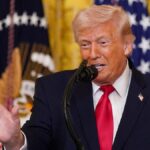
The path to reopening the DHS remains obstructed by the "Save America Act," a restrictive voting bill championed by President Donald Trump. The President has vowed to withhold his signature from any appropriations measure until the voting legislation is passed, despite warnings from election officials that the bill would cause significant administrative chaos and financial burdens during a federal midterm election year. Republican lawmakers contend the bill is essential for national security, while Democrats argue it serves as a tool for voter suppression and is irrelevant to the immediate need for homeland security funding.
On the Senate floor, the inability to reach a compromise has left essential workers in a state of professional and personal limbo. Reports from the DHS indicate that more than 300 TSA employees have already resigned since the shutdown began, citing the inability to maintain household expenses without a steady income. Aviation experts warn that continued attrition within the TSA could lead to longer security lines, reduced screening efficiency, and potential safety vulnerabilities at major US hubs during a period of heightened international tension.

US Airport Security and the Heightened Threat Landscape
The pay freeze for US airport security arrives at a precarious moment for national safety, as the United States remains deeply embroiled in a military conflict with Iran. This morning at the Pentagon, Defense Secretary Pete Hegseth and Chairman of the Joint Chiefs of Staff Dan Caine provided a briefing on the status of "Operation Decimation," the ongoing US-Israeli air campaign against Iranian military infrastructure. Hegseth claimed that Iran’s new Supreme Leader, Mojtaba Khamenei, is "wounded and likely disfigured" following an Israeli strike that reportedly killed much of his family, including the former Supreme Leader, Ali Khamenei.
While Tehran has confirmed through its ambassador in Cyprus that the younger Khamenei was injured in the February 28 attack, the Pentagon’s assertions regarding his physical condition remain unverified by independent intelligence. Hegseth noted that recent communications from the Iranian leader have been limited to written statements read on state television rather than live video appearances. "He’s scared, he’s injured, he’s on the run, and he lacks legitimacy," Hegseth told reporters, asserting that the US military would show "no quarter" in its effort to dismantle the Iranian regime’s capabilities.
Conflict at the Strait of Hormuz and Global Supply Chains
The geopolitical crisis has extended to the Strait of Hormuz, a vital maritime chokepoint that Iran has attempted to close. The resulting blockade has trapped more than 1,000 cargo vessels, threatening the flow of global commerce. President Trump announced this week that American forces have struck 28 Iranian mine-laying vessels to ensure the waterway remains open. Defense Secretary Hegseth reiterated that the US has a plan for "every option" to maintain the flow of commercial goods, even as US intelligence suggests that direct Iranian missile attacks on tankers remain a more potent threat than naval mines.
The consequences of the conflict are being felt acutely by American consumers at the gas pump. In Michigan, a critical political battleground, gas prices have surged by an average of 60 cents per gallon over the last week. In Detroit, some stations have reported prices exceeding $4.30 per gallon, a spike that many residents attribute directly to the disruption of Middle Eastern oil supplies. While the President has dismissed these increases as a temporary necessity of war, local motorists have expressed growing frustration with the economic collateral damage of the administration’s foreign policy.
Domestic Violence and the Michigan Synagogue Attack
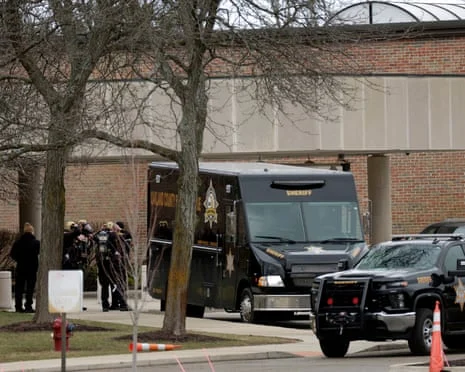
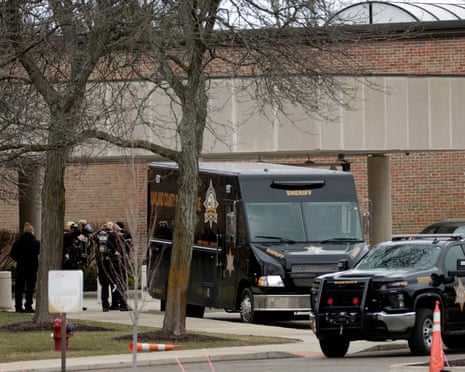
The atmosphere of international conflict has also bled into domestic security concerns. The FBI is currently leading an investigation into a targeted act of violence at Temple Israel in West Bloomfield Township, Michigan. On Thursday, 41-year-old Ayman Mohamad Ghazali rammed his vehicle into the synagogue, which houses an early childhood center. Ghazali, a naturalized US citizen born in Lebanon, was killed by security personnel on site. While no staff or children were injured, the attack has sent shockwaves through the Jewish community.

Sources close to the investigation revealed that Ghazali had lost four family members, including two brothers and a niece, in an Israeli airstrike in Lebanon just last week. Michigan Governor Gretchen Whitmer described the incident as "hate, plain and simple," and called for a reduction in national rhetoric. The attack highlights the volatile intersection of foreign military operations and domestic radicalization, placing further pressure on a Department of Homeland Security that is currently operating without a full budget or a paid workforce.
Surveillance Tools and ICE Quotas Revealed in Oregon
Amid the shutdown, a federal lawsuit in Oregon has provided a rare glimpse into the internal operations of Immigration and Customs Enforcement. Courtroom testimony from an agent identified as "JB" revealed that officers were utilizing a custom-made surveillance app called "Elite" to identify and target specific neighborhoods for enforcement actions. Furthermore, the testimony confirmed the existence of daily arrest quotas, with teams being ordered to meet a target of eight arrests per day.
This revelation appears to contradict previous statements from DHS officials who denied the use of quotas. The "Operation Black Rose" initiative in Portland has reportedly resulted in over 1,200 arrests since last fall. Immigrant rights advocates argue that these quotas lead to racial profiling and warrantless detentions, a claim that a federal judge recently supported by issuing a ruling to halt warrantless arrests in the state. The legal battle continues to unfold as the DHS faces increasing scrutiny over its tactics during the funding lapse.
Broader Economic Impact and Public Sentiment
The intersection of the homeland security shutdown, the war in the Middle East, and the administration’s trade policies has created a complex economic environment. A new poll conducted by The Harris Poll for the Guardian indicates that 72% of Americans believe the President’s tariffs have had a negative impact on the economy. The survey found that 67% of voters do not believe tariffs are the right solution for economic growth, with a majority of Republicans, Democrats, and Independents all reporting higher prices for consumer goods.
Despite this public sentiment, the administration has signaled its intent to pursue further trade restrictions. This economic pressure, combined with rising energy costs and the lack of pay for essential security workers, has created a sense of national urgency. In Washington, the President continues to hold private events at the White House, including the signing of various executive orders, before departing for his Mar-a-Lago club in Florida for the weekend.
Ongoing Investigations and Next Steps
As the DHS shutdown nears the one-month mark, several other high-profile investigations continue to move forward. The House Oversight Committee has announced its intention to depose Tova Noel, a prison guard who was on duty at the time of Jeffrey Epstein’s death in 2019. This deposition is part of a sweeping inquiry into the circumstances surrounding the financier’s suicide and the conduct of Bureau of Prisons personnel.
Simultaneously, the Pentagon has appointed a general officer from outside of Central Command to investigate the bombing of an Iranian girls’ school, an incident that reportedly resulted in the deaths of 175 children. While the administration has been hesitant to indicate what occurred, the investigation aims to address allegations of US involvement in the strike. These mounting domestic and international challenges underscore the critical nature of the Department of Homeland Security’s mission, even as its employees at US airport security checkpoints wait for the political gridlock to break and for their paychecks to resume.