Vince Gilligan, the acclaimed creator behind the iconic crime drama Breaking Bad, recently shared a candid anecdote at the South by Southwest Film & TV Festival, revealing the initial, scathing reception his groundbreaking concept received from a top Sony Pictures Television executive. The executive, whose identity remained undisclosed but is no longer with the company, reportedly dismissed Gilligan’s pitch as "the single worst idea I’ve ever heard," a stark contrast to the show’s eventual global phenomenon status and critical adoration.
From Nine Words to a Global Phenomenon
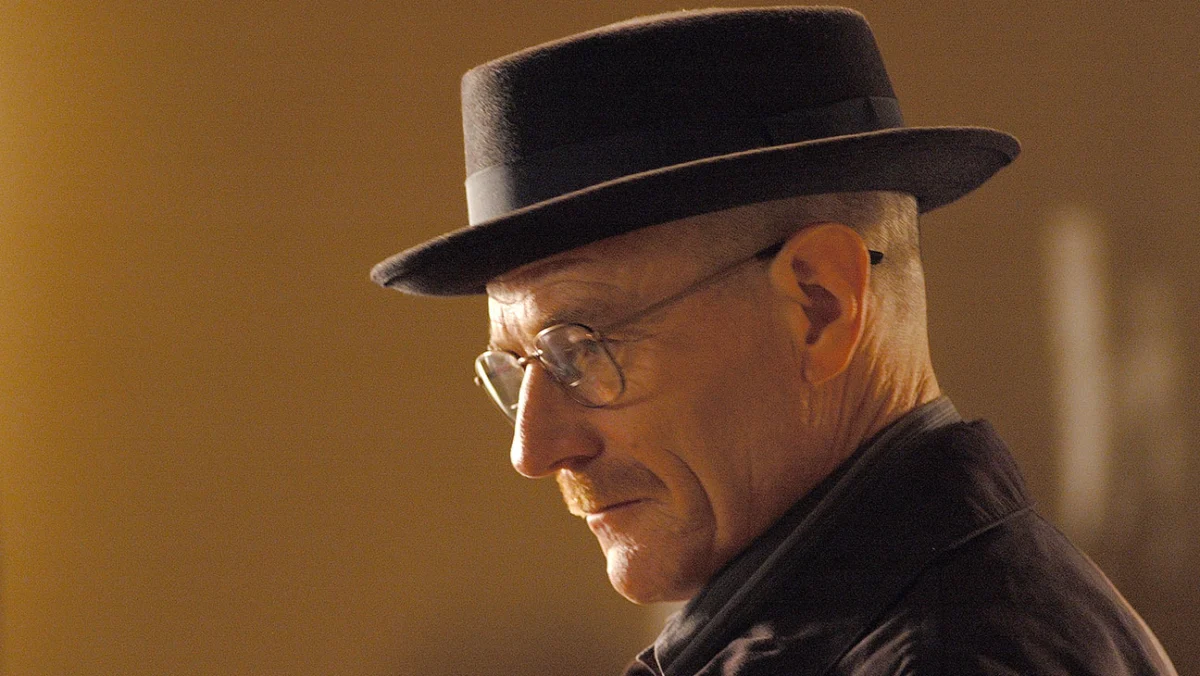
Gilligan recounted discovering an old notebook entry that contained the very first spark for Breaking Bad, a concise nine-word phrase: "Good guy does something bad to save his family." This foundational concept would evolve into the complex narrative of Walter White, a mild-mannered high school chemistry teacher who, after a cancer diagnosis, turns to manufacturing and selling methamphetamine to secure his family’s financial future. The transformation from a "Mr. Chips-type everyman" to a ruthless "Scarface" figure became the dramatic core of the series, captivating millions worldwide.
The simplicity of the initial idea belied the intricate moral dilemmas and character arcs that would define Breaking Bad. Gilligan’s ability to extrapolate such a profound story from a basic premise is a testament to his unique vision and storytelling prowess, which would later reshape the landscape of prestige television.
The Gauntlet of the Pitch: Initial Skepticism
Despite the clear dramatic potential Gilligan saw, his fleshed-out idea faced immediate and significant resistance from industry gatekeepers. The infamous "worst idea" comment came during a pitch meeting at Sony Pictures Television, the studio that would eventually produce the series. Gilligan, ever gracious, noted that the executive in question later acknowledged their misjudgment, highlighting a common challenge faced by creators pitching unconventional or morally ambiguous narratives in Hollywood.
This anecdote underscores the inherent risk and subjective nature of television development, where even the most visionary concepts can initially be met with skepticism. Breaking Bad was a show that defied traditional network formulas, centering on an anti-hero whose moral descent was as compelling as it was disturbing, a type of protagonist that was still relatively novel for mainstream audiences at the time.
HBO’s "Toxic Gamma Radiation of Disinterest"
Sony was not the only major player to initially pass on Breaking Bad. Gilligan famously pitched the series to HBO, then widely considered the gold standard for groundbreaking dramas. He described the meeting as one of the worst of his life, with executives exhibiting "a toxic gamma radiation of disinterest" toward his pitch. This rejection from a network known for shows like The Sopranos and The Wire further illustrates the uphill battle Gilligan faced in getting his unconventional series off the ground.
The reluctance of these networks to embrace Breaking Bad highlights a period in television history where the appetite for deeply serialized, morally complex narratives was still developing. It also serves as a cautionary tale about the perils of underestimating a creator’s unique vision, particularly when it pushes the boundaries of established genres and character archetypes.
Overcoming Skepticism: Breaking Bad‘s Path to Air
Ultimately, Sony Pictures Television did embrace Gilligan’s vision, paving the way for the series to find a home. AMC, a network then primarily known for classic movies, took a chance on Breaking Bad as its distributor, a decision that would profoundly alter its identity and position in the television landscape. The show premiered in 2008, and over its five seasons, it garnered unprecedented critical acclaim, numerous awards including 16 Primetime Emmy Awards and two Golden Globe Awards for Best Television Series – Drama, and a dedicated global fanbase.
Breaking Bad‘s success redefined what was possible on cable television, influencing a generation of creators and solidifying the era of "peak TV." Its intricate plotting, stunning cinematography, and unforgettable performances from Bryan Cranston as Walter White and Aaron Paul as Jesse Pinkman, among others, cemented its legacy as one of the greatest television series of all time. The show’s cultural footprint extended far beyond television, impacting everything from pop culture references to academic studies on morality and narrative.
A Showrunner’s Approach: Collaboration and Vision
During the SXSW panel, Gilligan also offered insights into his collaborative approach as a showrunner, a reputation he humbly acknowledged. When asked about navigating ideas within a writers’ room and choosing between his own concepts or those of his team, Gilligan emphasized the importance of intellectual humility. "The best thing to do is very quickly learn to not pay attention to whose ideas are whose," he stated, adding, "I’m not keeping score in my head. The moments I’m the most proud in [my] shows, I don’t remember who [suggested the idea]. The best idea wins."
This philosophy underscores a commitment to fostering a creative environment where merit trumps ego, a stark contrast to potentially "dictatorial" styles of leadership. Gilligan’s sentiment, "We’re not curing cancer in our respective TV shows. There’s no reason for people not to enjoy coming to work. Once they get there, they’re going to work hard. But there’s no reason they have to make it tough on each other," reflects a pragmatic and humane approach to managing creative talent, which arguably contributes to the high quality and collaborative spirit evident in his productions.
Beyond Breaking Bad: Pluribus and the Nuance of Character
The discussion at SXSW also touched upon Gilligan’s new project, Pluribus, which features Better Call Saul alum Rhea Seehorn in a starring role. An audience member’s question about Seehorn’s character, Carol, being "unlikable" sparked a thoughtful and firm rebuttal from the actress, delving into broader industry issues concerning the portrayal of female characters.
Seehorn argued that the term "unlikable" is often misapplied and overused when evaluating female characters, noting that the definition of what constitutes "likable" in a woman is often "very, very restrictive." She stressed that accessibility and truthful behavior are far more crucial than adherence to traditional notions of politeness. Recounting her character’s traumatic circumstances in Pluribus – including the murder of her wife, the loss of her career, and the prospect of dying alone – Seehorn explained, "Carol is allowed to be the full spectrum of human behavior. I find her complex and difficult and challenging."
Gilligan wholeheartedly supported Seehorn’s perspective, framing Carol’s character as a deliberate narrative choice. He explained that given the show’s premise, where "The Others" are "crushingly and uniformly nice," it was "Drama 101" to have a protagonist who provides a crucial balance and counterpoint, adding necessary friction and complexity to the story. This exchange highlighted the ongoing conversation in Hollywood about authentic character representation and challenging gendered double standards in storytelling.
Defining the Indefinable: Thematic Depth in Pluribus
When an audience member inquired about the core meaning of Pluribus, both Seehorn and Gilligan offered nuanced, somewhat elusive responses, characteristic of Gilligan’s thematic depth. Seehorn expressed the unique experience of playing a character who herself doesn’t fully grasp what’s unfolding around her. She pondered whether the show explores "human nature? What it means to be human, and redefining the pursuit of happiness? How do you find success, love and relationships?"
Gilligan, known for his thoughtful narratives, playfully sidestepped a definitive explanation, admitting, "This is the hardest [show] of all of them to explain." He expressed an openness to learning from audience interpretations, stating, "I’m going to try to let other folks tell me what our show is about, because I learn stuff all the time when people tell me. What is any show about? What is According to Jim about?" This response underscores his belief that the meaning of a complex narrative can be multifaceted and evolve through audience engagement, reflecting the enigmatic nature of Pluribus itself.
The panel, which also included composer Dave Porter, costume designer Jennifer Bryan, and producer Trina Siopy, offered a multifaceted look into Gilligan’s creative world, from the challenging origins of Breaking Bad to the evolving philosophical questions posed by Pluribus. It served as a powerful reminder that sometimes, the ideas initially deemed the "worst" can, through persistence and a steadfast creative vision, ultimately become the most celebrated and impactful in popular culture. The journey of a "good guy doing something bad to save his family" transformed from a nine-word scribble and a scoffed-at pitch into a television landmark, proving that true innovation often lies just beyond the comfort zone of conventional thinking.