NASA’s experimental supersonic jet, the X-59, returned to the tarmac at Edwards Air Force Base on Friday after a cockpit warning light forced mission controllers to truncate its second-ever test flight. The aircraft, designed to demonstrate quiet supersonic technology, was in the air for only nine minutes before the decision was made to execute an early landing. Despite the abbreviated duration, agency officials emphasized that the flight provided essential data for the ongoing development of the Quiet SuperSonic Technology (Quesst) mission.
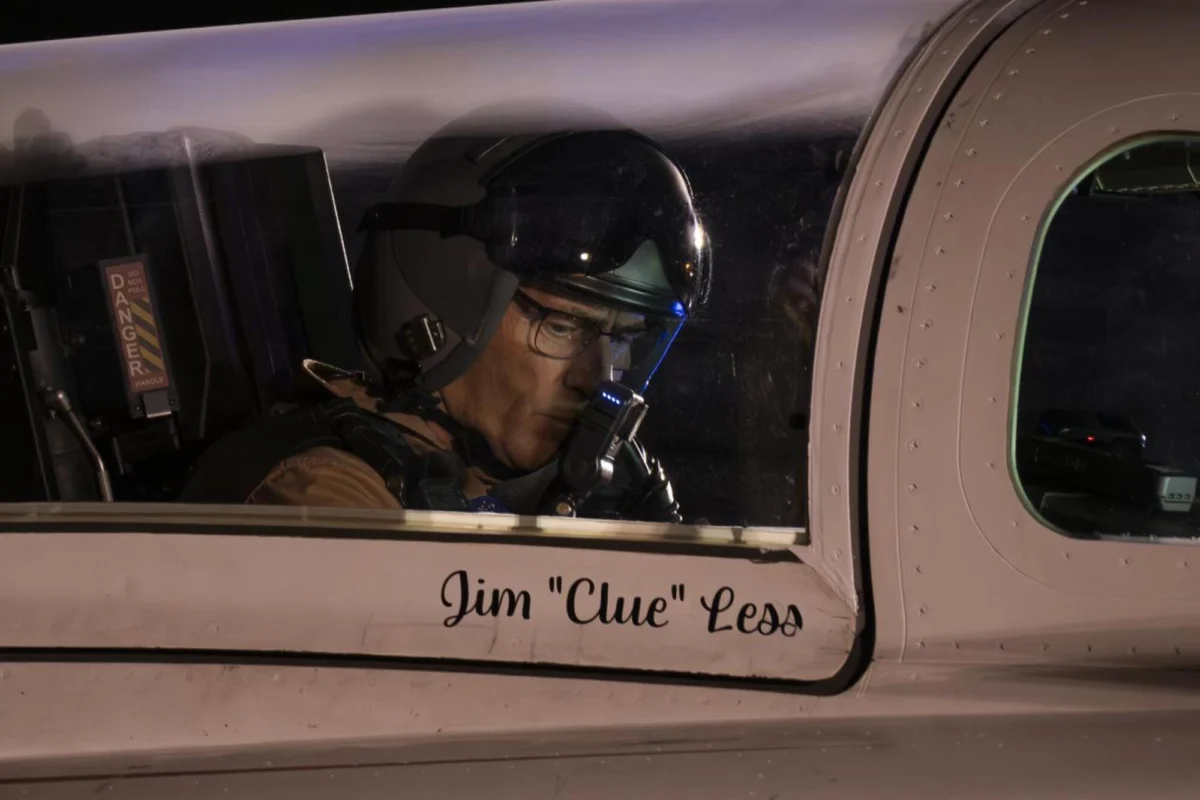
The flight departed from the high desert of California at 10:54 a.m. PT on March 20, marking a significant milestone in a program intended to revolutionize commercial aviation. The mission was originally scheduled to last approximately one hour, during which the aircraft was expected to perform a series of maneuvers to test its subsonic handling characteristics. However, shortly after takeoff, an undisclosed warning light appeared in the cockpit, prompting pilot Jim “Clue” Less to follow safety protocols and return to the runway.
This was not the first technical hurdle encountered during the day’s operations. An earlier attempt to launch the aircraft around 10:00 a.m. PT was scrubbed due to a separate caution light that appeared during taxiing and pre-flight checks. Cathy Bahm, the project manager at NASA’s Armstrong Flight Research Center, confirmed that the two warnings were unrelated but noted that such occurrences are standard during the early phases of testing a one-of-a-kind airframe.
Technical Challenges Facing NASA’s Experimental Supersonic Jet
The X-59 is the centerpiece of NASA’s effort to overturn a decades-old ban on supersonic flight over land. Since 1973, the Federal Aviation Administration (FAA) has prohibited commercial aircraft from exceeding Mach 1 over the United States because of the disruptive nature of sonic booms. These explosive sounds, created by shockwaves merging as an aircraft moves faster than the speed of sound, have historically caused property damage and significant public annoyance.
To address this, NASA and Lockheed Martin’s Skunk Works division engineered the X-59 with a unique, elongated geometry. The aircraft’s 99-foot length and 29-foot wingspan are dominated by a 30-foot "needle nose" designed to prevent shockwaves from coalescing. Instead of a singular, thunderous boom, the X-59 is intended to produce a muffled "thump" roughly equivalent to the sound of a neighbor closing a car door.
Bob Pearce, associate administrator for NASA’s Aeronautics Research Mission Directorate, defended the decision to land early, stating that the primary goal of the current phase is to "shake out" the systems. Pearce noted that building an experimental aircraft involves creating technologies that have never been integrated into a single platform before. He remarked that in the world of "X-planes," technical glitches and shortened test windows are expected parts of the iterative engineering process.
The Physics of the Sonic Thump vs. the Sonic Boom
The primary objective of NASA’s experimental supersonic jet is to collect data that will allow regulators to move away from speed-based restrictions and toward noise-based standards. When a traditional aircraft flies at supersonic speeds, it pushes air molecules aside with great force, creating pressure waves. At Mach 1, these waves cannot get out of each other’s way and instead merge into a single, massive shockwave that radiates toward the ground.
The X-59’s airframe is specifically sculpted to manage these pressure changes. By spreading the shockwaves across the length of the fuselage and using specifically designed aerodynamic surfaces, the aircraft prevents the waves from combining. During Friday’s flight, the aircraft did not reach supersonic speeds; it remained subsonic to ensure the structural integrity and flight control systems were functioning correctly. NASA officials stated the plane never exceeded 230 mph during its nine minutes aloft.
The planned flight profile had intended for the jet to reach 12,000 feet at 230 mph before climbing to 20,000 feet and accelerating to 260 mph. While those benchmarks were not met on Friday, the flight allowed pilot Jim Less to experience the aircraft’s handling in a real-world environment. Less, who also flew the X-59’s maiden flight, reported that the aircraft handled remarkably similarly to the high-fidelity simulators used during his hundreds of hours of ground training.
Innovations in the Cockpit of NASA’s Experimental Supersonic Jet
One of the most radical features of the X-59 is the absence of a forward-facing windshield. Because the aircraft’s long, slender nose is essential for its "quiet" supersonic profile, there is no physical space for a traditional cockpit window that would allow the pilot to see directly ahead. To solve this, NASA developed the External Vision System (XVS).

The XVS utilizes a forward-facing 4K camera and a suite of sensors to provide the pilot with a high-definition video feed of the airspace ahead. This digital "window" is augmented with flight performance data and graphical overlays to assist with navigation and collision avoidance. Jim Less noted that while the lack of a front window is unconventional, the system provided excellent visibility during the landing.
"It really felt comfortable," Less said during a post-flight press conference. He explained that the XVS can actually outperform the human eye in certain conditions, such as when flying directly into the glare of the sun. By using image processing to adjust contrast and reduce brightness, the system provides a clearer view of the horizon than a standard glass canopy might allow. During the early landing on Friday, Less relied on both the XVS and his side windows to guide the needle-nosed jet back to the Edwards runway.
The Future of the Quesst Mission and Commercial Aviation
The early landing of NASA’s experimental supersonic jet is a minor setback in a timeline that spans several years. Following the completion of the initial airworthiness phase at Edwards Air Force Base, NASA plans to move the aircraft to more rigorous testing environments. Once the "quiet" nature of the sonic thump is verified through ground-based sensors, the agency will begin the community overflight phase.
This phase will involve flying the X-59 over several U.S. cities to gauge public perception of the noise. Residents will be asked to provide feedback on whether they heard the aircraft and how intrusive the sound was. This data will be delivered to the FAA and the International Civil Aviation Organization (ICAO) to provide a scientific basis for changing the rules governing supersonic flight over land.
If successful, the technology demonstrated by NASA’s experimental supersonic jet could pave the way for a new generation of commercial airliners. At a target speed of Mach 1.4—roughly 925 mph—travel times could be cut in half. A flight from New York to Los Angeles, which currently takes six hours, could be completed in under three. This would represent the first major leap in commercial flight speeds since the retirement of the Concorde in 2003.
Regulatory and Economic Implications of Quiet Supersonic Flight
The economic stakes for the Quesst mission are significant. The global aerospace industry has seen a surge in interest regarding supersonic travel, with several private companies working on their own designs. However, without a change in federal law regarding over-land flight, the market for these aircraft remains limited to transoceanic routes.
By providing the data necessary to lift the 1973 ban, NASA is essentially de-risking the future of the supersonic market. Aerospace analysts suggest that a return to supersonic travel could revitalize the industry, creating high-tech manufacturing jobs and offering a competitive edge to airlines capable of offering drastically reduced travel times for business and premium passengers.
Lockheed Martin, NASA’s primary contractor on the project, has utilized its secretive Skunk Works facility in Palmdale, California, to assemble the X-59. The facility is legendary for producing some of the most advanced aircraft in history, including the U-2, the SR-71 Blackbird, and the F-117 Nighthawk. The X-59 continues this legacy of pushing the boundaries of what is aerodynamically possible.
Next Steps for NASA’s Experimental Supersonic Jet
In the coming weeks, engineers will conduct a thorough inspection of the X-59 to identify the root cause of the cockpit warning lights. This will involve analyzing flight data recorders and inspecting the various sensor suites that monitor the aircraft’s health. Once the issue is resolved and the systems are cleared for flight, the X-59 will return to the skies to continue its initial testing phase.
NASA has planned more than 100 test flights for the aircraft. These flights will gradually increase in complexity, altitude, and speed until the jet eventually breaks the sound barrier. Each flight, regardless of duration, contributes to the massive dataset required to prove that supersonic flight can be both fast and quiet.
The agency remains optimistic despite the shortened second flight. As Bob Pearce noted, the purpose of an experimental aircraft is to find these issues in a controlled test environment rather than during operational use. The X-59 remains on track to fulfill its mission of gathering the evidence needed to usher in a new era of high-speed travel, potentially changing the way the world moves across continents.