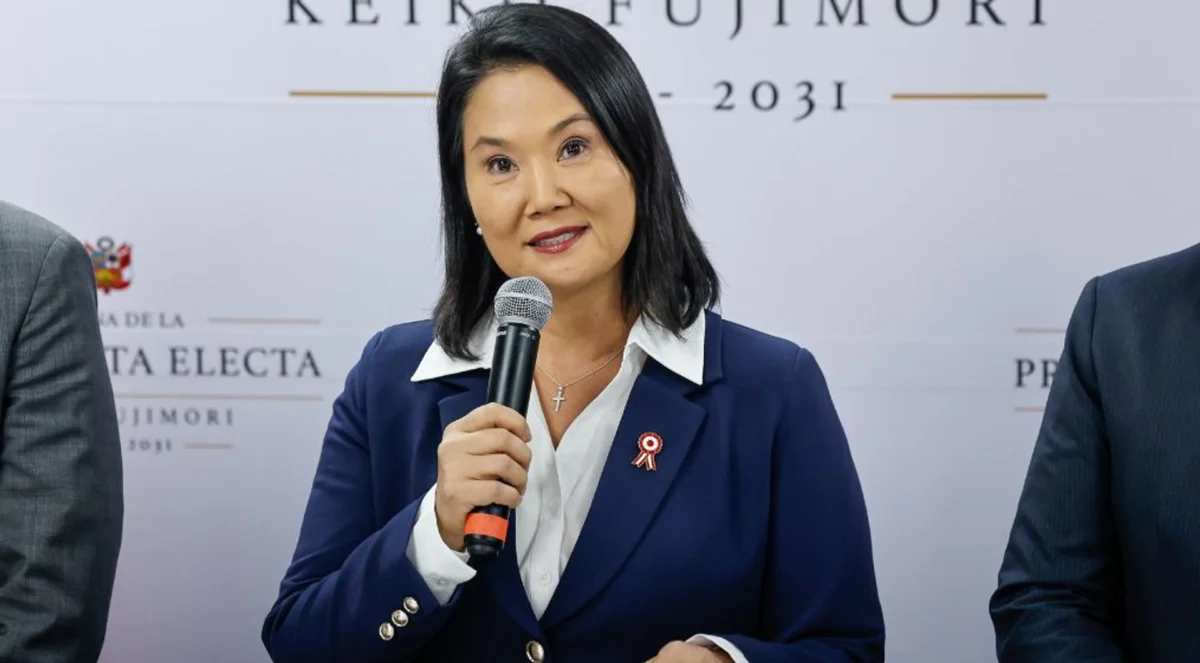
Keiko Fujimori has ascended to the presidency of Peru after a protracted electoral battle, securing the nation’s highest office on her fourth attempt over 15 years and making history as the country’s first female leader. Her victory signals a significant shift in Latin America, placing Peru among a growing cohort of nations leaning towards right-wing governance. However, her ascension is shadowed by deep skepticism regarding her ability to unify a fractured nation, a concern amplified by the controversial legacy of her father, former President Alberto Fujimori, who was convicted of human rights abuses and corruption.
The newly elected president inherits a deeply divided electorate, having defeated her left-wing rival by a razor-thin margin. This narrow victory underscores the political polarization that has characterized Peruvian society for years, raising questions about whether Keiko Fujimori can bridge these divides or if she will instead perpetuate the contentious policies and authoritarian tendencies associated with her father’s administration. The specter of Alberto Fujimori’s past looms large, prompting urgent deliberation on whether his example will guide his daughter’s tenure in office.
The Long Road to Power: A History of Political Ambition
Keiko Fujimori’s journey to the presidency has been a testament to her enduring political ambition and resilience. Her initial foray into politics began in the early 2000s, following her father’s downfall and imprisonment. She served as a congresswoman for several terms, building a political base and honing her leadership skills. Her supporters view her as a strong, decisive leader capable of restoring order and economic stability to Peru, citing her father’s economic reforms during his presidency as a model for national progress.
However, critics point to her father’s authoritarian rule and his government’s human rights violations as a dire warning. Alberto Fujimori, who governed Peru from 1990 to 2000, implemented sweeping neoliberal economic reforms that are credited by some with stabilizing the economy and combating hyperinflation. Simultaneously, his administration waged a brutal campaign against the Shining Path insurgency, which resulted in widespread human rights abuses, including extrajudicial killings and forced disappearances. He was eventually ousted amidst a corruption scandal and later convicted for these crimes.
Navigating a Divided Nation: Promises of Unity Amidst Skepticism
Fujimori’s campaign platform emphasized economic growth, security, and social programs, aiming to appeal to a broad spectrum of voters. She promised to foster national unity and overcome the deep-seated divisions that plague Peruvian society. Yet, the persistent doubts about her alignment with her father’s controversial methods cast a long shadow over these pledges. Many Peruvians fear that her presidency could signal a return to the era of strongman rule, potentially undermining democratic institutions and civil liberties.
The political landscape she inherits is one of profound fragmentation. Decades of political instability, corruption scandals, and social unrest have eroded public trust in institutions. The election itself was a hard-fought contest, reflecting the stark ideological differences that divide the nation. Fujimori’s victory, though historic as the first female president, comes at a time when the country is deeply polarized, making her task of governance exceptionally challenging.
The Shadow of Alberto Fujimori: A Legacy of Contradictions
The most significant question surrounding Keiko Fujimori’s presidency revolves around her relationship with her father’s legacy. Alberto Fujimori remains a polarizing figure in Peru. For some, he is a national hero who restored order and economic prosperity. For others, he is a symbol of authoritarianism and human rights violations. Keiko Fujimori has often sought to distance herself from the more egregious aspects of her father’s rule, while simultaneously embracing some of his policy successes.
Her supporters argue that she represents a new generation of leadership, capable of learning from the past and forging a different path. They highlight her efforts to modernize her political party, Fuerza Popular, and her commitment to democratic processes. However, her critics remain unconvinced, pointing to her past associations and the rhetoric employed by some within her party that echoes her father’s populist appeals. The question of whether she will uphold the rule of law and protect democratic institutions will be a central theme of her presidency.
A Shifting Political Tide in Latin America
Keiko Fujimori’s election is part of a broader trend in Latin America, where several countries have recently elected right-leaning governments. This regional shift reflects a complex mix of factors, including economic anxieties, a desire for stronger leadership, and a reaction against perceived leftist failures. Peru’s embrace of a right-wing leader, particularly one with such a prominent and controversial familial connection, is a significant development within this evolving regional dynamic.
The implications of this trend extend beyond individual nations. It could influence regional economic policies, diplomatic alliances, and approaches to issues such as environmental protection and social inequality. The United States and other global powers will be closely watching Peru’s trajectory, as it has the potential to shape the political and economic landscape of the entire continent.
The Challenge of Governance: Public Expectations and Political Realities
The immediate challenge for Keiko Fujimori will be to translate her electoral victory into effective governance. Her ability to unite the country, address pressing social and economic issues, and uphold democratic norms will be crucial. The narrowness of her victory means she will need to build consensus and engage in broad-based dialogue to achieve her policy objectives.
Public expectations are high, yet the political realities are complex. The country faces significant challenges, including poverty, inequality, and a lingering sense of political distrust. Her administration will need to demonstrate tangible progress in these areas to gain and maintain public support. Furthermore, any perceived missteps or authoritarian tendencies could quickly reignite protests and political opposition.
The Specter of Impeachment and Political Instability
Peru has a history of political instability, with several presidents facing impeachment or removal from office in recent years. This precedent adds another layer of scrutiny to Keiko Fujimori’s presidency. Her ability to navigate the complex web of congressional politics and maintain the confidence of the legislature will be paramount to completing her term.
The opposition, though defeated in the presidential election, remains a significant force in Congress. Fujimori will need to engage in careful negotiation and compromise to advance her agenda. Any hint of authoritarian overreach or disregard for democratic processes could quickly trigger impeachment proceedings, further destabilizing the nation.
International Scrutiny and Human Rights Concerns
Human rights organizations and international observers will be closely monitoring Keiko Fujimori’s administration. The human rights record of her father’s government remains a significant point of concern. There will be an expectation that her government will uphold the rule of law, respect civil liberties, and ensure accountability for any human rights violations.
The international community will be watching for signs of democratic backsliding or the erosion of institutional checks and balances. Peru’s commitment to democratic principles and human rights will be crucial for its standing on the global stage and its relationships with key international partners.
The Path Forward: A Test of Leadership and Legacy
Keiko Fujimori stands at a critical juncture. Her presidency represents a historic moment for Peru, offering the potential for significant change. However, the shadow of her father’s legacy and the deep divisions within the country present formidable obstacles. Her success will depend on her ability to forge a distinct path, one that honors the legitimate aspirations of the Peruvian people for stability and prosperity while firmly upholding democratic values and human rights.
The coming months and years will reveal whether Keiko Fujimori can successfully navigate the complexities of Peruvian politics and emerge as a leader who unites rather than divides, and whether she can definitively forge her own legacy, separate from that of her controversial father. The outcome will have profound implications not only for Peru but for the broader trajectory of democracy and governance in Latin America.