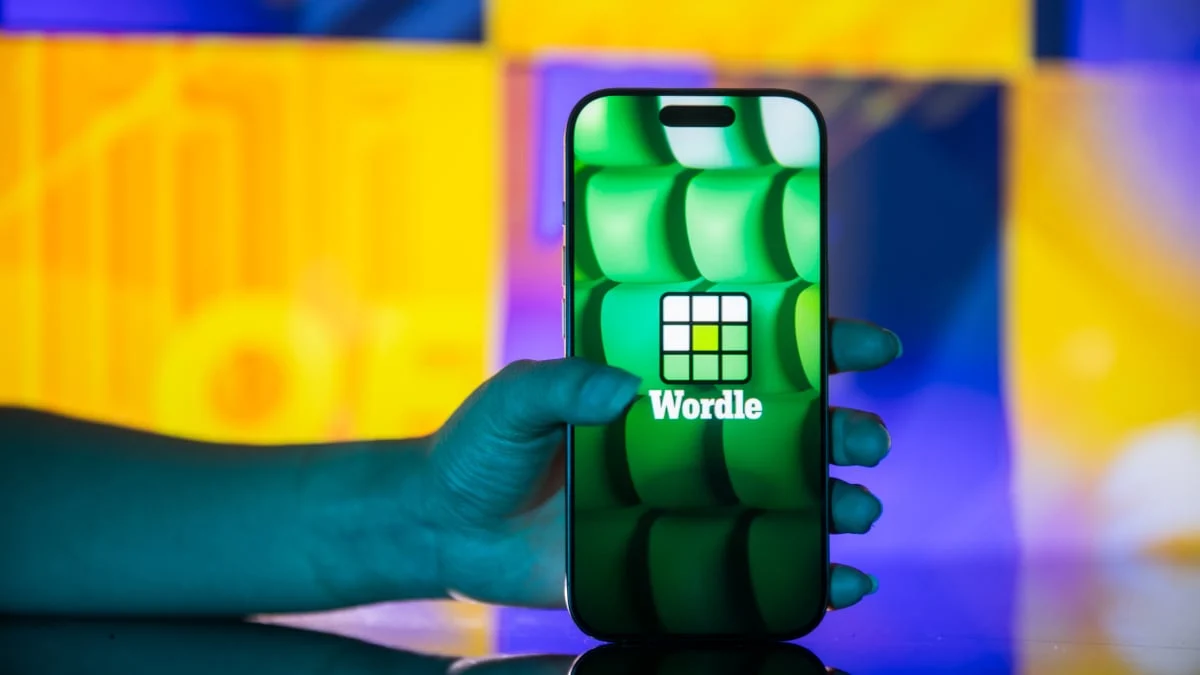
The New York Times Wordle puzzle for April 1, 2026, presents a significant challenge to daily players, centering on a word frequently associated with carbonated beverages and effervescence. As the digital puzzle enters another year of global popularity, today’s solution requires a combination of phonetic intuition and strategic consonant elimination, particularly given the rarity of the letters involved.
The solution for the April 1 puzzle is FIZZY, a five-letter adjective that describes the presence of bubbles or gas in a liquid. While the word is common in everyday vernacular, its construction within the Wordle grid is statistically difficult due to the presence of a double "Z," which remains one of the least frequently used letters in the English language.
Wordle today: The answer and hints for April 1, 2026
For those seeking to solve the puzzle without immediate disclosure of the answer, several strategic hints can narrow the field of possibilities. Today’s word begins with the letter "F" and concludes with the letter "Y," a structure that often leads players toward words like "FULLY," "FERRY," or "FOLLY." However, the internal composition of today’s answer is what defines its difficulty.
A primary clue for the April 1 puzzle is "carbonation." The word is synonymous with the sensation of drinking a freshly opened soda or sparkling water. Furthermore, the puzzle utilizes a double-consonant structure, specifically featuring the letter "Z" in the third and fourth positions. Statistically, the letter "Z" appears in fewer than 1% of common five-letter English words, making it a rare find in the early stages of a Wordle attempt.
The historical context of the Wordle phenomenon
Wordle’s journey from a private gift to a global staple of digital culture is a well-documented success story in the tech and media industries. Originally developed by software engineer Josh Wardle for his partner, Palak Shah, the game was designed as a simple, once-a-day distraction during the height of the COVID-19 pandemic. Its minimalist interface—devoid of advertisements, notifications, or engagement-hacking mechanics—stood in stark contrast to the prevailing trends in mobile gaming.
By late 2021 and early 2022, the game had transitioned from a few dozen players to millions. The New York Times Company recognized the strategic value of the game as a tool for driving digital subscriptions and acquired Wordle in early 2022 for a price "in the low seven figures." Since the acquisition, the game has been integrated into the New York Times Games suite, alongside long-standing titles like the Daily Crossword and newer additions like Spelling Bee and Connections.
Analyzing the strategic approach to Wordle today: The answer and hints for April 1, 2026
Professional puzzle solvers and data enthusiasts often debate the "mathematically perfect" starting word. While many players rely on personal favorites, statistical analysis suggests that words containing a high density of vowels and common consonants—such as "ADIEU," "STARE," or "RAISE"—offer the highest probability of uncovering yellow or green tiles in the first turn.
For the April 1 puzzle, a starting word like "STARE" would have yielded no correct letters, a situation that often causes panic among casual players. Conversely, a word like "FLUID" or "FOAMY" would have provided the crucial "F" or "Y" anchors. The challenge of "FIZZY" lies in the fact that very few standard starting words include the letter "Z." Players often only arrive at "Z" through a process of elimination after more common consonants like "L," "R," "S," and "N" have been ruled out.
The technical difficulty of double consonants and rare letters
The inclusion of double letters significantly increases the complexity of any Wordle puzzle. The game’s feedback system—turning tiles green for a correct letter in the correct spot and yellow for a correct letter in the wrong spot—can sometimes be ambiguous when a letter appears twice. If a player guesses a word with one "Z" and the answer contains two, the game only highlights the second "Z" if the player’s guess also placed it in a correct or alternate position.
"FIZZY" is particularly deceptive because "Z" is a high-value, low-frequency letter. In games like Scrabble, "Z" carries a point value of 10, reflecting its rarity. In Wordle, the appearance of "Z" often signals a specialized vocabulary or, as is the case today, a word that mimics a sound or sensation (onomatopoeia). The "F-I-ZZ-Y" structure is one that many players do not consider until their fourth or fifth attempt, placing their daily "streak" at risk.
Wordle today: The answer and hints for April 1, 2026 and the April Fool’s factor
Given that today is April 1, many players approach the Wordle grid with a degree of skepticism. The New York Times has a history of acknowledging holidays and cultural events through its puzzles, though the Wordle editors generally maintain that the daily word is pulled from a pre-determined, randomized list. Nevertheless, the choice of "FIZZY" on April Fool’s Day may feel like a "prank" to those who struggle with rare consonants.
In the broader context of April 1 digital culture, puzzles often serve as a rare ground for sincerity. While other platforms may publish satirical news or "fake" product launches, the Wordle remains a consistent, factual challenge. The difficulty of today’s word serves as a reminder that the game’s primary appeal is its uncompromising simplicity; it does not need to play a joke on the user because the inherent difficulty of the English language is often enough of a hurdle.
The evolution of the New York Times Games ecosystem
Since 2022, the New York Times has significantly expanded its gaming portfolio, moving beyond the traditional crossword to create a comprehensive digital "Games" destination. This expansion was fueled by the success of Wordle, which acted as a gateway for millions of new subscribers. Following the Wordle acquisition, the Times introduced "Strands," a word-search style game that has also seen high engagement levels.
The company also introduced the Wordle Archive, a feature reserved for subscribers that allows players to revisit past puzzles. This move was initially met with some resistance from the fan community, which had previously relied on free, fan-made archives. However, the integration of Wordle into the official NYT Games app has streamlined the user experience, providing detailed statistics, streak tracking, and "WordleBot" analysis, which evaluates a player’s performance against a computer-optimized path.
The social and cultural impact of daily word games
Wordle’s success has spawned an entire genre of daily "micro-games." Titles like "Heardle" (music identification), "Worldle" (geography), and "Quordle" (solving four words at once) have carved out their own niches. The "share" button, which generates a grid of colored squares without revealing the word, remains a staple of social media feeds. This specific feature allowed Wordle to go viral by creating a "spoiler-free" way for people to compete and compare results.
In 2026, the cultural footprint of Wordle remains steady. It has moved from a viral trend to a daily ritual for many, similar to a morning cup of coffee or checking the weather. The game’s ability to provide a brief, shared intellectual challenge across different age groups and geographies has cemented its place in the digital landscape. Today’s solution, "FIZZY," will likely be a topic of discussion in office breakrooms and social media threads, as players recount how they narrowly avoided breaking their long-term streaks.
Final considerations for the April 1 puzzle
As the day progresses, the global community of Wordle players will continue to log their attempts. For those who have yet to attempt the April 1 puzzle, the best advice remains to stay patient and avoid the temptation to reuse letters that have already been greyed out. In a puzzle featuring "Z," every guess is precious.
The solution "FIZZY" serves as a testament to the diverse and often surprising nature of the English lexicon. Whether a player reaches the solution in two guesses or six, the satisfaction of the tiles turning green remains a powerful motivator. Tomorrow will bring a new word and a new set of hints, but for today, the focus remains on the effervescent challenge of the double "Z."