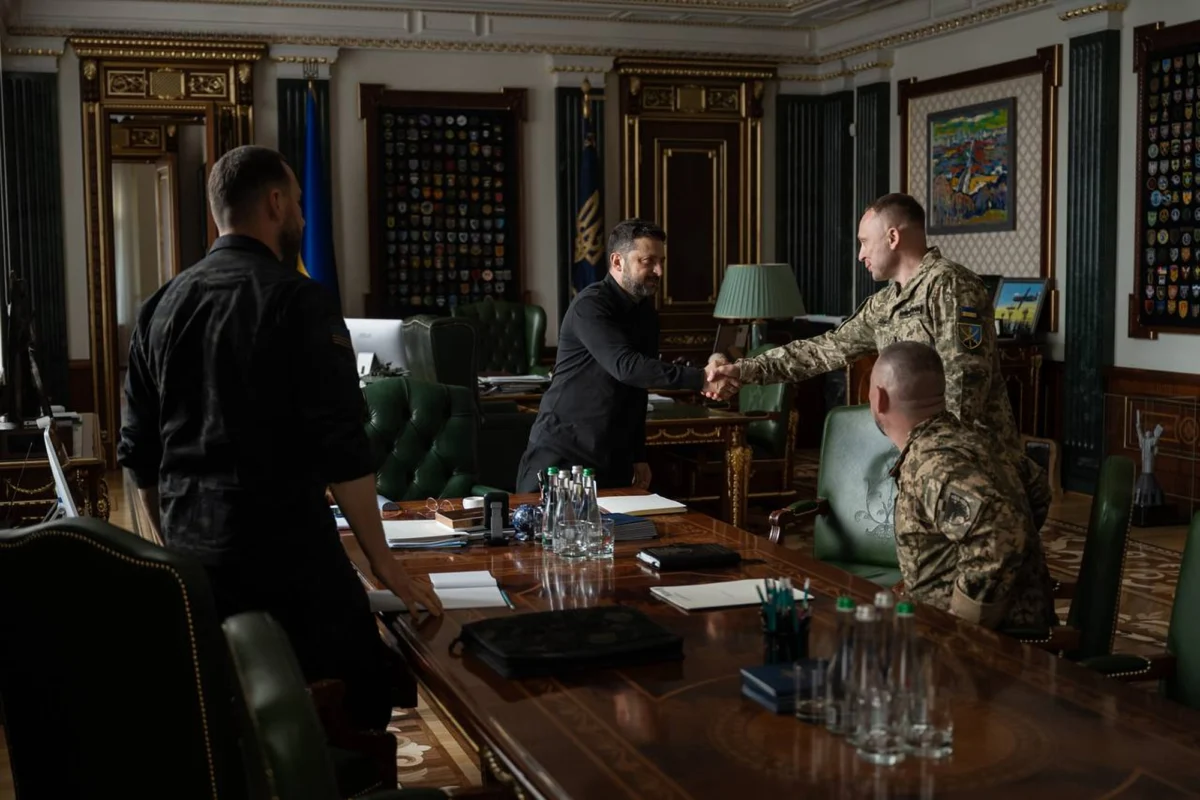
Ukrainian President Volodymyr Zelenskyy has dismissed Oleksandr Syrskyi as the nation’s commander-in-chief, appointing Mykhailo Drapatyi to lead the armed forces. This significant leadership change follows six days of intense public protests in the capital, Kyiv, which were ignited by the recent removal of Defense Minister Mykhailo Fedorov. Fedorov, a figure widely perceived as instrumental in Ukraine’s wartime resilience, had reportedly experienced friction with Syrskyi prior to his dismissal, a development that seemingly catalyzed the public outcry.
The decision to replace Syrskyi, announced Tuesday, is being framed by the Ukrainian presidency as a necessary "reset" for the ongoing protracted conflict against Russia. President Zelenskyy articulated his gratitude to both Syrskyi and the Ukrainian soldiers for their efforts in maintaining strong front-line positions. Simultaneously, he welcomed Mykhailo Drapatyi, expressing confidence in his shared vision for achieving victory and securing conditions conducive to peace with Russia.
Deepening Divides and Public Discontent
The removal of Defense Minister Mykhailo Fedorov last week proved to be a pivotal moment, sparking widespread demonstrations that reverberated beyond Kyiv. Protesters in numerous major cities voiced demands for greater accountability and a more effective military strategy. Many openly criticized Syrskyi’s leadership, citing rising Ukrainian casualties as a key concern and attributing some of the battlefield challenges to his command. The protests highlighted a growing undercurrent of public unease regarding the war’s trajectory and the effectiveness of its leadership.
The situation on the ground has been further underscored by grim casualty figures. Danielle Bell, head of the UN Human Rights Monitoring Mission in Ukraine, reported to reporters in Geneva on Tuesday that the mission had documented 1,396 civilian deaths and 7,978 injuries in Ukraine during the first six months of 2026. This represents a substantial 37 percent increase compared to the same period the previous year and an alarming near-doubling of figures from 2024, painting a stark picture of the human cost of the ongoing hostilities.
Strategic Realignment and Shifting Alliances
In recent months, both Moscow and Kyiv have escalated their aerial bombardment campaigns, targeting each other’s critical infrastructure. This intensified warfare occurs against a backdrop of stalled United States-led peace talks, with Washington’s diplomatic and military focus increasingly diverted towards its engagements in the Middle East, particularly its conflict with Iran. The shift in global attention has potentially created new strategic calculations for both belligerents.
Russia has consistently employed ballistic missiles in its attacks, a capability for which Ukraine currently faces a critical shortage of crucial Patriot interceptor munitions. This deficiency leaves Ukrainian cities and infrastructure particularly vulnerable to sophisticated aerial assaults. In response, Ukraine has intensified its own offensive operations targeting Russian territory, with a particular focus on oil depots. Recent Ukrainian drone attacks have resulted in significant casualties, with at least eight warehouse workers killed and dozens injured on Saturday alone. Another drone strike also ignited a fire at an oil depot situated on the outskirts of Moscow, signaling a sustained and increasingly bold Ukrainian retaliatory strategy.
The Broader Geopolitical Landscape
The leadership shake-up within Ukraine’s military command occurs at a critical juncture in the protracted conflict. The battlefield has become increasingly attritional, with both sides digging in and employing a range of tactics to gain strategic advantage. The international community, while largely supportive of Ukraine, faces its own complex geopolitical challenges, including economic pressures and evolving regional security concerns. The effectiveness of Western military aid, coupled with the ability of Ukraine to sustain its defense efforts amidst mounting casualties and resource constraints, remains a subject of ongoing analysis and concern.
The dismissal of Syrskyi and the appointment of Drapatyi suggest an effort by President Zelenskyy to inject new energy and potentially a revised strategic approach into the war effort. The internal friction between the former military chief and the ousted defense minister, as alluded to in earlier reports, may have contributed to an untenable command structure. Addressing these internal dynamics is seen as paramount to ensuring a cohesive and effective response to the Russian invasion.
Mobilization Challenges and Frontline Management
President Zelenskyy’s remarks emphasized the urgent need to address persistent issues concerning mobilization and frontline management. These are critical components of any sustained military campaign, and challenges in these areas can significantly impact operational effectiveness and morale. The ongoing need for troop replenishment and the strategic deployment of forces on the vast Ukrainian frontlines are complex logistical and strategic undertakings that require constant adaptation and re-evaluation.
The successful integration of new leadership within the military hierarchy will be closely watched. Mykhailo Drapatyi, now tasked with leading Ukraine’s armed forces, faces the immediate challenge of consolidating command, addressing the concerns that fueled the recent protests, and developing strategies to counter Russia’s offensive capabilities. His background and previous military assignments will be scrutinized for insights into his potential approach to the war.
Public Trust and the Path Forward
The public protests that preceded Syrskyi’s dismissal underscore the importance of maintaining public trust and demonstrating tangible progress in the war effort. For a nation engaged in an existential struggle for survival, the perception of effective leadership and a clear path toward victory is crucial for sustaining national resolve. The government’s ability to communicate its strategy effectively and to show tangible results on the battlefield will be key to rebuilding and maintaining public confidence.
The protracted nature of the conflict, marked by significant human and material losses, has inevitably led to increased scrutiny of military leadership. The appointment of a new commander-in-chief signals a potential shift in strategy or a renewed focus on specific aspects of the war effort. As Ukraine navigates this critical period, the international community will be observing closely for signs of renewed momentum and a clear articulation of the path toward achieving a just and lasting peace. The coming weeks and months will be decisive in determining the impact of this leadership change on the course of the war and Ukraine’s ultimate ability to secure its sovereignty.