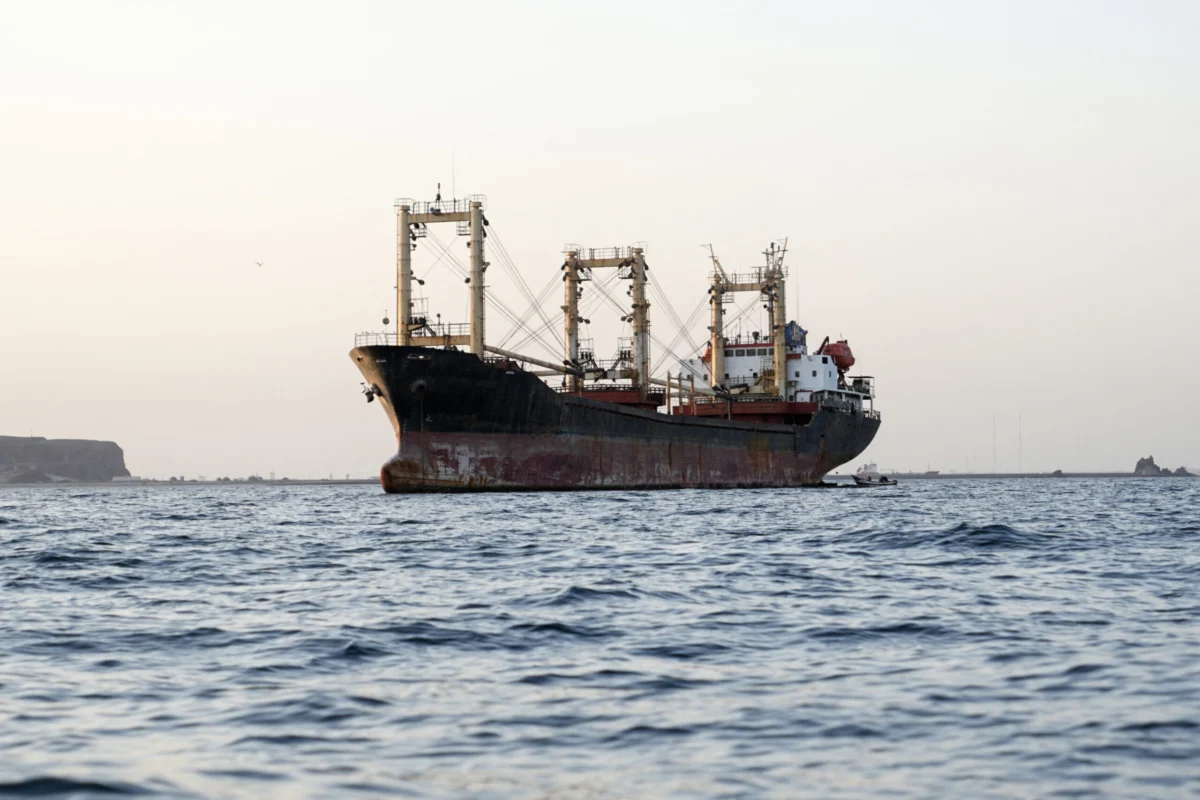
Italy will deploy warships to ensure the safe passage of its commercial vessels through the strategically vital Bab al-Mandeb strait, a move the nation’s defense minister indicated would proceed without waiting for a consensus European Union decision, citing the urgent need to avert severe economic repercussions. Defense Minister Guido Crosetto stated that Italy possesses the necessary capabilities to safeguard this critical maritime artery, emphasizing that any disruption rendering the Bab al-Mandeb impassable would trigger significant economic fallout. He further articulated Rome’s stance that bureaucratic delays in decision-making should not be permitted to worsen an already precarious situation.
Strategic Waterway Under Threat
The Bab al-Mandeb strait, a narrow maritime passage connecting the Red Sea to the Gulf of Aden, stands as one of the world’s most heavily trafficked shipping corridors. This chokepoint is indispensable for the transit of oil, gas, and container traffic between Europe and Asia, serving as a crucial link to the Suez Canal. Historically, approximately 12% to 15% of global trade has navigated this waterway, which at its narrowest point is a mere 30 kilometers (19 miles) wide, separating Yemen from Djibouti and Eritrea on the African continent.
The strait’s prominence has been amplified in recent years, particularly following shifts in regional geopolitical dynamics. As tensions escalated, impacting other key maritime routes, the Bab al-Mandeb has become an increasingly critical conduit for vital resources. Its security directly influences global energy markets and the supply chains of numerous industries, making any threat to its unimpeded flow a matter of international concern.
Escalating Regional Instability and its Impact
The geopolitical landscape surrounding the Bab al-Mandeb has been volatile for years, with control over its coastlines contested. Since the commencement of the war in Yemen in 2015, various factions, including the Yemeni government, Houthi rebels, and regional forces, have held sway over different segments of its shores. This ongoing conflict has created an environment of persistent instability, casting a shadow over maritime security in the region.
Recent developments have dramatically heightened these concerns. The Iran-aligned Houthi movement has launched a significant offensive, bringing the entirety of Yemen’s western Red Sea coast, including strategically positioned islands, under their control. This territorial expansion has granted the Houthis virtually unfettered access to the Bab al-Mandeb strait.
Houthi Offensive and Global Trade Concerns
This Houthi advance is widely perceived as a major setback for international shipping. The group’s history of targeting vessels associated with the United States or its regional allies has raised alarm bells among global maritime operators. The potential for further disruptions to shipping traffic through the strait poses a substantial risk to global commerce, potentially impacting supply chains and increasing transportation costs.
The strategic importance of the Bab al-Mandeb has been underscored by its role as an alternative route for Gulf oil exports. With the Strait of Hormuz facing its own set of geopolitical challenges, a growing volume of crude exports has been rerouted through the Red Sea. This increased reliance makes the Bab al-Mandeb one of the last major arteries for Gulf oil reaching global markets, amplifying the consequences of any disruption.
International Responses and Italy’s Proactive Stance
In response to the escalating threats, both the United States and the European Union have undertaken military operations designed to enhance the protection of merchant ships against Houthi attacks. However, these efforts have encountered significant challenges in fully securing the route, particularly as the conflict in Yemen intensifies. The persistent fighting has created a dynamic and often unpredictable environment for maritime security.
Italy’s decision to unilaterally deploy warships reflects a growing frustration with the pace of multilateral responses and a perceived urgency to protect its own economic interests. Minister Crosetto’s statement signals a commitment to independent action, prioritizing the direct protection of Italian commercial vessels. This approach suggests a belief that immediate, decisive measures are necessary to mitigate economic risks.
Economic Fallout of Impeded Passage
The economic implications of an impassable Bab al-Mandeb strait are profound and far-reaching. A significant portion of global trade relies on this route for the timely and cost-effective movement of goods. Disruptions would inevitably lead to increased shipping times, higher insurance premiums, and a surge in the cost of essential commodities, including oil and gas.
Such an event would ripple through global supply chains, potentially exacerbating inflationary pressures and impacting consumer prices worldwide. Industries dependent on just-in-time inventory management would face significant operational challenges. The financial markets could also experience considerable volatility as investors react to the perceived instability and its economic consequences.
Historical Context of the Strait’s Significance
The Bab al-Mandeb strait has long been recognized for its strategic importance, situated at a pivotal juncture of global maritime trade. Its narrow confines have historically made it a point of interest for powers seeking to control or influence regional trade flows. The ongoing conflict in Yemen has brought this historical significance into sharp focus, highlighting its contemporary relevance in a rapidly changing geopolitical landscape.
The strait’s control has been a recurring point of contention, influencing regional power dynamics and international maritime security. The current situation, with the Houthi movement consolidating its influence over key coastal areas, represents a significant escalation of these long-standing tensions.
Navigating Complex Geopolitical Waters
The decision by Italy to deploy warships underscores the complex and interconnected nature of global security and trade. The Bab al-Mandeb strait is more than just a waterway; it is a vital artery of the global economy, and its security is intrinsically linked to international stability. As regional conflicts continue to evolve, the challenges to maritime security are likely to persist, requiring ongoing vigilance and coordinated responses.
The proactive stance taken by Italy highlights the growing recognition among nations of the need for decisive action to protect critical trade routes. The effectiveness of such independent deployments, however, will likely be subject to ongoing observation, particularly in the context of broader international efforts to ensure freedom of navigation and the unimpeded flow of global commerce. The situation demands a careful balancing of national interests with the collective responsibility to maintain open and secure maritime pathways.