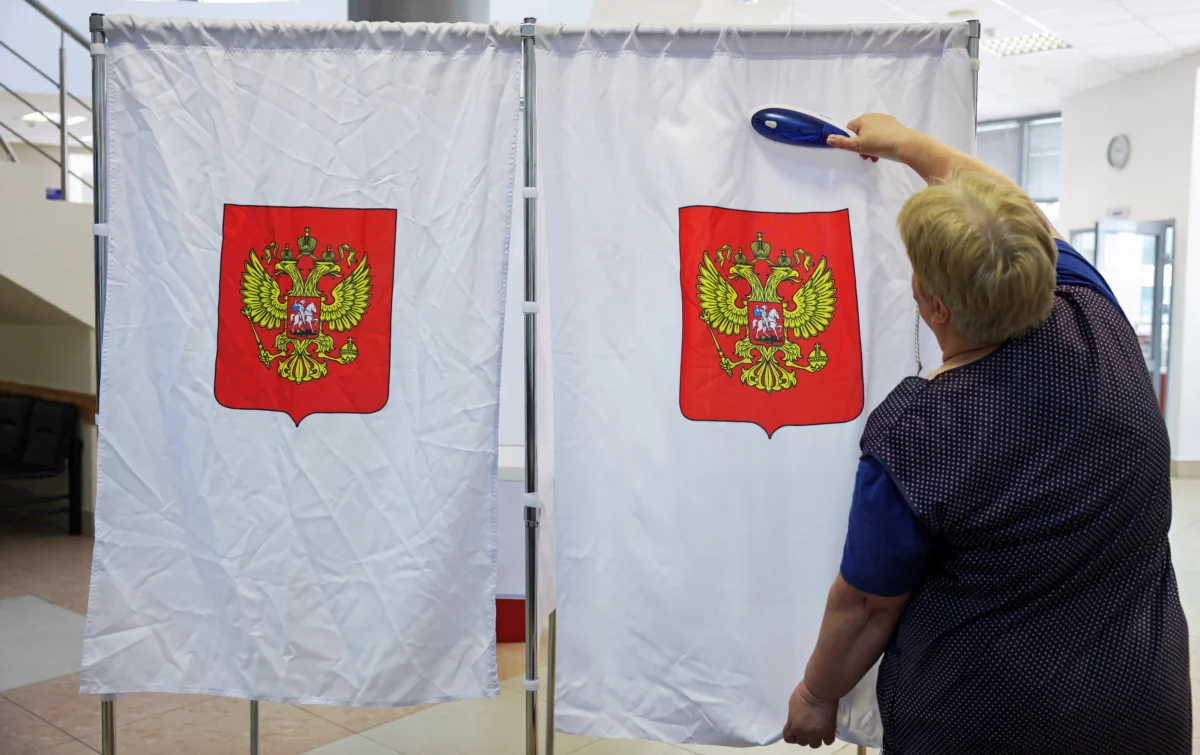
Russians are heading to the polls from Friday to Sunday to elect members of the State Duma, the lower house of parliament, in the first such election since the nation launched its full-scale invasion of Ukraine in 2022. This vote occurs against a backdrop of a struggling economy and escalating Ukrainian drone strikes targeting Russian infrastructure far from the front lines.
The election is being presented by authorities as a democratic exercise for citizens to voice their preferences. However, critics contend that the absence of genuine opposition candidates on the ballot predetermines the outcome, raising questions about the fairness and significance of the vote. Despite these criticisms, the elections hold considerable importance for understanding the current political climate and public sentiment within Russia.
How Russia’s Elections Operate
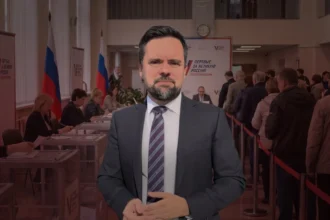
The electoral process spans three days, from Friday through Sunday, a measure intended to maximize voter turnout among the 111 million eligible citizens. This extended voting period also encompasses regions currently under Russian occupation in Ukraine, a contentious inclusion. Electronic voting is an option for voters, alongside traditional in-person methods.
The State Duma comprises 450 seats. Half of these are allocated through party-list proportional representation, where voters choose a party and seats are distributed based on the national vote share. The remaining half are decided in single-mandate constituencies, where candidates compete directly against each other in specific geographic districts.

In addition to the parliamentary elections, voters in 11 regions will select their governors, and 39 regions will elect members of their respective regional legislatures. These concurrent local and regional elections offer a broader snapshot of political preferences across the country.
United Russia: The Kremlin’s Political Backbone
United Russia, the long-standing ruling party, is overwhelmingly expected to retain its dominant position in the State Duma. Since its formation in 2001 through the merger of pro-Kremlin parties, it has served as President Vladimir Putin’s primary political vehicle, consistently backing his agenda and securing a supermajority in past parliamentary contests. In the 2021 election, the party secured over two-thirds of the Duma’s seats, a stronghold it is poised to maintain.
The party’s electoral list is headed by prominent figures within the Russian government, including Foreign Minister Sergey Lavrov, a key architect of Russia’s foreign policy for over two decades, and Sergei Sobyanin, the influential mayor of Moscow. This leadership lineup underscores the party’s connection to the established power structure.
In an apparent effort to inject new energy into a party often perceived as bureaucratic, war correspondent Yevgeny Poddubny, who was reportedly injured by a Ukrainian drone, is listed as the third highest-ranking candidate. This move suggests an attempt to associate the party with the ongoing conflict and the sacrifices being made. Members of United Russia have explicitly pledged their support for the war effort and President Putin’s stated objectives in Ukraine, referred to by the Kremlin as a "special military operation."
The Contenders: Systemic Opposition and Faltering Voices
Beyond United Russia, several other parties, often categorized as "systemic opposition," are expected to secure seats. These parties, while nominally distinct, generally align with the government on crucial policy matters.

The Communist Party of the Russian Federation (CPRF) has been a consistent presence in the Federal Assembly since the 1990s. Led for over three decades by Gennady Zyuganov, a veteran politician and former Soviet official, the CPRF has historically offered criticism of specific government policies but has carefully avoided direct challenges to Putin’s leadership. Crucially, the party has staunchly supported the war in Ukraine.
Alexander Bratersky, a political analyst and independent journalist, notes that the race for second place in the elections is particularly noteworthy. He suggests that a strong showing by the Communist Party could signal public discontent over economic hardships and declining living standards.
The Liberal Democratic Party of Russia (LDPR), an ultranationalist party, has also been a significant force in the legislature since the early 1990s. Like the Communists, the LDPR vocally supports the war and highlights the presence of military veterans among its ranks, projecting an image of patriotic commitment.
Other smaller parties are also vying for representation. "A Just Russia – For Truth," a social-democratic party, has been active for two decades and often appeals to older voters nostalgic for the Soviet era. It also publicly supports the war.
The "New People" party, established shortly before the 2021 parliamentary elections, positioned itself as a liberal alternative appealing to younger voters and technocrats. It secured just over 5% of the vote in 2021, enabling it to form a small faction. Bratersky describes "New People" as a "liberal-leaning party backed by some Kremlin people who are more technocratic and more pro-peace." He believes it resonates with the middle-class audience and has, in the wake of the ban on the Yabloko Party, become a perceived substitute for voters seeking an anti-war stance. If "New People" achieves a strong third-place finish, Bratersky suggests, it could indicate that anti-war sentiment is being channeled through this party as a legal avenue of expression.

Several other minor parties, including Communists of Russia, the Party of Pensioners, the Green Party, the Party of Direct Democracy, and the Motherland Party, are also competing for seats.
The Yabloko Party’s Exclusion
The liberal Yabloko Party, the sole registered political party openly opposing the war in Ukraine, faced a significant setback when the Supreme Court ordered its removal from the ballot in August. The court cited, among other reasons, that the party’s anti-war stance was tantamount to advocating for the violation of Russia’s territorial integrity. Despite this disqualification from party-list elections, Yabloko candidates are still permitted to run in some single-mandate constituencies. This exclusion of a prominent anti-war voice highlights the tightening restrictions on political dissent.
Significance for the Kremlin: Legitimacy and War Support
These parliamentary elections carry particular weight for the Kremlin, as they are the first since the full-scale invasion of Ukraine. Bratersky emphasizes that President Putin has intrinsically linked the elections to public support for the war. At a United Russia party congress in August, Putin stated that the party’s "duty is to do everything for victory" in Ukraine.
This linkage suggests a Kremlin concern about demonstrating popular backing for its military campaign. The elections, despite their managed nature, represent the most visible legal mechanism for citizens to express their views, even if indirectly. Bratersky observes that "the Kremlin is a bit worried since the elections are the only legal way to show disrespect for the Kremlin. Even Putin’s core fans hate United Russia as a corrupt force." This sentiment indicates a potential disconnect between official narratives and public perceptions, even among those who generally support the government.
A History of Contested Elections
Since Vladimir Putin first assumed power in 2000, United Russia has consistently dominated Duma elections, often by substantial margins. However, the integrity of these results has been repeatedly questioned by independent observers and opposition groups. The 2011 parliamentary elections, in particular, were marred by widespread allegations of vote-rigging, which ignited the largest street protests witnessed during Putin’s tenure.

Following the 2021 vote, independent monitors and statisticians presented data suggesting that United Russia’s actual level of support was significantly lower than the officially declared results. While authorities have consistently denied claims of widespread electoral fraud, the trend of sidelining opposition parties and critics of the war from electoral contests has become increasingly pronounced. This pattern raises serious concerns about the fairness and democratic legitimacy of the ongoing electoral process.
Broader Implications and Public Impact
The outcome of these elections, while largely anticipated to favor United Russia, will offer insights into the prevailing mood of the Russian populace. The extended voting period and the inclusion of occupied Ukrainian territories underscore the Kremlin’s determination to project an image of national unity and legitimacy. However, the disenfranchisement of genuine opposition voices and the ongoing conflict in Ukraine create a complex and potentially volatile backdrop.
The economic pressures faced by ordinary Russians, exacerbated by international sanctions and the costs of war, may influence voter behavior, even within the confines of a controlled political system. The performance of parties like the CPRF and "New People" could serve as barometers for levels of public discontent and evolving political allegiances.
The elections also serve as a critical juncture for the Kremlin to consolidate its political authority and reinforce its narrative surrounding the war in Ukraine. The results will be closely scrutinized by both domestic and international audiences, offering clues about the resilience of President Putin’s leadership and the direction of Russian domestic and foreign policy in the coming years. The global community will be watching to see how these elections, conducted under the shadow of war, shape the future trajectory of Russia.