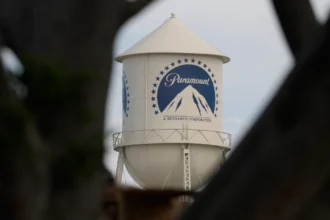
Following a significant legal settlement with California Attorney General Rob Bonta and a coalition of 12 states, media mogul David Ellison has publicly reaffirmed his commitment to keeping the newly merged Paramount and Warner Bros. Discovery enterprise firmly headquartered in Los Angeles. This declaration puts an end to months of speculation regarding a potential corporate relocation outside of California, solidifying the entertainment giant’s future within the historic heart of Hollywood.
A New Era for Hollywood’s Titans
The proposed merger, spearheaded by Ellison’s Skydance Media, aims to combine two of the most venerable names in entertainment, Paramount Global and Warner Bros. Discovery, into a formidable new entity. This ambitious consolidation, if approved, would create a powerhouse with an extensive library of iconic films and television shows, a vast array of intellectual property, and a significant footprint across theatrical distribution, broadcast television, cable networks, and burgeoning streaming services. The potential scale of such an organization naturally drew intense scrutiny from regulators concerned about market concentration and its broader impact on the industry.
Ellison, son of Oracle founder Larry Ellison, has long been a prominent figure in Hollywood through Skydance Media, known for producing blockbusters like "Top Gun: Maverick" and the "Mission: Impossible" franchise. His vision for the combined company centers on leveraging these storied assets to navigate the evolving media landscape, which has seen traditional studios facing increasing competition from tech-driven streaming platforms. The strategic importance of the merger for the future of both companies, and indeed the broader entertainment sector, cannot be overstated, prompting a close watch from industry insiders and public officials alike.
The Regulatory Gauntlet and Relocation Whispers
The path to this consolidation has been far from smooth. In February of this year, Ellison had initially engaged with California politicians, promising significant investments in local production and a renewed commitment to boosting Hollywood’s economic vitality. These early discussions aimed to assuage concerns about job retention and the continued presence of a major studio within the state. However, the regulatory landscape shifted dramatically in July when California Attorney General Rob Bonta, joined by attorneys general from 12 other states, launched an antitrust lawsuit against the proposed merger.
This legal challenge placed the merger in jeopardy, citing concerns over potential anti-competitive practices, reduced consumer choice, and the impact on the creative economy. The lawsuit alleged that the consolidation could stifle innovation, lead to higher prices for consumers, and decrease opportunities for independent content creators. As the legal battle intensified, a cloud of uncertainty descended upon the deal, giving rise to persistent rumors about the combined company’s future corporate domicile.
During this period of heightened legal pressure, whispers began to circulate about Ellison’s potential willingness to relocate the company’s headquarters outside of California. Ellison and his family maintain deep ties to Tennessee, leading some to speculate about a possible move to Nashville or other cities in the state. Concurrently, officials in Texas, actively seeking to position the state as a corporate headquarters capital, reportedly extended overtures, touting lower taxes and a business-friendly environment, with Austin frequently mentioned as a potential new base. These discussions, while often dismissed as strategic posturing in a high-stakes game of corporate "chicken" between Ellison and California, gained increasing traction as the legal deadline loomed. The threat of a $7 million-per-day ticking fee, which Paramount would have faced starting in October if no settlement was reached, added a palpable urgency to the situation, making the prospect of relocation seem more concrete with each passing day.
The Settlement: A Commitment to Los Angeles
The recent settlement marks a pivotal moment, effectively resolving the antitrust concerns raised by California and its allied states. While the full details of the consent decree have not been publicly disclosed, Ellison described the concessions made as "minor," indicating that the core structure of the merger largely remains intact. A key component of the agreement, however, is a specific commitment regarding the company’s physical presence in Los Angeles.
Under the terms of the consent decree, the iconic Warner Bros. and Paramount studio lots in Los Angeles County are explicitly protected from sale for a period of five years. This provision directly addresses fears within the local community and political circles that a merger might lead to asset stripping or the consolidation of operations in another state, thereby diminishing Hollywood’s physical and economic footprint in L.A. The commitment to retain these historic properties underscores the symbolic and practical importance of Los Angeles as the undisputed global hub for film and television production.
Ellison’s public statement following the settlement was unequivocal: "Now that we reached and announced a settlement, we’re eager to get to work building a stronger Hollywood," he declared. "Let me be clear: the newly merged company will be headquartered in Los Angeles. We aren’t going anywhere. Our history is here and this is where our future is being built." This emphatic declaration serves to reassure employees, industry stakeholders, and the wider Los Angeles community that the company’s roots and future are intertwined with the city.
Broader Implications for the Entertainment Industry and L.A.
The resolution of this legal dispute and Ellison’s reaffirmation of commitment carry significant implications beyond the immediate parties involved. For the broader entertainment industry, it signals a period of stability following months of uncertainty regarding one of its largest potential consolidations. The merged entity, now poised to move forward with a clear corporate home, can focus on integration and strategic growth, rather than battling regulatory hurdles and fending off relocation rumors. This stability is crucial in an industry currently undergoing massive transformation driven by technological advancements, evolving consumer habits, and intense competition from global players.
For Los Angeles, the decision represents a significant economic and cultural victory. The entertainment industry is a cornerstone of the L.A. economy, supporting hundreds of thousands of jobs across a vast ecosystem that includes writers, directors, actors, crew members, post-production specialists, marketing professionals, and countless ancillary businesses. Keeping the headquarters of a merged Paramount and Warner Bros. Discovery in Los Angeles ensures the continued flow of high-paying jobs, local investment, and tax revenues into the city and state. It also reinforces L.A.’s identity as the creative capital of the world, a designation fiercely protected by local politicians and residents.
Politically, the outcome is a win for California Attorney General Rob Bonta and the coalition of states that joined the lawsuit. It demonstrates the ability of state-level regulatory bodies to influence corporate decision-making and ensure that large mergers adhere to principles of fair competition and local economic protection. This could set a precedent for future large-scale consolidations, indicating that companies must consider the broader societal and economic impacts of their deals, not just the financial bottom line.
A Future Forged in Los Angeles
The commitment period of five years for the non-sale of the studio lots provides a concrete timeframe for the newly merged company to establish its operations and deepen its ties to Los Angeles. During this time, the combined entity will be tasked with integrating two vast corporate cultures, streamlining operations, and delivering on the promise of a "stronger Hollywood" that Ellison has articulated. The focus will now shift from legal battles and relocation speculation to the challenging work of combining two legacy studios into a coherent, competitive force in the global entertainment market.
As the dust settles on the legal front, the industry watches closely to see how this new colossus will reshape the landscape of content creation, distribution, and consumption. With its headquarters firmly planted in Los Angeles, the merged Paramount and Warner Bros. Discovery is poised to write its next chapter from the very place where much of Hollywood’s history was made, promising a future built upon its rich heritage in the city it calls home.