President Donald Trump announced Tuesday that the United States Navy is prepared to begin escorting commercial oil tankers through the Strait of Hormuz, marking a significant escalation in the administration’s efforts to stabilize global energy markets. The proposal comes as the Israeli Defense Forces (IDF) confirmed a "broad wave" of extensive strikes across Iranian territory, targeting nuclear infrastructure, command centers, and military airfields. The escalating US-Israel war with Iran has triggered a massive spike in crude prices and forced the evacuation of non-emergency personnel from several American embassies in the Middle East.
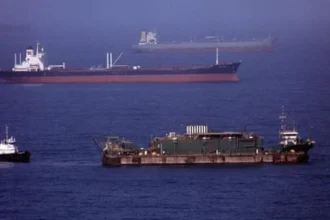
The White House confirmed that the U.S. International Development Finance Corporation (DFC) has been directed to provide political risk insurance and financial guarantees for maritime trade in the Gulf region. This move aims to reassure ship owners who have grown hesitant to navigate the Strait of Hormuz, a critical waterway through which approximately 15% of the world’s oil and 20% of its liquefied natural gas pass. In a social media post, President Trump emphasized that "no matter what, the United States will ensure the free flow of energy to the world."
The announcement follows a series of retaliatory threats from Iran’s Revolutionary Guards, who have vowed to "burn any ship" attempting to navigate the waterway. While U.S. Central Command (CENTCOM) maintains that the strait remains open, the threat of military engagement has caused Brent crude to settle at $81.40 a barrel, its highest level in over a year. Analysts remain skeptical that military escorts alone can curb the volatility, as the conflict now spans a 2,000-kilometer swathe of the region, affecting production from Qatar to Iraq.
IDF Strikes on Iran and the Targeted Infrastructure
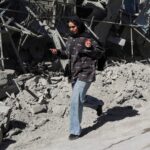
On the ground, the Israeli military has intensified its air campaign, launching simultaneous strikes on Tehran and Beirut. The IDF reported hitting a compound in Iran allegedly used to develop capabilities for nuclear weapons, though specific evidence for the claim was not immediately provided. Furthermore, Israeli media reported a direct strike on the building housing Iran’s Assembly of Experts in the city of Qom. The assembly is the body responsible for electing the country’s supreme leader, and Israeli officials stated the objective was to disrupt the selection of a successor to the late Ayatollah Ali Khamenei.
The IDF also confirmed the assassination of Daoud Ali Zadeh, the commander of Iran’s Quds Force in Lebanon, during a precision strike in Tehran. The Quds Force is the elite unit of the Islamic Revolutionary Guard Corps (IRGC) responsible for unconventional warfare and intelligence operations abroad. This loss follows the deaths of several high-ranking Iranian officials since the conflict began on Saturday. In response, the IRGC claimed to have destroyed a U.S. air base command headquarters in Bahrain using a fleet of 20 drones and three missiles, though CENTCOM has not confirmed the extent of the damage.
U.S. forces have been equally active, with CENTCOM reporting that more than 1,700 targets have been hit within Iran since the weekend. These targets include missile sites, naval vessels, submarines, and control centers. Military officials stated that the operations are prioritizing locations that pose an "imminent threat" to U.S. assets and regional allies. President Trump told reporters at the White House that the Iranian military has been "knocked out," claiming their navy, air force, and air detection systems are effectively non-functional.

Diplomatic Tensions and the Fracture of the Western Alliance
The war has created deep rifts between the United States and its traditional European allies. President Trump expressed sharp dissatisfaction with British Prime Minister Keir Starmer, who has declined to join the offensive strikes against Iran. While the UK has allowed the U.S. to use British bases and deployed F-35 jets for defensive actions over Jordan and Iraq, Trump remarked that the relationship is "not what it was," adding that Starmer is "not Winston Churchill."
The diplomatic friction extended to Spain, where Prime Minister Pedro Sánchez explicitly condemned the "unilateral military action" of the U.S. and Israel. Sánchez’s refusal to allow the U.S. military to use the Rota and Morón airbases for missions against Iran prompted an immediate and severe reaction from Washington. President Trump announced that he has instructed Treasury Secretary Scott Bessent to "cut off all dealings" and all trade with Spain, stating, "We don’t want anything to do with Spain."
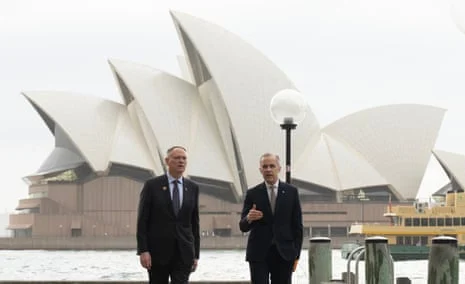
Israeli Foreign Minister Gideon Sa’ar joined the criticism, accusing the Spanish government of being on the "wrong side of history" and pandering to terrorist regimes. Meanwhile, Canadian Prime Minister Mark Carney, speaking from Sydney, called for a rapid de-escalation of hostilities. Carney characterized the conflict as a "failure of the international order" and urged all belligerents to respect international rules of engagement.
Humanitarian Crisis and Regional Destabilization
The human cost of the conflict is mounting rapidly. The Iranian Red Crescent Society reported that at least 787 people have been killed since Saturday, though human rights organizations like the Norway-based Hengaw suggest the actual death toll may exceed 1,500. One of the most devastating incidents involved a direct strike on a girls’ elementary school in Minab, southern Iran, which reportedly killed at least 168 people.
The conflict has also triggered a massive displacement crisis. In Lebanon, the United Nations estimates that 30,000 people have been forced from their homes following Israeli ground incursions and airstrikes targeting Hezbollah positions. Israeli Defense Minister Israel Katz confirmed that the IDF has been authorized to seize additional strategic areas in southern Lebanon to prevent rocket fire into northern Israel.
In Gaza, the war has led to a total siege. Israel has closed all border crossings indefinitely, halting the flow of food and essential supplies. Humanitarian groups, including World Central Kitchen, have warned that they will run out of food within days. Founder José Andrés stated that the organization is currently cooking one million meals daily but cannot sustain operations without consistent deliveries, threatening to plunge two million people into a fresh hunger crisis.
Economic Repercussions and Global Inflation Risks
The economic fallout of the US-Israel war with Iran is being felt globally as energy and commodity prices surge. Beyond the 40% spike in European gas prices, the conflict has interrupted the production of downstream products. QatarEnergy announced a halt in the production of urea, polymers, methanol, and aluminum following attacks on facilities in Ras Laffan and Mesaieed.

The disruption to the Strait of Hormuz has also impacted the prices of sugar, fertilizer, and soy, raising concerns about a prolonged inflationary period that could stifle economic recovery in Europe and Asia. Financial analysts warn that if the war continues for weeks, as President Trump has suggested it might, the ripple effects on global supply chains could be catastrophic.
To mitigate these risks, the U.S. State Department has issued a blanket warning for all American citizens to leave 14 Middle Eastern countries, including Bahrain, Egypt, Jordan, Kuwait, and the UAE. Tens of thousands of foreign nationals remain stranded in the region as major airlines cancel flights and regional airspace remains largely closed.
Casualties and the Path Forward
The Pentagon released the names of four U.S. Army Reserve soldiers killed Sunday in a drone strike at Port Shuaiba, Kuwait. The deceased were identified as Sgt. 1st Class Nicole Amor, 39; Sgt. Declan Coady, 20; Capt. Cody Khork, 35; and Sgt. 1st Class Noah Tietjens, 42. All were assigned to the 103rd Sustainment Command based in Des Moines, Iowa. These deaths underscore the widening geographic scope of the conflict, as Iranian-backed elements target U.S. personnel stationed outside the immediate combat zone.
International monitors are also closely watching Iran’s nuclear sites. The International Atomic Energy Agency (IAEA) confirmed that while the entrance buildings of the Natanz Fuel Enrichment Plant sustained damage in recent strikes, there have been no detected radiological consequences. However, IAEA Director General Rafael Grossi expressed "serious concern" regarding Tehran’s continued refusal to grant inspectors full access to its facilities.
As the IDF launches strikes on Iran in a new "broad wave" of operations, the strategic objectives of the campaign remain in flux. While Israeli Prime Minister Benjamin Netanyahu has stated that the war will not last for years, President Trump has outlined four key goals: destroying Iran’s missile capabilities, annihilating its navy, preventing it from obtaining nuclear weapons, and stopping the funding of regional proxies. With diplomacy at a standstill and military operations expanding, the region remains on the brink of a total systemic collapse.