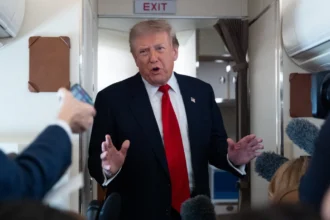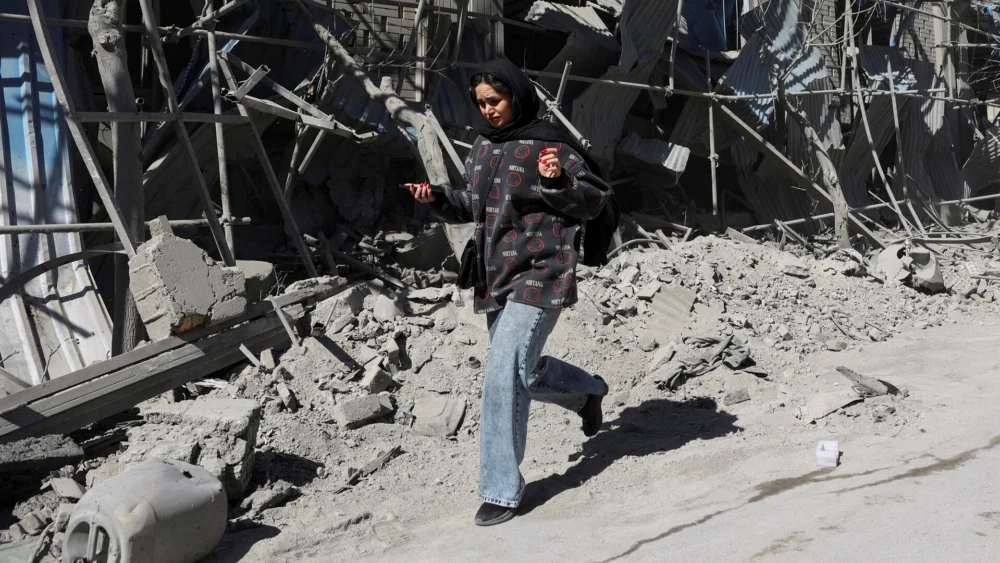
Washington D.C. – The United States officially confirmed that its recent military actions targeting Iran were not predicated on an "imminent threat," but rather on intelligence suggesting that Israel was on the verge of launching its own strikes against Iranian targets. This revelation has significantly reshaped the narrative surrounding the escalation, prompting a deeper examination of the Trump administration’s justifications for initiating military engagement and whether these rationales withstand scrutiny. The stated shift in rationale from direct, immediate danger to preemptive action based on an ally’s perceived intentions introduces new layers of complexity to the ongoing geopolitical tensions.
The administration’s initial pronouncements following the attacks emphasized an immediate and existential threat to American interests and personnel in the region. This framing was crucial in garnering domestic and international support for the military response, painting a picture of a necessary defensive posture against an aggressive adversary. However, the subsequent clarification that the U.S. acted to preempt an Israeli strike fundamentally alters the legal and strategic underpinnings of the intervention. This pivot raises critical questions about the reliability of intelligence, the decision-making process, and the extent to which U.S. foreign policy is being shaped by the strategic imperatives of its allies.
Examining the Shifting Justifications for US Actions Against Iran
The initial justification for the U.S. military operations against Iran revolved around the concept of an "imminent threat." This is a well-established legal and strategic doctrine, often invoked to legitimize preemptive or preventative military action. The administration asserted that intelligence indicated specific, actionable threats to U.S. forces and interests in the Middle East, necessitating a robust and immediate response. This narrative was widely disseminated through official channels, aiming to convey a sense of urgency and the absolute necessity of the military strikes.
However, the subsequent acknowledgment by U.S. officials that the attacks were, in part, a response to Israel’s perceived intentions to strike Iran introduces a significant divergence from the initial narrative. This new information suggests a more complex calculus, one where U.S. actions are not solely driven by direct threats to its own security, but also by a desire to manage regional escalations and support the strategic objectives of its key allies. This shift from a purely defensive posture to one that includes preempting an ally’s actions necessitates a re-evaluation of the overarching strategy and the criteria for military engagement.
Background: A History of Tensions and Escalation
The relationship between the United States and Iran has been fraught with tension for decades, marked by a complex history of diplomatic disputes, proxy conflicts, and periods of heightened confrontation. The current administration inherited a legacy of strained relations, which were further exacerbated by the U.S. withdrawal from the Joint Comprehensive Plan of Action (JCPOA), commonly known as the Iran nuclear deal, in 2018. This decision, accompanied by the reimposition of stringent economic sanctions, significantly heightened animosity and fueled Iran’s perception of being under siege.
Following the JCPOA withdrawal, Iran’s regional activities, including its support for various proxy groups and its ballistic missile program, became a focal point of U.S. concern. The Trump administration frequently cited these activities as destabilizing forces in the Middle East, contributing to a climate of insecurity. These concerns were often framed as direct threats, leading to a series of retaliatory actions and increased military posturing in the region. The cycle of actions and reactions created a volatile environment, where a miscalculation or a minor incident could potentially spiral into a larger conflict.
The Role of Intelligence in Preemptive Operations
The intelligence underpinning the U.S. justification for military actions is a critical, yet often opaque, element of the decision-making process. In cases of preemptive or preventative strikes, the quality and interpretation of intelligence are paramount. The administration’s claims of imminent threats were based on specific intelligence assessments, though the precise nature and details of this intelligence are rarely made public for national security reasons. This lack of transparency can fuel skepticism and lead to challenges in verifying the validity of the justifications presented.
The recent admission that U.S. actions were also influenced by Israel’s perceived plans to strike Iran introduces a new dimension to the intelligence narrative. It suggests that U.S. intelligence agencies were not only monitoring direct threats to American interests but also assessing the strategic intentions and capabilities of regional partners. This raises questions about the U.S. role in coordinating military responses with allies and the extent to which its own security calculus is influenced by the strategic priorities of others. The reliability of intelligence concerning an ally’s intentions is as crucial as intelligence concerning an adversary’s actions.
Timeline of Key Developments and Escalations
The period leading up to the recent U.S. military actions was marked by a series of escalating incidents and heightened rhetoric. Following the U.S. withdrawal from the JCPOA, Iran responded by gradually increasing its uranium enrichment levels and engaging in activities that were seen as provocative by regional adversaries and the U.S. itself. These actions included attacks on oil tankers in the Persian Gulf and the downing of a U.S. drone. Each incident was met with strong condemnations and increased U.S. military presence in the region.
The Trump administration, in turn, designated Iran’s Islamic Revolutionary Guard Corps (IRGC) as a foreign terrorist organization, a move that was unprecedented and significantly raised the stakes. This designation was accompanied by intensified sanctions aimed at crippling Iran’s economy and forcing it to change its behavior. The tit-for-tat escalations created a precarious situation, where the possibility of a direct military confrontation loomed large. The recent attacks, therefore, did not occur in a vacuum but were the culmination of a prolonged period of rising tensions and strategic maneuvering.
Analysis: The Strategic Implications of Preemption
The shift in justification from an "imminent threat" to preempting an ally’s strike has significant strategic implications. It suggests a U.S. foreign policy that is increasingly intertwined with the security concerns and strategic objectives of its allies, particularly Israel. While alliance cooperation is a cornerstone of U.S. foreign policy, acting preemptively based on an ally’s perceived intentions raises questions about U.S. autonomy and the potential for being drawn into conflicts that may not directly align with its primary national security interests.
This approach could also be interpreted as an attempt to maintain regional stability by managing the actions of its allies, thereby preventing a broader, uncontrolled escalation. However, it also carries the risk of alienating Iran further and potentially provoking a more assertive response. The long-term consequences of such a strategy are uncertain and could lead to a prolonged period of heightened tensions and instability in an already volatile region. The credibility of U.S. intelligence and its decision-making processes are also under scrutiny.
Broader Implications for Regional Security and International Law
The justification for military action, particularly when it shifts from direct self-defense to preempting an ally’s actions, has broader implications for international law and the norms governing the use of force. The principle of self-defense, as enshrined in Article 51 of the UN Charter, typically requires an armed attack or an imminent threat thereof. Acting to preempt an ally’s intended strike may fall into a gray area, potentially challenging established interpretations of international legal frameworks.
Furthermore, this approach could set a precedent for future U.S. military interventions, where the rationale for action becomes increasingly complex and potentially less transparent. It could also embolden other allies to expect similar preemptive actions from the U.S. in support of their own strategic objectives, potentially drawing the U.S. into a wider range of regional conflicts. The long-term impact on regional security dynamics and the global order remains a significant concern.
Public and Political Reactions to the Evolving Narrative
The evolving narrative surrounding the U.S. justification for its actions against Iran has elicited a range of reactions both domestically and internationally. Within the United States, political discourse has been divided, with critics questioning the administration’s transparency and the wisdom of its foreign policy decisions. Some lawmakers have called for greater congressional oversight and a clearer articulation of the strategic objectives driving these actions.
Internationally, the move has been met with a mixture of concern and skepticism. Allies and adversaries alike are closely watching the U.S. approach, seeking to understand the implications for regional stability and the future of international relations. The credibility of U.S. intelligence and its commitment to established international norms are under intense scrutiny. The impact on global oil markets and the broader economic implications of renewed tensions are also significant considerations for policymakers and the public.
Consequences and Next Steps in a Volatile Geopolitical Landscape
The ramifications of the U.S. military actions and the shifting justifications are likely to be far-reaching. Iran has condemned the attacks and has vowed to respond, raising concerns about the potential for further escalation. The economic sanctions imposed on Iran continue to exert pressure, but their effectiveness in achieving desired behavioral changes remains a subject of debate. The humanitarian impact of these sanctions on the Iranian population is also a growing concern.
Moving forward, the U.S. faces the challenge of navigating a complex geopolitical landscape with a clear and consistent strategy. The emphasis on intelligence-driven decision-making, coupled with a willingness to act preemptively based on allied intentions, requires careful consideration of the potential consequences. Diplomacy and de-escalation efforts will be crucial in preventing a wider conflict and finding a path toward greater regional stability. The international community will be closely observing how these dynamics unfold and the impact on global security.