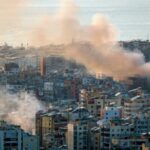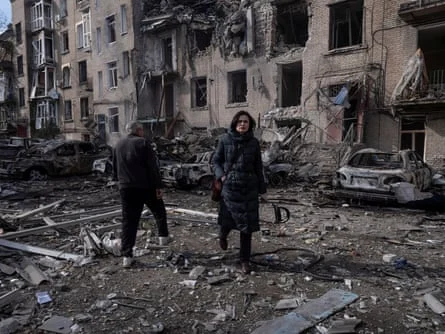
A widening energy crisis triggered by escalating hostilities across the Middle East is providing a critical financial cushion to the Kremlin’s military operations at a time when Western sanctions and falling prices had begun to deplete Russian reserves. The volatility in the Persian Gulf, characterized by direct military confrontations and threats to maritime corridors, has reversed a downward trend in Russian oil revenues, potentially extending Moscow’s ability to sustain its high-intensity campaign in Ukraine.
While the potential destabilization of the Iranian government represents a strategic loss for the Kremlin, the resulting surge in global energy prices is currently viewed by Moscow as a net economic gain. Analysts suggest that the disruption of Middle Eastern supply chains is forcing major global consumers to reconsider their dependence on Gulf crude, inadvertently driving demand back toward Russian barrels. This shift comes as a reprieve for a Russian economy that had recently seen its oil and gas revenues hit a five-year low.
The Impact of the Middle East Conflict on Russia’s War Machine
The resurgence of Brent crude prices, which jumped more than 7% in a single day to surpass the $80-a-barrel threshold, marks a significant turning point for the Russian treasury. This price action followed a series of drone and missile strikes on regional infrastructure and a subsequent halt to shipping through the Strait of Hormuz. For the Kremlin, every dollar added to the price of a barrel of oil translates directly into billions of rubles for the federal budget, much of which is earmarked for the production of armored vehicles, missiles, and personnel costs.
Sergey Vakulenko, a senior fellow at the Carnegie Russia Eurasia Center, noted that the effective locking up of nearly 20% of the global oil supply and a quarter of seaborne trade acts as a massive stimulus for Russian exports. Before the recent escalation, Moscow was forced to offer deep discounts on its Urals blend to attract buyers in Asia who were wary of secondary sanctions. The tightening of the global market removes much of that buyer leverage, allowing Russia to narrow the discount and increase its profit margins on every shipment.
The timing of this windfall is particularly significant given the internal economic pressures facing the Russian Federation. By early 2025, the Russian Ministry of Finance reported that energy revenues had reached their lowest point since 2020, leading to speculation that the "war machine" was beginning to flag under the weight of sustained combat and restricted market access. The Middle East conflict offers an economic lifeline that could potentially fund the invasion well into 2026 and beyond.
Strait of Hormuz Disruptions and Global Supply Volatility
The Strait of Hormuz serves as the world’s most important oil transit chokepoint, with millions of barrels passing through the narrow waterway daily. Recent Iranian military activity and the subsequent response from regional actors have created a "risk premium" that has not been seen in the markets since the early stages of the 2022 invasion of Ukraine. This instability has reached its highest level since mid-2024, and energy analysts predict that prices will continue to climb if the disruption lasts more than a few weeks.

For Russia, the closure or restriction of the Strait is a strategic advantage. While Middle Eastern producers like Saudi Arabia, Iraq, and the UAE struggle to get their product to market, Russian ports in the Baltic and Black Seas remain operational. This allows Moscow to position itself as a "reliable" alternative supplier, despite the ongoing sanctions regime imposed by the G7 and the European Union.
The shift in market dynamics is already visible in the behavior of commodity traders. Cargoes of Russian oil that had been idling in tankers, unable to find buyers due to price caps and shipping insurance restrictions, are suddenly seeing renewed interest. As supply from the Gulf diminishes, the "shadow fleet" of aging tankers used by Russia to bypass Western restrictions has become an essential component of the global energy architecture.
Strategic Realignments for India and China
The two largest importers of crude in the world, China and India, are currently navigating a complex geopolitical landscape as they attempt to secure their energy futures. Beijing has long pursued a policy of diversification, sourcing oil from Africa, the Middle East, and Russia. However, a prolonged conflict involving Iran—a key Chinese partner—could force a more permanent tilt toward Russian energy. If Iranian supplies are knocked offline by military strikes or internal collapse, Russia stands as the only producer capable of meeting China’s massive industrial demand.
India faces an even more complicated balancing act. Until recently, New Delhi had been a primary beneficiary of discounted Russian oil, but a recent trade agreement with the United States led India to reduce its Russian imports to the lowest level since the start of the war. Under pressure to diversify away from Moscow, Indian refineries had begun increasing their intake of Gulf crude.
The current Middle East conflict upends that strategy. If supplies from the Gulf become unreliable or prohibitively expensive due to insurance costs, Indian officials are expected to seek waivers or "flexibility" from Washington to resume large-scale purchases from Russia. This would effectively collapse the Western effort to starve the Russian war machine of Indian capital, further strengthening the Kremlin’s hand in international negotiations.
The Financial Boon for the Kremlin’s Budget
Inside Russia, the reaction to the Middle East escalation has been one of calculated satisfaction. State media figures and government officials have been vocal about the benefits of rising prices. Vladimir Solovyov, a prominent television host, told viewers that a strike on Iranian oilfields would leave Russia as one of the few remaining major producers, essentially granting Moscow a monopoly over certain market segments.
The Russian sovereign wealth fund, headed by Kirill Dmitriev, has already signaled expectations for oil to exceed $100 per barrel in the near term. Such a price point would not only stabilize the Russian ruble but would also provide the surplus needed to overcome the "signs of strain" that Western intelligence agencies had previously identified in the Russian military-industrial complex.
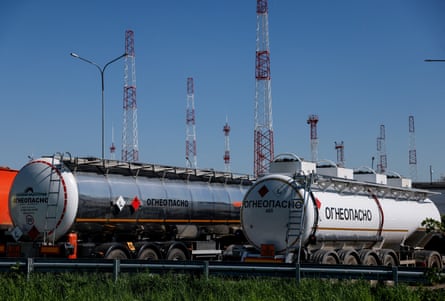
Beyond oil, the potential for a global gas shock is also looming. If Qatari exports of Liquefied Natural Gas (LNG) are restricted by the conflict, a massive supply gap will open in the European and Asian markets. While Russian gas infrastructure is less flexible than its oil pipelines, companies like Gazprom and Novatek are already seeing their stock prices rise in anticipation of higher global prices and potential "emergency" sales to desperate buyers.
Military Implications for the Frontlines in Ukraine
The economic lifeline provided by the Middle East conflict has immediate and dire consequences for the defense of Ukraine. President Volodymyr Zelenskyy has expressed public concern that the escalation in the Middle East is distracting Western allies and draining the supply of critical munitions. Specifically, the demand for US-made Patriot missile systems and other air defense assets has spiked in the Middle East, potentially diverting shipments that were originally intended for Kyiv.
The Ukrainian leadership had been banking on the idea that 2025 would be the year Russia’s economic constraints forced a slowdown in the pace of its missile strikes and ground offensives. If the Kremlin can successfully leverage the Middle East crisis to refill its coffers, the prospect of a negotiated peace on terms favorable to Ukraine becomes increasingly remote.
Furthermore, the "wait and see" approach adopted by Vladimir Putin suggests a strategic patience. By avoiding direct criticism of U.S. actions in the Middle East, Putin is attempting to keep the door open for future negotiations with the Trump administration, while simultaneously reaping the rewards of the chaos that U.S. policy in the region has partially catalyzed.
European Energy Policy at a Crossroads
In Europe, the Middle East crisis is reopening old wounds regarding energy dependency. The European Union has spent the last two years attempting to "liberate" itself from Russian fossil fuels, a policy that has been costly and politically divisive. Countries like Hungary and Slovakia, which have remained friendly toward Moscow, are now using the Middle East instability to argue that a total ban on Russian gas is a threat to European national security.
Norway’s energy minister, Terje Aasland, recently noted that the events of the past several days have made the EU’s transition away from Russian energy significantly more difficult. The debate over whether to continue sanctioning Russian energy or to prioritize price stability for European consumers is expected to intensify as winter approaches. If the Middle East conflict remains unresolved, the political pressure on European leaders to ease restrictions on Russian imports may become overwhelming.
The convergence of these factors—rising oil prices, diverted military resources, and fractured Western alliances—creates a perfect storm that favors the Kremlin. As long as the Middle East remains in turmoil, the Russian war machine will likely find the fuel it needs to continue its operations, undermining years of Western economic pressure and shifting the momentum of the global geopolitical order.