The United States military announced on Wednesday that its ongoing air campaign against Iran has surpassed the intensity of the 2003 "shock and awe" invasion of Iraq, with nearly 2,000 targets struck in the first five days of the conflict. The Department of Defense confirmed that the scale of the offensive represents the largest deployment of regional firepower in a generation, aimed at neutralizing Iranian military infrastructure and maritime capabilities. President Donald Trump, speaking from the White House, signaled a further escalation in maritime strategy, suggesting the U.S. Navy may begin escorting commercial oil tankers through the Strait of Hormuz to stabilize global energy markets.
As the conflict enters its fifth day, the Pentagon reported that the initial 24 hours of the campaign saw a strike volume nearly double that of the opening day of the Iraq War. Admiral Brad Cooper of U.S. Central Command stated that the coalition has successfully targeted launch sites, air defense systems, and command-and-control hubs across the Iranian mainland. While the Admiral did not provide a specific breakdown between U.S. and Israeli sorties, he emphasized that the combined effort has effectively grounded the Iranian air force and crippled its naval presence in the Persian Gulf.
US Says Nearly 2,000 Targets Hit in Iran War as Air Campaign Intensifies
The air campaign has focused heavily on the Iranian Revolutionary Guard Corps (IRGC) assets and strategic coastal installations. According to U.S. Central Command, at least 17 Iranian naval vessels have been destroyed, leaving no Iranian military ships currently underway in the Arabian Gulf, the Gulf of Oman, or the Strait of Hormuz. This maritime dominance is seen by military analysts as a prerequisite for the broader goal of ensuring the flow of global commerce, which has been severely restricted since hostilities began.
The Pentagon’s report of 2,000 targets hit reflects a high-tempo operation utilizing precision-guided munitions launched from carrier-based aircraft, long-range bombers, and regional ground installations. Military officials noted that the "broad wave" of strikes is intended to systematically dismantle Iran’s ability to retaliate or disrupt international shipping lanes. Despite the volume of the strikes, the Iranian government has maintained a defiant stance, though its operational capacity appears significantly diminished.
Trump Says Navy May Escort Tankers Through Strait of Hormuz to Stabilize Markets
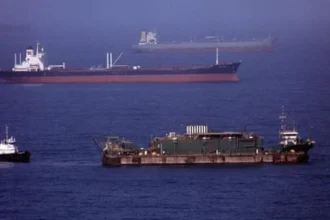
In a move aimed at curbing a global energy crisis, President Trump announced on Tuesday that he is prepared to authorize U.S. Navy escorts for oil tankers transiting the Strait of Hormuz. The announcement comes as global oil and gas prices have reached historic highs following the total cessation of energy exports from the region. Tehran has reportedly targeted several merchant vessels and energy facilities in the opening days of the war, leading to a near-total shutdown of navigation in the Gulf.
"We will do what is necessary to protect the global economy," President Trump told reporters, emphasizing that the U.S. Navy’s presence in the Strait of Hormuz is now a matter of national and international security. The proposal for naval escorts is one of the most aggressive steps taken by the administration to date, reflecting the urgency of the economic situation. Production stoppages in Qatar, Iraq, and Kuwait have exacerbated the supply crunch, leading to fears of a prolonged global recession.
Expansion of the Conflict into Lebanon and the Beirut Suburbs
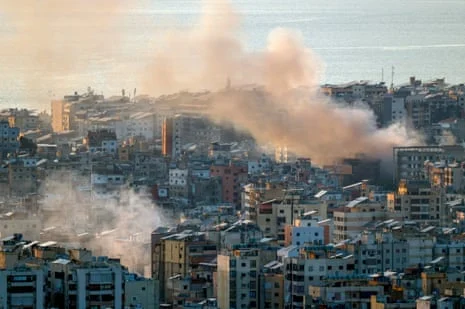
The regional dimensions of the war expanded significantly on Monday as Hezbollah, the Tehran-aligned militant group, launched a series of drone and rocket attacks against northern Israel. In response, the Israeli Air Force has conducted extensive strikes across Lebanon, targeting both Hezbollah strongholds and areas outside the group’s traditional zones of influence. On Wednesday morning, Lebanese state media reported an Israeli airstrike on a hotel in the Hazmieh suburb of Beirut, marking a further encroachment into the capital’s metropolitan area.
The Lebanese Health Ministry confirmed that at least six people were killed and eight others wounded in recent strikes on the towns of Aramoun and Saadiyat, located south of Beirut. These towns are generally considered to be outside the primary Hezbollah corridors, suggesting a widening of the target list by the Israeli Defense Forces (IDF). The United Nations has reported that more than 30,000 people have already been displaced within Lebanon as families flee the aerial bombardment in the south and the outskirts of the capital.

Global Market Turmoil and the Economic Fallout of the Iran War
The financial consequences of the conflict have been felt immediately across global markets. In Tokyo, the Nikkei 225 index continued its downward trajectory on Wednesday, falling 1.7% in early trading. This follows even sharper losses in Seoul, where the Kospi index plummeted over 7% on Tuesday and dropped an additional 3.1% at Wednesday’s open. Investors are reacting to the total halt of Middle Eastern energy exports, which has disrupted supply chains and increased manufacturing costs worldwide.
While Wall Street appeared to stabilize slightly in pre-market trading, analysts warn that the potential for a long-term closure of the Strait of Hormuz remains the primary risk factor for the global economy. The "tanker war" scenario, where commercial vessels are routinely targeted, has forced insurance premiums for shipping to skyrocket, effectively grounding much of the world’s maritime oil transport in the region. The administration’s plan for naval escorts is seen as an attempt to restore investor confidence, though the logistical challenges of such an operation are immense.
Diplomatic Tensions and the Role of the United Kingdom
The conflict has also sparked friction between the United States and its traditional allies. President Trump expressed public dissatisfaction with British Prime Minister Keir Starmer, citing a lack of direct military participation from the United Kingdom. While the U.K. has permitted U.S. forces to utilize British sovereign bases for refueling and logistical support, it has stopped short of joining the active combat mission against Iran.
"I’m not happy with the U.K.," President Trump remarked, criticizing the time it took for the U.S. military to secure landing rights for certain operations. In a sharp rhetorical jab, the President compared Starmer unfavorably to Winston Churchill, highlighting a growing rift in the special relationship. Meanwhile, Canadian Prime Minister Mark Carney has called for an immediate de-escalation of the violence, urging all involved parties to adhere to international rules of engagement and seek a diplomatic resolution to the crisis.
Humanitarian Crisis and the Toll on Civilian Populations
The human cost of the five-day conflict has been staggering. The Iranian Red Crescent Society reported on Wednesday that at least 787 people have been killed within Iran since the U.S. and Israeli strikes began. The most significant mass casualty event occurred on Saturday in the city of Minab, where a direct strike on a girls’ elementary school reportedly killed as many as 168 people. The incident has drawn international condemnation and fueled anti-war sentiment in several Western capitals.
In addition to the casualties in Iran and Lebanon, a massive evacuation effort is underway for foreign nationals caught in the crossfire. The British Foreign Office has organized chartered flights from Muscat, Oman, to repatriate British citizens and their families. Approximately 130,000 Britons have registered with the government for evacuation. Officials have urged those in the region to remain in place until contacted, as the logistical burden on regional airports like Muscat International remains severe.
Strategic Outlook and the Potential for Further Escalation
As the U.S. military continues to hit nearly 2,000 targets across Iran, the strategic focus is shifting toward the long-term stabilization of the Persian Gulf. The destruction of the Iranian navy and the neutralization of coastal missile batteries are seen as the first steps toward reopening the Strait of Hormuz. However, the potential for a prolonged insurgency or a deeper quagmire in Lebanon remains a significant concern for military planners.
President Trump has dismissed suggestions that the United States was pressured into the war by Israeli interests, claiming instead that his administration may have "forced their hand" to address the Iranian threat decisively. This assertive stance suggests that the U.S. is prepared for a sustained military engagement if Tehran does not move toward a total surrender of its strategic capabilities. With global markets in a state of high volatility and the humanitarian toll rising, the coming days will be critical in determining whether the conflict can be contained or if it will evolve into a broader regional conflagration.