
The United States Senate failed for the fourth time this year to pass a critical appropriations bill to fund the Department of Homeland Security, leaving the agency in a state of partial shutdown as it approaches the 30-day mark. In a 51-46 vote that largely followed party lines, lawmakers remained unable to bridge a bitter divide over immigration enforcement guardrails, a deadlock that continues to leave thousands of federal employees without pay. The failure to secure the 60 votes necessary to advance the legislation underscores a deepening partisan schism within the Capitol, even as the nation grapples with an expanding military conflict abroad and domestic security threats.
Senator John Fetterman of Pennsylvania was the sole Democrat to break ranks, joining Republicans in support of the funding bill that would have sustained the department through September. The impasse centers on Republican demands for more aggressive federal immigration enforcement and Democratic insistence on stronger oversight and humanitarian protections. As the Department of Homeland Security funding remains stalled, the effects are becoming increasingly visible at the nation’s borders and transportation hubs, where essential personnel are required to work without guaranteed compensation.
The human cost of the legislative paralysis was evident Thursday at major transit points across the country. At Miami International Airport, security checkpoint wait times doubled as Transportation Security Administration (TSA) agents faced the certainty of a missed paycheck. While many agents reported for duty, the atmosphere was one of growing resentment. Federal officials warned that a prolonged shutdown could lead to increased "call-outs" by personnel, further straining a national security infrastructure already stretched thin by the administration’s multi-front policy agenda.
The Legislative Impasse and the DHS Funding Failure
The ongoing failure to pass homeland security funding is a hallmark of the current congressional session, which has been defined by high-stakes brinkmanship. Republican leadership has tied the Department of Homeland Security funding to broader shifts in border policy, while Democrats argue that the proposed guardrails on the Immigration and Customs Enforcement (ICE) and Customs and Border Protection (CBP) are necessary to prevent civil rights abuses. This latest defeat marks a significant blow to efforts to stabilize the department following the ouster of former Secretary Kristi Noem just 13 months into her tenure.

While the Senate remains deadlocked on security spending, it achieved a rare moment of consensus on domestic policy earlier in the day. Lawmakers overwhelmingly passed the 21st Century ROAD to Housing Act in a bipartisan 89-10 vote. The legislation, co-authored by Democratic Senator Elizabeth Warren and Republican Senator Tim Scott, aims to boost the national housing supply and lower costs through federal incentives and a ban on large institutional investors purchasing single-family homes.
However, the success of the housing bill serves as a stark contrast to the dysfunction surrounding the Department of Homeland Security. The housing legislation now moves to the House of Representatives, where it faces an uncertain future. Some House Republicans have signaled opposition to provisions regarding rent control and a temporary rather than permanent ban on the Federal Reserve issuing a digital currency. The discrepancy between the two chambers suggests that even bipartisan victories in the Senate may struggle to cross the finish line in a divided Congress.
Operation Epic Fury: The Financial and Human Toll of War
The domestic funding crisis is unfolding against the backdrop of "Operation Epic Fury," the U.S.-led military campaign in Iran. Pentagon officials informed the Senate Armed Services Committee this week that the cost of the conflict exceeded $11.3 billion in its first six days alone. This figure is expected to rise sharply as the military continues to calculate the expenses of hardware deployment and personnel mobilization. Despite President Donald Trump’s assertions that the U.S. possesses a "virtually unlimited supply" of ammunition, the White House is expected to request additional emergency funding from a Congress that is already struggling to pass standard agency budgets.
The war has also drawn intense scrutiny following reports of significant civilian casualties. A preliminary Pentagon investigation recently indicated that a U.S. Tomahawk missile strike was responsible for the bombing of the Shajareh Tayyebeh primary school near Minab, which killed an estimated 175 people, most of them schoolgirls between the ages of 7 and 12. The incident has sparked outrage among Congressional Democrats, who are demanding immediate accountability from Defense Secretary Pete Hegseth.
Senators Elizabeth Warren and Chris Van Hollen released a joint statement Thursday calling for Hegseth’s immediate termination. They accused the Defense Secretary of dismantling civilian harm mitigation systems and ignoring established rules of engagement. House Democrats have also launched an inquiry into the role of artificial intelligence in selecting targets and making legal determinations during the operation. The administration, meanwhile, has offered conflicting messages regarding the war’s timeline, with the President claiming a "speedy victory" while simultaneously stating that U.S. forces will remain to "finish the job."

Global Energy Markets and the Strategic Pivot on Russian Oil
The conflict in the Middle East has sent shockwaves through global energy markets, particularly after Iran responded to U.S.-Israeli strikes by closing the Strait of Hormuz. With 20% of the world’s oil supply normally passing through the waterway, prices spiked above $100 a barrel this week before settling near $98. In response, the U.S. Treasury Department issued a surprise license on Thursday temporarily suspending sanctions on the sale of Russian crude oil and petroleum products through April 11.
Treasury Secretary Scott Bessent characterized the move as a necessary step to promote global energy stability and keep prices low for American consumers. The decision represents a significant shift in policy, as Russian oil had been heavily sanctioned following the invasion of Ukraine. The administration is also moving forward with a plan to release 172 million barrels of oil from the Strategic Petroleum Reserve.
Energy Secretary Chris Wright noted that while the U.S. Navy cannot currently escort commercial vessels through the Strait of Hormuz, such operations are "quite likely" to begin by the end of the month once the U.S. achieves greater control of the airspace. The administration’s efforts to manage fuel costs come as the national average for a gallon of gasoline has climbed to $3.59, up from $2.94 just one month ago. President Trump has sought to frame the rising oil prices as a windfall for the U.S. as a major producer, though he emphasized that his primary focus remains the "destruction of the Iranian regime."
Domestic Violence and National Security Threats
As the federal government remains partially shuttered, a series of violent incidents on U.S. soil has heightened national security concerns. In Michigan, the FBI is investigating a targeted attack on the Temple Israel synagogue in West Bloomfield. Authorities report that a suspect rammed a vehicle into the building before being killed in an exchange of gunfire with security personnel. FBI Special Agent Jennifer Runyan confirmed the bureau is treating the incident as a "targeted act of violence against the Jewish community."
Simultaneously, a fatal shooting at Old Dominion University in Virginia has been classified as an act of terrorism. The suspect, identified as Mohamed Jalloh, was a former Army National Guard member who had previously pleaded guilty to attempting to support the Islamic State. Jalloh was subdued and killed by students in the university’s ROTC program after opening fire in a classroom. FBI Director Kash Patel praised the "extreme bravery" of the students while confirming that the bureau is investigating the shooter’s motives and potential radicalization.

These events have added pressure on the administration to provide clear leadership on domestic security. During a Women’s History Month event at the White House, President Trump stated he had been "fully briefed" on the Michigan attack, calling it a "terrible thing." However, he quickly pivoted to discussing the war in Iran, claiming the situation was moving "very rapidly" and that the U.S. was doing "what has to be done" to combat terror abroad.
Political Realignment and the Future of the Filibuster
The legislative gridlock in Washington is fueling a debate over the very rules that govern the Senate. Republican Majority Leader John Thune is facing intense pressure from the White House and members of his own party to alter filibuster rules to pass the "Save America Act." The bill would implement sweeping changes to national election laws, including mandatory proof of citizenship for voter registration and strict voter ID requirements.
President Trump has signaled that he will not sign any other legislation until the Save America Act reaches his desk, effectively daring Thune to "be a leader" and override Democratic opposition. Senators John Cornyn and Ron Johnson have suggested various methods to bypass the 60-vote threshold, including a return to the "talking filibuster" or a test vote to force Democrats on the record.
The political landscape is also shifting as veteran lawmakers look toward the future. Representative Jim Clyburn, the 85-year-old South Carolina Democrat, announced Thursday that he will seek re-election, positioning him to remain one of the oldest members of Congress. His announcement comes as other senior figures, including former Speaker Nancy Pelosi, prepare to step down, signaling a period of transition within the Democratic caucus even as the party fights to maintain its influence in a Republican-led Washington.
Conclusion of a Month of Uncertainty
As the shutdown of the Department of Homeland Security nears a full month, the lack of a funding agreement remains a glaring symbol of the nation’s political divide. The department responsible for border security, aviation safety, and counter-terrorism is operating with a significant portion of its workforce in financial limbo, just as the U.S. enters a period of heightened international conflict and domestic instability.
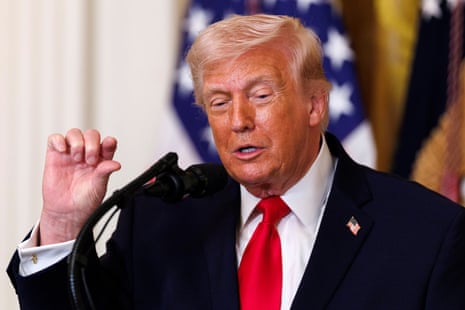
The refusal of the Senate to pass homeland security funding reflects a broader struggle over the direction of American policy. With the administration pursuing an aggressive agenda of mass deportations, foreign war, and election reform, the legislative branch remains the primary battlefield for these competing visions. Without a breakthrough in the coming days, the consequences for federal employees and the public they serve are likely to intensify, testing the resilience of the nation’s infrastructure and the patience of its citizens.