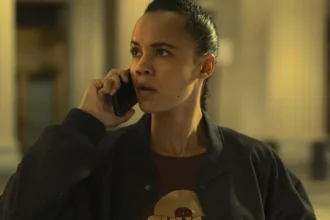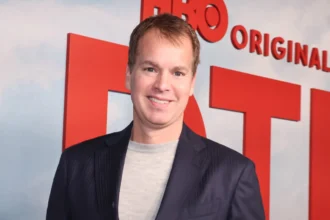
Apple TV+ has premiered "Margo’s Got Money Troubles," a new dramedy that critics are hailing for its captivating performances by Elle Fanning and Michelle Pfeiffer, and its uniquely offbeat yet deeply grounded exploration of modern family dynamics and financial hardship. The series, based on Rufi Thorpe’s novel, introduces viewers to a world that initially appears aggressively quirky but quickly reveals itself as a poignant and realistic portrayal of contemporary challenges.
Background: A Creator’s Signature Touch and Novel Origins
The series is spearheaded by Emmy-winning writer-producer David E. Kelley, renowned for his distinct storytelling voice and a career spanning iconic shows like "Ally McBeal," "The Practice," "Boston Legal," and more recently, "Big Little Lies." Kelley’s projects often feature complex female characters navigating intricate personal and professional lives, frequently set against a backdrop of legal or societal scrutiny. "Margo’s Got Money Troubles" continues this tradition, delving into the unconventional life of its titular protagonist.
The narrative draws directly from Rufi Thorpe’s acclaimed novel, which earned praise for its raw honesty and unflinching look at economic precarity, single motherhood, and the complexities of familial relationships. The adaptation for Apple TV+ signifies the platform’s continued investment in prestige dramas and unique, character-driven narratives that push cultural boundaries and explore relevant social issues. The show’s premiere at the SXSW Film Festival positioned it as a significant entry in this year’s television landscape.
Plot Overview: From Fanciful Flights to Harsh Realities
At first glance, "Margo’s Got Money Troubles" might seem like a venture into an eccentric, almost fantastical realm. The series opens with the whimsical, sci-fi-infused narration from Margo (Elle Fanning) herself, describing "impossible possibilities" and a desire to "avoid reality by rewriting it." This perspective is reinforced by her penchant for creating elaborate sci-fi videos and the colorful job descriptions of her ensemble cast: Michelle Pfeiffer as Shyanne, a former Hooters waitress; Nick Offerman as Jinx, an ex-pro wrestler; and a trio of OnlyFans models. This initial presentation suggests a leaning toward the aggressively quirky, where characters are adorably odd but potentially detached from real-world stakes.
However, the series quickly pivots, grounding its narrative in the stark realities of Margo’s life. During her freshman year at a community college, Margo embarks on an affair with her English professor, Mark (Michael Angarano). The relationship leads to an unplanned pregnancy, and Mark subsequently abandons her. Faced with the daunting prospect of raising her son, Bodhi, alone and unable to continue her education or maintain a steady job, Margo finds herself in a desperate financial situation. This predicament is particularly heartbreaking for her mother, Shyanne, who herself became a young, single, and impoverished mother, and had hoped for a brighter future for her daughter.
The Unconventional Family Unit Emerges
Salvation arrives from unexpected corners, forming an unconventional yet fiercely loyal family unit. Margo’s semi-estranged father, Jinx, fresh out of rehab and in need of a place to stay, suddenly appears on her doorstep. Simultaneously, Margo makes the pivotal decision to open an OnlyFans account. With Jinx and a shy young cosplayer roommate named Susie (Thaddea Graham) helping to care for Bodhi, Margo is able to generate income from home.
This newly formed household, comprising a disparate collection of individuals, rallies around Margo and her son. The family dynamics are further complicated by the presence of Kenny (Greg Kinnear), Shyanne’s "obliviously square" fiancé, who offers a contrast to the family’s more bohemian sensibilities. Together, they navigate the challenges of cohabitation, co-parenting, and finding stability amidst chaos.
Exploring OnlyFans and Creative Expression
Margo’s journey on OnlyFans is central to the narrative. Initially, her work is text-based, offering humorous "Pokémon dick comparisons" for tips. This gradually expands into saucier photos and, eventually, elaborate video productions. Margo consistently insists on the artistic merit of her content, viewing it less as pornography and more as a form of creative expression. The show largely supports this perspective, pushing back against characters who label her work as disreputable or degrading.
"Margo’s Got Money Troubles" highlights the collaborative and whimsical aspects of Margo’s digital labor, showing her spinning increasingly elaborate sci-fi plots that she shoots with the help of Susie, fellow models KC (Rico Nasty) and Rose (Lindsey Normington), and even Jinx for the family-friendly segments. While the series celebrates Margo’s satisfaction and creative agency, it also subtly acknowledges the complexities of her chosen path, particularly through Rose’s observation of Margo’s "internalized whorephobia," suggesting the show itself might, at times, downplay the sexual aspects to emphasize the artistic.
Performances That Anchor the Narrative
The critical consensus firmly highlights the strength of the ensemble cast, particularly Elle Fanning and Michelle Pfeiffer. Fanning is praised for her winsome portrayal of Margo, embodying a heroine who maintains a spark of joy and resilience despite facing a relentless barrage of dirty diapers, unpaid bills, and legal woes. Her performance grounds the character, preventing Margo from becoming a mere caricature of a flighty fabulist.
Michelle Pfeiffer delivers a deeply nuanced performance as Shyanne. Clad in memorable leopard print and faux-fur, Shyanne is a vibrant and outwardly boisterous personality. However, Pfeiffer injects the character with profound emotional depth, conveying a lifetime of experience and feeling through subtle gestures, such as the way she watches Margo during her baby shower. Nick Offerman, as Jinx, balances humor with pathos. His amusing explanations of wrestling moves or the plot of "I, Claudius" to an uncomprehending Bodhi are endearing, but Offerman truly excels in portraying the deep sadness etched into the character’s face, a testament to Jinx’s past struggles.
Supporting performances further enrich the tapestry of the show. Greg Kinnear provides comic relief as Kenny, while Thaddea Graham, despite her likable presence, plays a character that critics suggest could have been more fully developed. Michael Angarano’s portrayal of the abandoning professor, Mark, sets the stage for much of Margo’s struggle. Later, Nicole Kidman makes a notable appearance as a lawyer named Linda, offering a "fun change of pace" from her more dramatic roles by playing a "well-adjusted, middle-class white lady." Marcia Gay Harden also delivers a chilling performance as Mark’s "icily patrician" mother, whose attempts to cover up Bodhi’s existence with an NDA underscore the class divide and societal judgment Margo faces.
Broader Implications: Redefining Family and Success
"Margo’s Got Money Troubles" delves into significant cultural conversations, challenging traditional notions of family and success. The show posits that strength and love can be forged in the most unexpected and unconventional of bonds. It actively critiques societal judgments, particularly from Mark and his mother, who attempt to discredit Margo and her circle as unreliable, deviant, and strange.
The series defiantly counters these accusations. While acknowledging that Margo’s clan might indeed be "a little kooky"—bonding over choreographing and constructing costumes for a serialized OnlyFans series, and navigating a plot involving broken jaws, broken hands, and restraining orders—it asserts that this uniqueness does not diminish their worth or their capacity for genuine connection. The show offers a poignant commentary on economic precarity, the evolving landscape of digital labor, and the resilience required to forge a new path in the face of adversity. It suggests that a loving, albeit messy, home can be built on foundations far removed from conventional expectations.
Critical Reception and Audience Impact
The series has garnered widespread praise for its warmth, endearing characters, and well-executed performances. Critics noted its ability to appreciate the characters’ offbeat qualities without reducing them to mere oddities, and to empathize with their struggles without resorting to pity. This nuanced approach contributes to its appeal as a thoughtful dramedy that resonates with modern audiences.
"Margo’s Got Money Troubles" is poised to spark important discussions about modern family structures, the economic pressures driving individuals to unconventional forms of labor, and the societal perceptions surrounding sex work. Its presence on Apple TV+ further solidifies the platform’s reputation for delivering high-quality, character-driven narratives that tackle complex social themes with both humor and heart. The show’s eight approximately 40-minute episodes were largely felt to be an appropriate length for the story it tells, though many critics expressed a desire for more time with the "crew" due to the genuine pleasure of their company.
Conclusion: A Memorable, Grounded Dramedy
Ultimately, "Margo’s Got Money Troubles" stands as a memorable and grounded dramedy that navigates the space between whimsical fantasy and harsh reality with remarkable grace. It portrays an unorthodox clan whose good intentions are often entangled with messy consequences, yet whose bonds are strengthened by their shared experiences. The show’s ability to depict the universal patterns of mother-daughter relationships—bonding, fighting, and making up—alongside wistful reminiscences of past loves, grounds its more unusual elements in relatable human experience. Despite its initial appearance as an aggressively quirky family drama, the series concludes by affirming that even the strangest corners of Fullerton can feel like home, populated by individuals who, despite their larger-than-life personas, are undeniably real.