Global energy markets experienced a violent upheaval on Thursday as an escalating military conflict in the Middle East targeted critical infrastructure, sending shockwaves through international financial exchanges. Wholesale natural gas prices in the United Kingdom skyrocketed by more than 25%, while Brent crude oil surged toward $117 a barrel, marking some of the most significant single-day price movements since the early days of the 2022 invasion of Ukraine. The volatility comes as traders digest news of direct attacks on the world’s largest gas fields and processing facilities, raising fears of a protracted energy supply crunch that could stifle global economic growth.
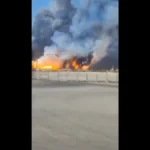
The immediate catalyst for the market panic was a series of retaliatory strikes involving Israel, Iran, and Qatar. On Wednesday, an attack on Qatar’s Ras Laffan Industrial City caused confirmed damage to the Pearl GTL (gas-to-liquids) facility, a cornerstone of global energy production. Shell, which holds a 100% interest in the project, confirmed that while a resulting fire was quickly extinguished and no injuries were reported, the facility remains in a "safe state" as engineers assess the structural integrity of the site. The strike was reportedly launched by Iranian forces in retaliation for an earlier Israeli operation targeting Iran’s South Pars gas field, the largest of its kind in the world.
Gas Prices Surge 25% and Oil Jumps 6% as Middle East Conflict ‘Spooks the Markets’
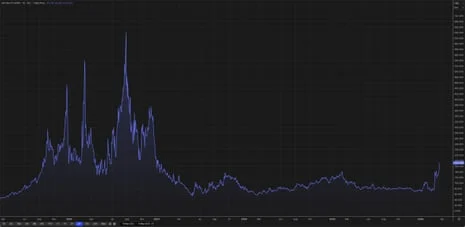
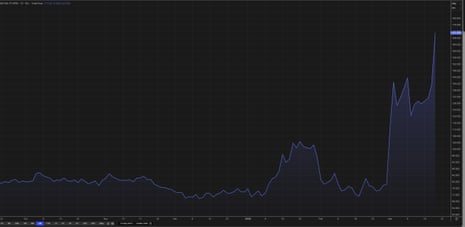
The financial repercussions were instantaneous as European trading desks opened. The UK month-ahead wholesale gas price jumped 25.5% to 175p per therm, a level not seen since August 2022. On the continent, the Dutch front-month wholesale gas price—the benchmark for European energy—soared by 31% to €71.7 per megawatt-hour. These spikes represent a doubling of gas prices since late February, threatening to derail recent progress made in cooling global inflation.
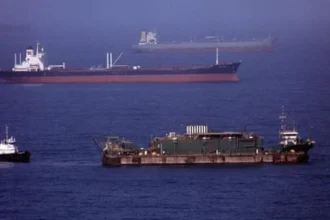
Oil markets followed a similar trajectory. Brent crude, the international benchmark, rose 5.9% in early trading before accelerating to an 8.8% gain, reaching $116.85 a barrel. Market analysts noted that the price is now within striking distance of the three-and-a-half-year high of $119.50 set earlier this month. The rapid appreciation in crude is being driven by what experts call a "risk premium" as the threat of a wider regional war in the Middle East looms over the Strait of Hormuz, a vital chokepoint for global oil transit.
Kathleen Brooks, research director at XTB, noted that the energy sector is currently the primary driver of global risk sentiment. "The escalation in the conflict is spooking the market, and futures markets are predicting hefty losses for stocks as risk sentiment sours," Brooks said. "Oil is driving the bus in this market, and where it goes, risk sentiment will follow."
Geopolitical Escalation and the Threat to Global Infrastructure
The targeting of Ras Laffan has specifically alarmed industrial experts due to the site’s systemic importance to the global economy. Beyond its role in liquefied natural gas (LNG) production, the facility is a primary source of the world’s helium supply and other refined gas products. Ed Conway, a prominent economic commentator, warned that damage to such a critical node could have repercussions that last for years rather than months. The vulnerability of these sites has shifted the conflict from a localized military engagement to a full-scale energy war.

In the United States, the political response has been swift and aggressive. Former President Donald Trump issued a public warning to Tehran, threatening to "massively blow up" the entirety of Iran’s South Pars gas field if Iranian forces continue to target Qatari infrastructure. The rhetoric has added a layer of geopolitical uncertainty, as traders weigh the possibility of a direct U.S. intervention or further sanctions that could permanently remove Iranian and regional supply from the global balance sheet.
Central Banks Paralyzed by Inflationary Energy Shocks
The sudden spike in energy costs has created a profound dilemma for the world’s most powerful central bankers. Prior to this week’s escalation, many economists expected a synchronized cycle of interest rate cuts to begin this spring. However, the prospect of a renewed inflation surge driven by $120 oil and record-high gas prices has forced a dramatic rethink.
The Bank of England (BoE) is widely expected to leave interest rates on hold at 3.75% during its meeting today, a sharp reversal from just weeks ago when money markets priced in an 80% chance of a rate cut. Market indicators now suggest a 97% probability that the BoE will maintain current levels to guard against the inflationary "second-round effects" of the energy shock. Ajith Nair, CIO of Isio Investment Management, explained that the rise in oil and gas prices has materially shifted the outlook for fixed-income markets, with government bond yields rising as investors pare back expectations for monetary easing.
Other central banks are following a similar "wait and see" approach. The Swiss National Bank (SNB) kept its policy rate unchanged at 0% today, explicitly warning that the Middle East crisis would likely drive inflation higher in the coming quarters. The SNB also signaled its readiness to intervene in foreign exchange markets to prevent an "excessive appreciation" of the Swiss franc, which often acts as a safe-haven currency during times of geopolitical strife. Similarly, Sweden’s Riksbank held its rate at 1.75%, citing the "dramatic" international developments as a reason for extreme forecasting uncertainty.
Corporate Fallout and the Energy Sector’s Response
The crisis is forcing major energy corporations to accelerate restructuring plans and adjust production targets. BP, the British energy giant, reported a busy morning amid the price surge, though for reasons beyond just market volatility. The company announced the sale of its Gelsenkirchen refinery in Germany to the Klesch Group as part of a broader effort to simplify its portfolio. BP also raised its cost-reduction target, aiming for up to $7.5 billion in structural savings by 2027.
Despite the broader market downturn, energy stocks like BP were among the few gainers on the FTSE 100, rising 1.6% as higher crude prices improved their profit outlook. However, for smaller players, the security environment is becoming untenable. Gulf Keystone Petroleum, a producer focused on the Kurdistan region of Iraq, suspended its financial guidance today. The company cited a "deterioration of the regional security environment" and has kept production at its Shaikan field halted since late February.
The broader equity markets reflect a deep sense of unease. The FTSE 100 tumbled 1.6% in early trading, shedding 162 points to sit at 10,142. Selling was widespread, hitting the banking and mining sectors particularly hard as investors fled to safer assets like gold and the U.S. dollar. Susannah Streeter, chief investment strategist at Wealth Club, remarked that "downbeat sentiment is spreading fast" as the prospect of a drawn-out conflict becomes the baseline scenario for many portfolios.
Impact on Households and the Labor Market
For the general public, the most immediate concern is the inevitable rise in the cost of living. Analysts estimate that if gas prices remain at these elevated levels, household energy bills could rise by an average of £160 as early as this summer. This potential increase comes at a time when the labor market is showing signs of significant strain.
New data from the Office for National Statistics (ONS) revealed that UK wage growth has slowed to a five-year low. Average pay, excluding bonuses, rose by 3.8% in the three months to January, down from 4.1% in the previous period. When adjusted for inflation, real regular pay growth fell to a meager 0.5%. This cooling of wage growth, while normally welcomed by central banks seeking to control inflation, is a "worrying sign for workers" who are now facing a fresh wave of energy-driven price hikes without the cushion of rising salaries.
Luke Bartholomew, Deputy Chief Economist at Aberdeen, noted that the labor report feels "stale" in the face of the new geopolitical reality. "Negative supply shocks are difficult for central banks to navigate as they push up on inflation and down on growth at the same time," Bartholomew said. He warned that while the hurdle for further rate hikes remains high, the timeline for much-needed rate cuts has been "significantly delayed."
Outlook for Global Energy Security
As the conflict shows no signs of de-escalation, the focus of the international community has shifted to protecting the remaining energy corridors. The attacks on the South Pars and Ras Laffan facilities represent a shift toward "total energy warfare," where economic infrastructure is viewed as a primary military target. The long-term consequences of this strategy could lead to a fundamental decoupling of global energy markets and a permanent increase in the cost of energy security.
In the coming days, all eyes will remain on the Middle East for any signs of a diplomatic breakthrough. However, with both Iran and Israel ratcheting up their rhetoric and targeting the very resources that power the global economy, the path toward stability remains obscured. For now, the "spooked" markets are bracing for a period of sustained volatility, with the twin threats of high inflation and stagnant growth looming over the global horizon.