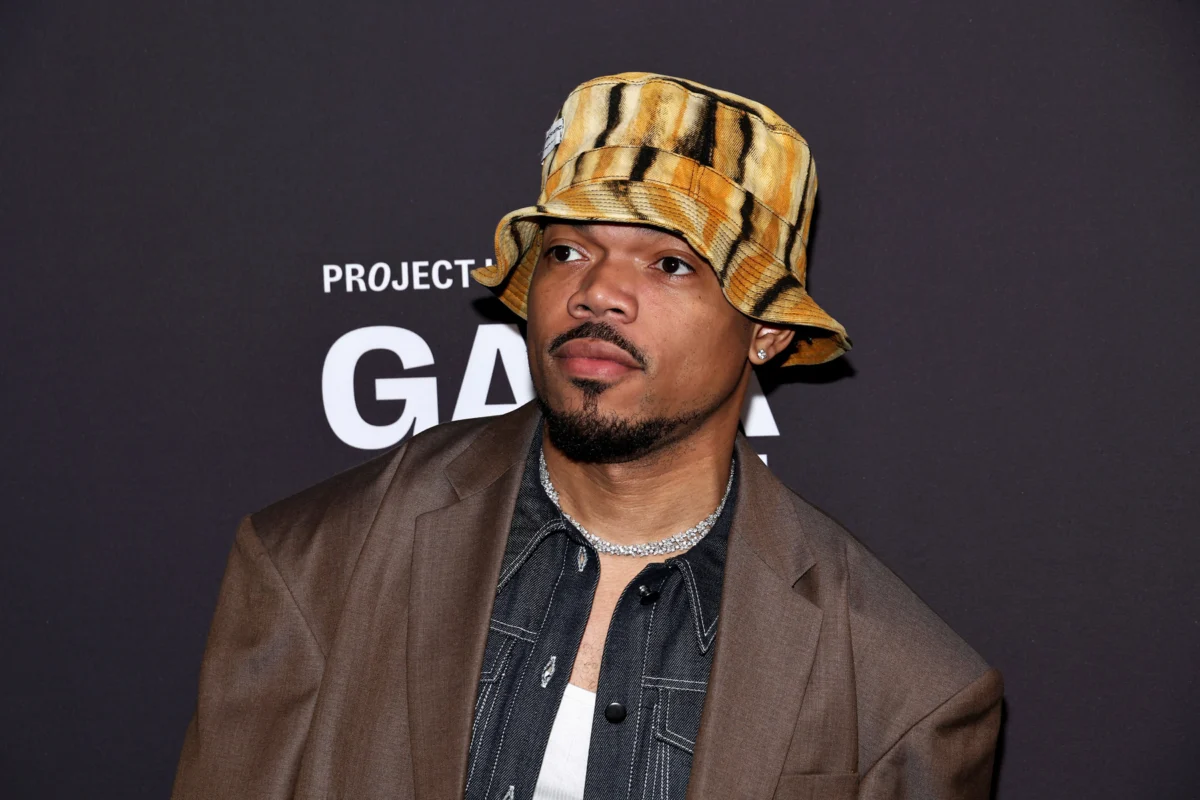
A Chicago jury has delivered a decisive verdict in favor of Grammy-winning artist Chance the Rapper, rejecting all legal claims brought forth by his former longtime manager, Pat Corcoran, also known as "Pat the Manager." The decision concluded a contentious two-and-a-half-week trial, bringing a significant chapter to a close in the complex and deeply personal legal dispute that pitted the two once-close associates against each other.
The legal battle, which has been ongoing for several years, centered on allegations of unpaid commissions and breach of fiduciary duty. Corcoran had sued Chance the Rapper, born Chancelor Bennett, in 2020, seeking approximately $3.8 million in alleged unpaid commissions. A key element of Corcoran’s claim was the existence of a verbal agreement that included a "sunset clause," which he contended entitled him to commissions for three years after their professional relationship ended. However, the absence of a formal written contract between the two became a central point of contention throughout the proceedings.
Jurors ultimately sided with Chance the Rapper on Corcoran’s claims, finding no basis for the substantial financial demands. This ruling signifies a major victory for the artist, who had vehemently denied the validity of Corcoran’s assertions regarding the extended commission period and the scope of their initial agreement. The verdict underscores the jury’s skepticism regarding the existence and enforceability of the alleged oral contract as presented by Corcoran’s legal team.
Chance the Rapper’s countersuit, filed in 2021, accused Corcoran of breaching his fiduciary duties and exploiting career opportunities for personal gain. While the jury found in favor of Chance on these points, the awarded damages were notably minimal, amounting to just $35. This figure stands in stark contrast to the $1 million Chance had sought in his countersuit, suggesting that while the jury acknowledged some wrongdoing on Corcoran’s part, the extent of the alleged exploitation or financial harm was not as significant as the artist had argued.
The Genesis of a Legal Dispute
The rift between Chance the Rapper and Pat Corcoran emerged several years ago, marking a somber end to a professional partnership that was instrumental in the early stages of Chance’s meteoric rise. Corcoran, often credited as the architect behind Chance’s independent business model and strategic career moves, played a pivotal role in shaping the artist’s unique trajectory in the music industry. Their collaboration was characterized by a shared vision and a commitment to maintaining artistic and financial independence from major record labels.
Corcoran’s initial lawsuit in 2020 painted a picture of a manager meticulously managing an artist’s burgeoning career, only to be left uncompensated for his efforts. He argued that the 15% commission structure, agreed upon verbally in the early days of Chance’s career around 2013, should extend beyond their professional separation, citing the purported "sunset clause" as a crucial component of their understanding. This clause, Corcoran maintained, was designed to provide a financial safety net for him during the transition period following their professional parting.
The legal proceedings illuminated the complexities of oral agreements within the often informal ecosystem of the music business. Corcoran’s legal team emphasized the duration and depth of their working relationship as evidence of an implied contractual understanding, even in the absence of written documentation. They highlighted Chance’s significant commercial successes, including the critically acclaimed 2016 album "Coloring Book" and his subsequent Grammy wins, as testaments to Corcoran’s indispensable role.

Arguments and Counterarguments in Court
During the trial, closing arguments presented starkly contrasting narratives of the relationship and its dissolution. Robert D. Sweeney, representing Corcoran, urged the jury to consider the tangible contributions Corcoran made, framing him as the "common denominator" in Chance’s early successes. Sweeney drew a comparison between the longevity of "Coloring Book" on the Billboard 200 and the comparatively brief chart run of Chance’s 2025 album "Star Line," released after their split, to underscore the argument that managerial guidance was crucial.
Sweeney portrayed Corcoran as a dedicated partner who went above and beyond his managerial duties, taking on roles in promotion and distribution to champion Chance’s independent spirit. He described a scenario where two individuals worked tirelessly together, only for a disagreement to lead to one party feeling uncompensated for their efforts. The defense rested heavily on the idea that the jury needed to determine which narrative of their oral agreement held more weight and credibility.
Conversely, Precious S. Jacobs-Perry, counsel for Chance the Rapper, vehemently challenged the existence of the sunset agreement, asserting that it was not substantiated by any evidence beyond Corcoran’s own testimony. She characterized the lawsuit as an act of "greed" and an attempt by Corcoran to claim something he did not deserve. Jacobs-Perry presented written communications between Chance and Corcoran dating back to 2014, which she argued outlined the 15% commission but made no mention of any post-termination provisions.
Jacobs-Perry further alleged that Corcoran had increasingly prioritized his own ventures, using his position to enrich himself while neglecting Chance’s projects. She cited instances of alleged managerial lapses, such as the unfulfilled 20,000 merchandise orders in 2019, as evidence of Corcoran’s diminishing involvement and his reliance on delegation. The accusation that Corcoran sought equity in Chance’s recordings through United Masters in 2017, and that Chance confronted him about this, added another layer of betrayal to the narrative presented by Chance’s legal team.
The Jury’s Deliberation and Verdict
The jury’s deliberation, which spanned several days, culminated in a verdict that largely vindicated Chance the Rapper’s position. The rejection of Corcoran’s claims, particularly regarding the sunset clause and the substantial commission owed, signals a significant legal and financial defeat for the former manager. The minimal $35 award on the countersuit, while technically a win for Chance, underscores the jury’s assessment that while Corcoran may have overstepped in certain areas, the financial repercussions for Chance were not as extensive as initially claimed.
Jay Scharkey, an attorney for Corcoran, acknowledged the jury’s decision, issuing a statement that advised other music managers to "Get it in writing." He noted that the small damages awarded in the countersuit reflected how seriously the jury viewed Chance’s case, implying that the evidence presented by the defense was not compelling enough to warrant a larger award. This statement serves as a cautionary note for professionals operating without formal contracts in the music industry.
Broader Implications for the Music Industry

The outcome of this high-profile trial carries significant implications for the music industry, particularly concerning the enforceability of oral agreements and the fiduciary responsibilities of managers. The case highlights the inherent risks associated with operating without comprehensive written contracts, a practice that, while sometimes prevalent in the early stages of an artist’s career, can lead to protracted and costly legal disputes.
For artists, the verdict reinforces the importance of clear contractual documentation to define the scope of managerial duties, commission structures, and termination clauses. It suggests that a manager’s success in claiming unpaid commissions or extended benefits will likely depend on the existence of concrete evidence, rather than solely on the longevity or perceived intimacy of the professional relationship.
Conversely, for managers, the case serves as a stark reminder of the need for formal agreements that clearly outline their compensation and the terms of their engagement. The jury’s decision, while acknowledging some breaches of duty by Corcoran, ultimately did not validate the extensive financial claims based on an alleged oral contract. This underscores the legal precedent that, in the absence of written proof, proving the existence and specific terms of an oral agreement can be exceptionally challenging.
The minimal damages awarded in Chance’s countersuit also raise questions about how juries assess damages in cases involving alleged exploitation of career opportunities. While the jury found Corcoran liable for breaching his fiduciary duties, the low monetary award suggests a difficulty in quantifying the precise financial harm suffered by Chance due to Corcoran’s actions. This could prompt artists to refine their damage calculations and present more concrete evidence of financial loss in future litigation.
The Public Reaction and Future of Artistic Partnerships
While Chance the Rapper’s representative did not immediately comment following the verdict, the legal victory is likely to be seen as a vindication for the artist. The case has captivated fans and industry observers alike, offering a rare glimpse into the often-turbulent dynamics of artist-manager relationships. The public’s fascination with the trial stems from the personal nature of the dispute, involving individuals who were once integral to each other’s professional journeys.
The trial has undoubtedly cast a shadow over the legacy of their partnership, transforming a narrative of collaborative success into one of acrimonious legal conflict. As Chance the Rapper continues to navigate his career independently, the legal resolution provides a clear path forward, free from the cloud of ongoing litigation. The outcome may also influence how future artist-manager partnerships are structured, with an increased emphasis on transparent communication and legally sound agreements.
The verdict in favor of Chance the Rapper in this contract trial serves as a definitive conclusion to a chapter marked by intense legal scrutiny and public interest. It underscores the critical importance of clear, written contracts in the music industry and sets a precedent for how disputes over oral agreements and fiduciary responsibilities will be adjudicated. The minimal damages awarded in the countersuit also offer a nuanced perspective on the assessment of financial harm in such cases, highlighting the challenges of quantifying intangible losses.