President Donald Trump announced Friday that the United States is evaluating a timeline to "wind down" military operations against Iran, suggesting that the strategic objectives of the three-week-old conflict are nearing completion. The statement, posted to the president’s Truth Social platform, comes amid a flurry of high-stakes military developments, including a confirmed Iranian ballistic missile attack targeting the joint U.S.-UK military base on Diego Garcia and a coordinated strike by U.S. and Israeli forces on an Iranian nuclear enrichment facility. The hostilities, which began on February 28, have significantly disrupted global energy markets and pushed regional tensions to a breaking point, though the White House now signals a potential shift toward de-escalation.
White House Press Secretary Karoline Leavitt corroborated the president’s outlook, noting that the administration and the Pentagon had originally projected a four-to-six-week window to achieve their primary mission objectives. Despite this rhetoric of withdrawal, the situation on the ground remains volatile. Even as the U.S. considers a reduction in force, the Iranian military continues to demonstrate its reach, and Israel’s defense ministry has warned that its own air campaign will "intensify" in the coming days.

Iran Targets Diego Garcia in Significant Long-Range Escalation
The conflict reached a new geographical milestone this week when Iran fired two intermediate-range ballistic missiles at the Diego Garcia military base in the Indian Ocean. The UK Ministry of Defence confirmed the strikes, though it noted the attempts were unsuccessful. According to reports from the Wall Street Journal and CNN, one missile suffered a mechanical failure during flight, while the other was engaged and neutralized by a U.S. Navy warship using an SM-3 interceptor.
The targeting of Diego Garcia—located approximately 4,000 kilometers (2,485 miles) from Iranian territory—represents a massive expansion of the war’s theater. Military analysts suggest this strike indicates that Tehran possesses missile technology with a significantly greater range than previously acknowledged by international intelligence agencies. Previously, Iranian Foreign Minister Abbas Araghchi had claimed that the country’s missile capabilities were capped at a 2,000-kilometer range. The reach demonstrated in the Diego Garcia attempt places a wide array of U.S. and allied strategic assets within the crosshairs of the Islamic Revolutionary Guard Corps.
The base at Diego Garcia is a critical staging ground for U.S. heavy bombers and long-range maritime patrols. Its security has been a point of recent political contention in the United Kingdom, following a controversial deal by Prime Minister Keir Starmer to cede sovereignty of the Chagos Islands to Mauritius while leasing back the base. President Trump had previously criticized the move, calling it "woke" and expressing disappointment in the British government’s speed in authorizing U.S. use of the territory for defensive operations.
Strategic Strikes on Nuclear and Missile Infrastructure
Simultaneous with the long-range exchange, U.S. and Israeli forces conducted an overnight operation against the Natanz nuclear enrichment facility in central Iran. Iranian state media, via the Tasnim news agency, confirmed the attack but insisted that no radioactive leakage occurred and that local residents remained safe. The International Atomic Energy Agency (IAEA) has issued an urgent plea for military restraint, with Director General Rafael Grossi warning that strikes on nuclear infrastructure risk a catastrophic accident.
In a separate engagement, the Israel Defense Forces (IDF) claimed to have "significantly degraded" Iran’s ballistic missile production capacity. A precision air campaign targeted a major factory in Tehran, hitting dozens of specific sites used to manufacture critical missile components and fuel. The IDF stated that these strikes were necessary to neutralize direct threats to the State of Israel.
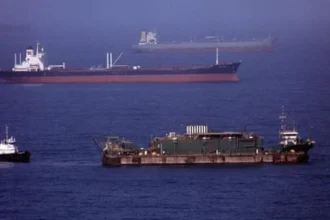
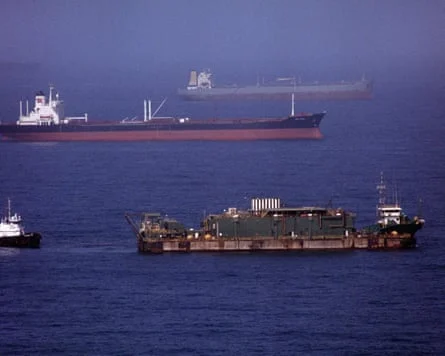
Meanwhile, the U.S. Central Command (CENTCOM) reported the destruction of an Iranian underground facility used for storing cruise missiles near the Strait of Hormuz. Admiral Brad Cooper, commander of CENTCOM, stated in a video message that the operation successfully took out intelligence support sites and radar relays used by Iran to monitor and threaten commercial shipping. Cooper asserted that Iran’s ability to "threaten freedom of navigation" in the vital waterway has been measurably diminished.
Global Energy Markets and the Coalition for the Strait of Hormuz
The Middle East crisis has sent shockwaves through the global economy, with crude oil prices hovering around $125 per barrel. To mitigate a potential global supply catastrophe, the U.S. Treasury announced a temporary easing of sanctions on Iranian oil shipments. This authorization allows for the sale and delivery of Iranian crude and petroleum products that were loaded onto vessels prior to March 20, with the waiver set to expire on April 19. This marks the third time the administration has utilized temporary waivers in a two-week span to stabilize the market.
In a show of international unity against the maritime blockade, more than 20 countries—including the UK, Germany, France, Japan, and South Korea—have formed a coalition to ensure safe passage through the Strait of Hormuz. The 22-nation group issued a joint statement condemning Iran’s de facto closure of the waterway and its attacks on unarmed commercial vessels and civilian energy infrastructure. The coalition members, which also include the UAE and Bahrain, expressed a readiness to contribute "appropriate efforts" to maintain open shipping lanes, which are essential for global energy security.
Regional Instability: Iraq, Lebanon, and the Gulf States
The spillover of the conflict has been felt acutely by Iran’s neighbors. In Baghdad, a drone attack on the Iraqi National Intelligence Service headquarters killed one officer and wounded another. The Iraqi government blamed "outlaw groups" for the strike, which targeted a telecommunications building in the Mansour district. This follows several other drone attacks on U.S. diplomatic and logistics hubs at Baghdad International Airport.

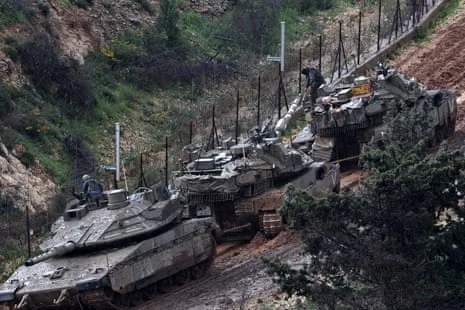
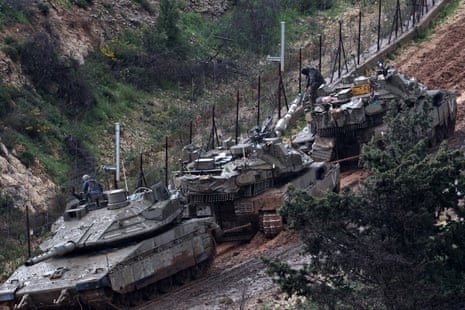
In southern Lebanon, the IDF reported killing several Hezbollah members in ground and tank engagements. Hezbollah, in turn, claimed to have engaged in a four-hour confrontation with Israeli troops in the border town of Khiam. The humanitarian toll in Lebanon continues to mount, with state media reporting civilian casualties from Israeli airstrikes on residential towns.
Saudi Arabia and Kuwait have also been drawn into the defensive perimeter. The Saudi Defense Ministry reported intercepting dozens of drones over its eastern provinces in the last 24 hours. The kingdom, alongside Turkey, has also condemned recent Israeli strikes in Syria, labeling them a "blatant aggression" and a violation of international law.
The Human and Environmental Toll of the Three-Week War
Beyond the geopolitical maneuvering, the human cost of the conflict has been staggering. Estimates suggest that more than 3,000 people have been killed in Iran alone, with at least 18,000 others injured. Environmental analysts have also raised alarms regarding the "carbon cost" of the war. A report shared with the Guardian suggests that the first two weeks of the conflict generated 5 million tonnes of greenhouse gas emissions—exceeding the annual output of 84 individual countries.
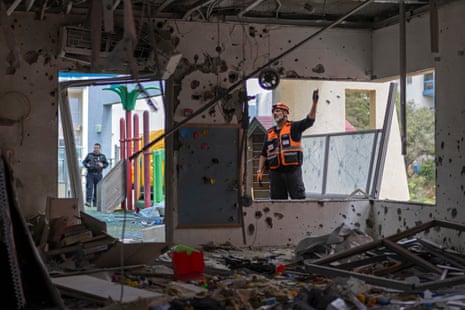
The destruction of fossil fuel infrastructure, refinery fires, and the constant deployment of high-altitude warplanes are draining the global carbon budget at an unprecedented rate. Experts warn that the environmental degradation of the Middle East is turning the region into a "sacrifice zone," where the long-term ecological damage may persist for decades after the guns fall silent.
Domestic Iranian Politics and the Silence of Mojtaba Khamenei
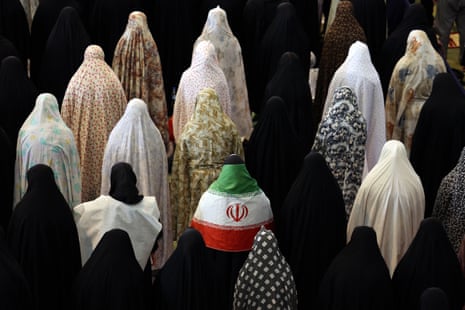
Inside Iran, the conflict coincides with Nowruz, the Persian New Year. While families in Tehran attempted to observe traditions of renewal and hope, the political landscape remains shrouded in uncertainty. Intelligence agencies have been closely monitoring the country for any sign of Mojtaba Khamenei, the son of the late Ayatollah Ali Khamenei.
Since reportedly assuming the role of Supreme Leader three weeks ago, Mojtaba has not been seen in public. His New Year’s address was delivered only as a written statement, fueling rumors regarding the stability of his leadership. A senior Israeli official noted that there is currently "no evidence" that Mojtaba is the one actually issuing military orders, leading to speculation about a power vacuum or a military junta operating behind the scenes.

Security Concerns in the West
The crisis has also triggered heightened security alerts in the West. In Scotland, two individuals—an Iranian man and a Romanian woman—were arrested after allegedly attempting to enter the HM Naval Base Clyde, which houses the UK’s Trident nuclear submarines. The incident has raised fears of Iranian-directed sabotage or intelligence gathering against NATO nuclear assets.
As the international community watches for the next move from Washington and Tehran, the prospect of a "winding down" offers a glimmer of hope for de-escalation. However, with Israel vowing to intensify its strikes and Iran proving its ability to strike targets as far away as the Indian Ocean, the path to a durable peace remains fraught with significant military and diplomatic obstacles. The coming week will be decisive in determining whether the region moves toward a ceasefire or a deeper, more protracted engagement.