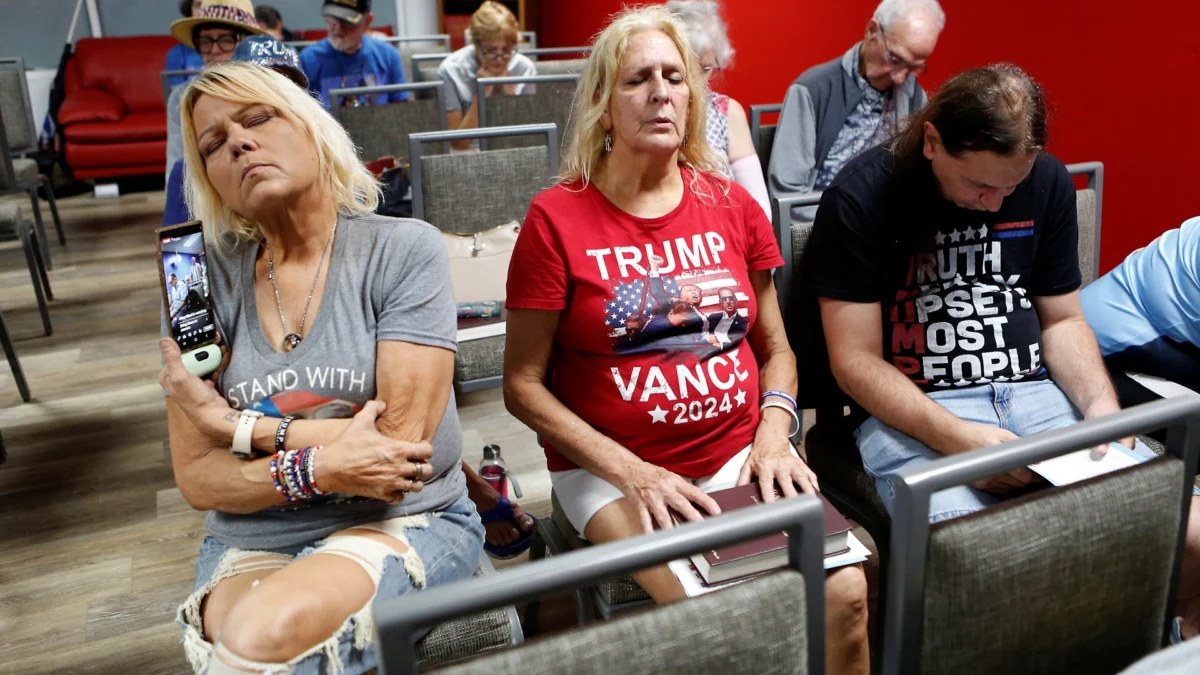
A significant portion of white evangelical Christians in the United States perceive Donald Trump as a divinely appointed leader, a belief that persists even among those who do not consider him personally devout. This perspective, highlighted in recent analyses, suggests a profound intersection of faith and political allegiance for a substantial segment of the American electorate. The perception that Trump has actively advanced Christian principles in the nation’s governance is widespread, indicating a complex dynamic where theological interpretations heavily influence political endorsement and the evolving relationship between religious doctrine and state policy.
The "Chosen" Narrative: Faith Meets Politics
The notion of Donald Trump being "chosen by God" to lead the United States has become a potent and pervasive narrative within certain Christian communities, particularly among white evangelicals. This belief system transcends traditional expectations of personal piety or moral rectitude in a political figure. Instead, it frames Trump’s presidency and ongoing political influence through a lens of divine providence, casting him as an instrument of God’s will in a nation perceived to be at a spiritual crossroads. This theological framework provides a powerful justification for political support, insulating many adherents from criticisms regarding Trump’s personal conduct or policy decisions that might otherwise alienate religious voters.
This phenomenon is not entirely new, but its prominence during and after Trump’s presidency has been a subject of considerable discussion and academic inquiry. Scholars and commentators have explored the historical roots of such beliefs, often tracing them to earlier instances where religious leaders and congregants have identified political figures as divinely selected. However, the scale and intensity of this conviction among white evangelicals regarding Trump appear to be a defining characteristic of contemporary American politics. The alignment between a specific political leader and a perceived divine mandate has created a formidable bloc of voters whose loyalty is often unwavering, driven by a sense of spiritual mission.
Understanding the Evangelical Vote
The white evangelical Christian demographic constitutes a significant voting bloc within the United States, characterized by a strong adherence to conservative social values and a deeply held belief in the literal interpretation of the Bible. Historically, this group has been a cornerstone of the Republican Party, but the ascendancy of Donald Trump marked a particular inflection point. While many evangelicals had previously aligned with candidates who emphasized traditional Christian values and a more reserved public demeanor, Trump’s populist appeal and his strong stance on issues like abortion and religious freedom resonated deeply.
Key tenets that often guide evangelical political engagement include a desire to see Christian principles reflected in public policy, a concern for the moral direction of the nation, and a belief in the importance of religious freedom. For many, Trump’s rhetoric and actions, particularly his appointments of conservative judges and his vocal support for religious organizations, were interpreted as tangible evidence of his commitment to these values. This interpretation often overshadowed concerns about his personal life or his sometimes unconventional public persona, as the perceived spiritual and national implications of his leadership took precedence.
The Blurring of Church and State
A significant consequence of this faith-based political endorsement is the observable blurring of the lines between church and state. When a substantial group of voters believes their leader is divinely appointed to uphold Christian principles, the distinction between religious advocacy and governmental policy can become indistinct. This dynamic raises questions about the separation of church and state, a foundational principle of American governance. Critics argue that this fusion of religious conviction with political support can lead to policies that favor one religious group over others or that impose specific religious doctrines on the wider populace.
Supporters, however, often view this convergence not as a violation of separation principles, but as a necessary effort to restore what they perceive as a Christian foundation to American society. They may argue that the nation was founded on Christian ideals and that leaders like Trump are instrumental in returning it to those roots. This perspective often frames political action as a form of religious stewardship, where electing and supporting leaders who align with their faith is seen as a moral imperative and a duty to God and country. The intensity of this belief underscores the complex and often contentious relationship between religion and politics in the United States.
The Genesis of Divine Mandate Beliefs
The perception of Donald Trump as a divinely chosen leader among many white evangelical Christians did not emerge overnight. It is a phenomenon that has developed through a confluence of factors, including political events, theological interpretations, and the unique persona of Donald Trump himself. This narrative has been amplified by prominent religious leaders, media figures, and the Trump campaign’s own messaging, which often framed his presidency as a spiritual battle for the soul of America.
Early in his political career, Trump began to cultivate relationships with influential evangelical figures. These connections, coupled with his policy stances on issues such as the appointment of conservative judges to the Supreme Court and his strong opposition to abortion, began to earn him the support of a significant portion of the evangelical community. Many saw him as an unlikely but effective champion for their values, a stark contrast to previous political candidates who may have been more overtly religious but less impactful on issues they deemed critical.
Key Moments and Influential Voices
Several key moments and influential voices played a crucial role in shaping the narrative of Trump as a divinely appointed leader. During the 2016 presidential campaign, Trump made several appeals to evangelical voters, often speaking at religious gatherings and emphasizing his commitment to protecting religious freedom. His selection of Mike Pence, a prominent evangelical, as his running mate further solidified this connection. Pence, known for his devout faith, acted as a bridge between Trump and many evangelical leaders and congregations.
Furthermore, certain prominent evangelical pastors and commentators actively promoted the idea that Trump was chosen by God. Figures like Paula White-Cain, Lance Wallnau, and others frequently spoke of Trump as a Cyrus figure, referencing the Persian king in the Old Testament who was used by God to restore Jerusalem. This biblical analogy suggested that Trump, despite his personal flaws, was an instrument of divine will, tasked with a specific mission for the nation. These interpretations, disseminated through sermons, books, and social media, provided a theological framework for understanding and supporting Trump.
The "Christian Principles" Argument
The assertion that Donald Trump has pushed the U.S. closer to Christian principles is a central tenet for many of his evangelical supporters. This belief often centers on specific policy outcomes and rhetorical strategies. For instance, the appointment of conservative judges, including three Supreme Court justices who were instrumental in overturning Roe v. Wade, is frequently cited as a direct fulfillment of a long-held evangelical goal. This action is viewed not merely as a political victory, but as a moral triumph that aligns the nation with what they consider biblical values regarding the sanctity of life.
Beyond judicial appointments, supporters point to Trump’s vocal opposition to abortion, his rhetoric on religious freedom, and his administration’s policies aimed at supporting religious institutions. These actions are interpreted as evidence of his commitment to a Christian agenda. The emphasis on "Christian principles" in this context often refers to a particular interpretation of morality and governance, frequently emphasizing social conservatism and the perceived need to reassert traditional religious values in public life. This focus on tangible policy achievements, framed through a theological lens, helps to solidify support even in the face of personal criticisms.
Societal and Political Ramifications
The widespread belief among a significant segment of the electorate that a political leader is "chosen by God" carries profound implications for the fabric of American society and its political landscape. This phenomenon contributes to a deepening of partisan divides, a redefinition of the role of religion in public life, and potentially influences policy debates in ways that reflect specific religious interpretations.
Deepening Political Polarization
The "chosen" narrative often exacerbates political polarization by framing elections as spiritual battles between good and evil. When a leader is seen as divinely appointed, opposition to that leader can be interpreted not just as political disagreement, but as defiance of God’s will. This can lead to an entrenchment of political identities, making compromise and dialogue more difficult. Voters who subscribe to this view may be less inclined to consider alternative perspectives or to critically evaluate their chosen leader, as their support is rooted in a conviction that transcends ordinary political considerations.
This dynamic can also alienate voters who do not share these religious beliefs or who interpret their faith differently. For those who believe in a strict separation of church and state or who adhere to different religious or secular worldviews, the perception of a divinely ordained political leader can be seen as a threat to democratic pluralism and religious freedom for all. This creates a schism where political discourse becomes increasingly charged with religious fervor, making it challenging to find common ground on national issues.
Redefining the Role of Faith in Public Life
The strong embrace of Donald Trump by a segment of evangelical Christians has undeniably reshaped the conversation about the role of faith in American public life. It has demonstrated that a candidate’s personal piety or traditional moral standing may be secondary to their perceived ability to champion a specific religious agenda. This has led to a re-evaluation of what constitutes "faith-based leadership" for many voters.
This shift also raises questions about the influence of religious groups on policy-making. When a political leader is seen as a champion of specific religious principles, it can embolden those groups to exert greater influence in shaping legislation and public discourse. The focus on "Christian principles" in governance, as interpreted by this voting bloc, can lead to policy debates that are heavily influenced by theological arguments, potentially marginalizing secular viewpoints or the concerns of minority religious groups.
Impact on Future Elections and Governance
The enduring belief in Trump’s divine mandate will likely continue to shape future elections and the direction of governance. For the Republican Party, this demographic remains a critical base of support, and candidates will likely continue to cater to their religious and social concerns. The success of this narrative suggests that appealing to a perceived spiritual mission can be a powerful electoral strategy, potentially influencing how future candidates campaign and articulate their platforms.
In terms of governance, the continued influence of this voting bloc could lead to policies that further align with specific religious interpretations. This might include ongoing efforts to promote religious freedom as defined by conservative Christian groups, further restrictions on abortion access, and a greater emphasis on faith-based initiatives in social policy. The long-term impact of this trend on the secular nature of American governance and the rights of individuals with differing beliefs remains a subject of ongoing observation and debate.
A Persistent Influence
The phenomenon of many Christian voters, particularly white evangelicals, viewing Donald Trump as a divinely chosen leader is a complex and significant aspect of contemporary American politics. It reflects a deep integration of religious belief and political identity, where perceived divine favor is a primary driver of electoral support. This perspective transcends personal admiration for the candidate, framing their leadership through a lens of spiritual mission and national destiny.
The continued resonance of this narrative underscores the powerful influence of faith in shaping political attitudes and behaviors within the United States. As political landscapes evolve, the dynamics observed between religious conviction and political allegiance will undoubtedly continue to be a crucial factor in understanding electoral outcomes and the broader trajectory of American governance and society. The persistent belief in a divinely appointed leader highlights a unique intersection of theology and politics that continues to define a significant portion of the American electorate.