Lebanon erupted in anger and grief Wednesday as Israel unleashed a wave of deadly airstrikes across its southern towns, inflicting civilian casualties and devastating homes. The relentless assault continued despite a high-profile diplomatic push in Washington, D.C., aimed at fostering direct talks between the two nations. The escalating violence has intensified calls for an immediate ceasefire and cast a dark shadow over nascent diplomatic efforts.
The Lebanese state-run National News Agency (NNA) reported that Wednesday’s attacks claimed the lives of at least 13 civilians, a stark and tragic toll just one day after Lebanese and Israeli envoys met for unprecedented discussions in the U.S. capital. These latest strikes underscore the deep chasm between the diplomatic aspirations and the brutal reality on the ground, fueling widespread resentment and despair among the Lebanese populace.
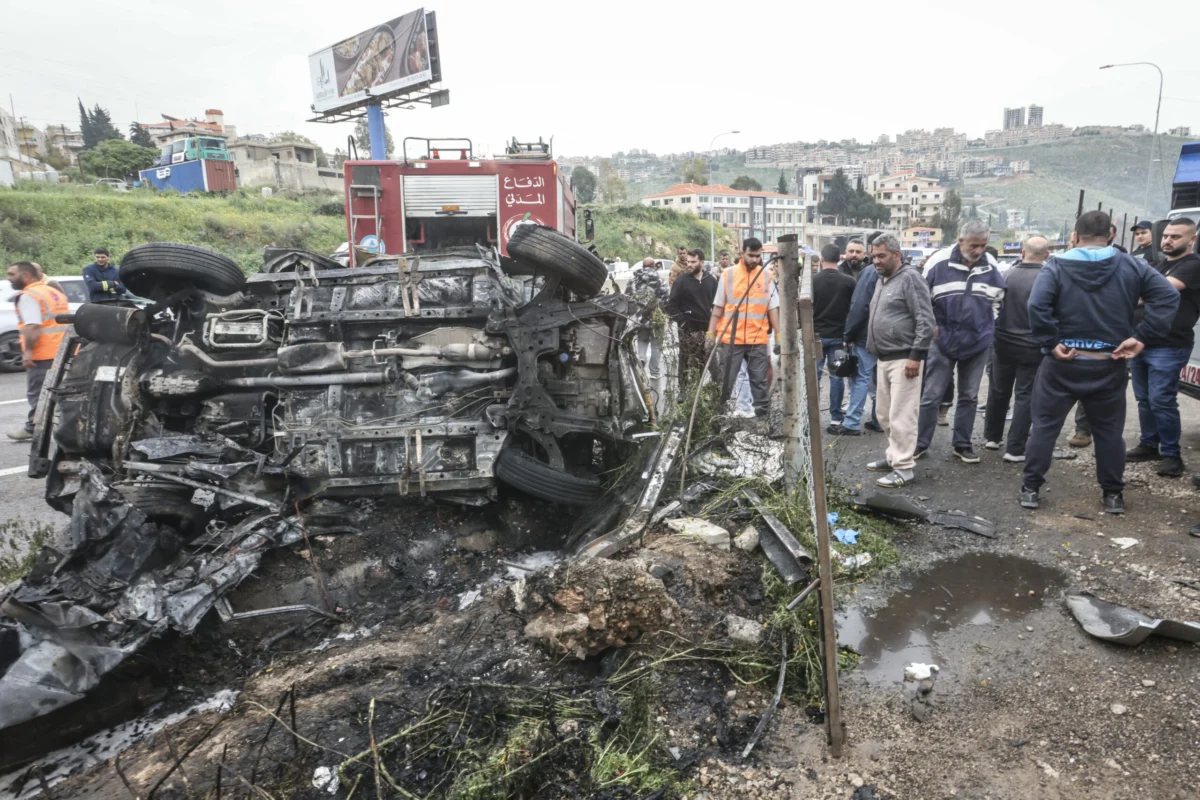
A particularly devastating Israeli bombing targeted the town of Jbaa, striking a family home and resulting in the deaths of a husband and wife, their son, and his wife. The NNA also confirmed that five other individuals perished in the town of Ansariyeh, while four more lost their lives in Qadmus. These attacks represent a catastrophic loss for grieving families and further highlight the indiscriminate nature of the ongoing conflict.
In parallel, Israel launched further strikes south of Beirut, hitting two vehicles in the coastal town of Saadiyat and another on a major coastal highway in neighboring Jiyeh. Located approximately 20 miles south of the capital, these areas have become increasingly vulnerable to Israeli aggression, amplifying fears of a wider regional escalation.
Lebanese Public Outrage Over Israeli Strikes Amid Diplomatic Overtures
Zeina Khodr, reporting from Beirut for Al Jazeera, conveyed the palpable anger simmering within Lebanon. "People believe the Lebanese government should not have sat down with Israel, the enemy, which has already killed more than 2,000 people in the past few weeks alone," Khodr stated, reflecting the deep-seated mistrust and resentment towards Israel. The sentiment on the streets is one of profound disillusionment, with many questioning the efficacy of engaging with a nation perceived as a relentless aggressor.
The primary demand echoing through Lebanese communities is a swift cessation of hostilities. "What people want here is an end to the attacks," Khodr emphasized, noting that the affected neighborhoods have been subjected to repeated Israeli strikes in recent weeks. Residents are demanding accountability and questioning why the November 2024 ceasefire agreement between Israel and Hezbollah, which has been repeatedly violated by Israel, has not been upheld. The perceived impunity with which Israel conducts its operations has fostered a sense of helplessness and frustration.
Hezbollah Lawmaker Condemns Beirut’s Diplomatic "Concessions"
The recent meeting between Lebanese and Israeli envoys, hosted by U.S. Secretary of State Marco Rubio, marked a significant moment, representing the first direct contact between the two nations in decades. Both sides characterized the talks as positive, yet ahead of the summit, Israel had explicitly ruled out any discussion regarding Lebanon’s primary demand: a comprehensive ceasefire in the ongoing war. This war, which ignited on March 2, was a direct retaliation by Hezbollah following the U.S.-Israeli assassination of Iran’s Supreme Leader, Ayatollah Ali Khamenei.
As Israel intensified its offensive against Hezbollah, issuing further forced displacement orders to residents in southern Lebanon, a prominent Hezbollah lawmaker delivered a scathing critique of Beirut’s diplomatic approach. Hassan Fadlallah, a member of parliament for Hezbollah, declared that "the option of negotiations with the enemy is wrong." His pronouncement underscored a deep internal division within Lebanon regarding the strategy for confronting Israeli aggression.
Speaking at a news conference, Fadlallah accused the Lebanese government of "squandering Lebanon’s political and military strength." He criticized the government for withdrawing its army from the south, leaving the region "vulnerable to occupation and giving the enemy free rein." This withdrawal, he argued, has emboldened Israel and undermined Lebanon’s defensive capabilities.
Fadlallah further asserted that the current government had failed to meet the expectations of the Lebanese people and had underestimated the "resistance of the young fighters." He condemned Beirut’s "concessions" and accused the government of "inciting internal division" within the country. This rhetoric highlights the growing chasm between the political establishment and the armed resistance, fueled by differing perspectives on how to address the existential threat posed by Israeli incursions.
The Iran-aligned group, Hezbollah, has reiterated its demand for a comprehensive ceasefire, rejecting a return to the pattern of near-daily Israeli strikes and assassinations that followed the November 2024 ceasefire deal. The group insists that any lasting peace must address the root causes of the conflict and ensure Israel’s adherence to international law and agreements.
Escalation in Southern Lebanon: A Pattern of Destruction
Earlier on Wednesday, the Israeli military had issued an evacuation order to residents in southern Lebanon, signaling an impending escalation of military operations. The NNA reported that attacks also struck the southern towns of Baraachit, Souaneh, Babliyeh, Seddiqine, Nabatieh El Faouqa, and areas along the Litani River. These repeated bombardments have rendered large swathes of southern Lebanon uninhabitable and created a humanitarian crisis.
The outskirts of the town of Bint Jbeil, which has been particularly hard-hit by a recent Israeli operation that claimed the lives of at least 100 Hezbollah fighters, also came under shelling. The destruction in these areas is immense, with homes reportedly blown up in the southern town of Hanine. The relentless nature of these attacks has displaced thousands of civilians, exacerbating an already dire humanitarian situation.
Context of the Conflict: A Cycle of Retaliation and Escalation
The current escalation of violence between Israel and Hezbollah is rooted in a long-standing animosity and a series of retaliatory actions. The immediate trigger for the current conflict was Hezbollah’s firing of rockets into Israel on March 2, a response to the U.S.-Israeli assassination of Iranian Supreme Leader Ayatollah Ali Khamenei. This act, viewed by Hezbollah as a direct attack on the broader axis of resistance, ignited a tit-for-tat exchange that has rapidly intensified.
The November 2024 ceasefire, brokered after a period of intense hostilities, had offered a fragile hope for de-escalation. However, recurring Israeli violations, including targeted assassinations and cross-border incursions, consistently undermined its effectiveness. Lebanon, and particularly Hezbollah, views these violations as a deliberate strategy by Israel to destabilize the region and assert its dominance.
The broader geopolitical context also plays a crucial role. The assassination of Ayatollah Khamenei, a figure of immense influence in Iran and its regional allies, signaled a significant escalation in the proxy war between Iran and Israel, with Lebanon serving as a key battleground. Hezbollah, as a heavily armed and ideologically aligned group, is a central player in this regional power struggle.
The Impact of Israeli Strikes: Civilian Suffering and Infrastructure Devastation
The human cost of the ongoing Israeli strikes is staggering. The loss of civilian life, including entire families, has plunged communities into mourning and despair. Beyond the immediate casualties, thousands have been displaced from their homes, seeking refuge in more secure areas, often with limited access to basic necessities such as food, water, and medical care. The destruction of homes, infrastructure, and agricultural lands has crippled the local economy and shattered the livelihoods of countless Lebanese citizens.
The repeated targeting of civilian areas raises serious concerns about potential violations of international humanitarian law. The systematic destruction of residential buildings and infrastructure vital for civilian survival exacerbates an already precarious humanitarian situation, pushing Lebanon further into crisis.
Diplomatic Efforts Amidst the Crossfire: A Glimmer of Hope or a Futile Endeavor?
The diplomatic engagement in Washington, while a rare development, has been met with skepticism by many in Lebanon. The timing of the talks, occurring concurrently with intensified Israeli military operations, has led to accusations that Beirut is making concessions without tangible security guarantees. Hezbollah’s strong opposition to direct negotiations with Israel, labeling it a "wrong option," highlights the deep divisions within Lebanon regarding the path forward.
While the U.S. and other international actors are pushing for de-escalation and dialogue, the immediate reality on the ground suggests that diplomatic efforts are struggling to keep pace with the escalating violence. The commitment of both sides to a lasting peace remains uncertain, with the specter of further conflict looming large. The effectiveness of any future diplomatic breakthroughs will hinge on Israel’s willingness to cease its aggressive military actions and respect Lebanon’s sovereignty and the lives of its citizens. The international community faces a critical juncture in either facilitating genuine de-escalation or witnessing a further descent into regional instability.