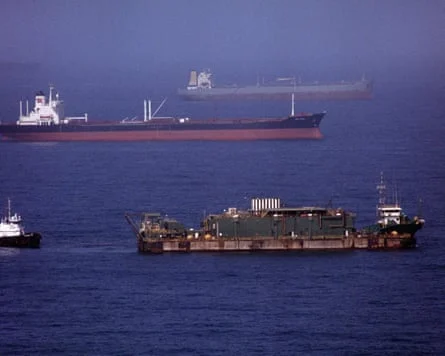
The Iranian military issued a sweeping ultimatum on Wednesday, warning that it would expand its maritime operations to disrupt international trade routes in the Sea of Oman and the Red Sea if the United States maintains its current naval blockade of Iranian ports. Maj. Gen. Ali Abdollahi, commander of the Khatam al-Anbiya Central Headquarters, stated that Tehran now considers the American naval presence a direct breach of the standing ceasefire, specifically if the blockade continues to create "insecurity" for Iranian merchant vessels and oil tankers.
This escalation marks a significant shift in the regional conflict, as the Iranian armed forces signaled a willingness to move beyond the strategic chokepoint of the Strait of Hormuz. Abdollahi’s statement, carried by the semi-official Tasnim news agency, warned that the Iranian military "will not allow any exports or imports to continue" across the broader Persian Gulf and neighboring waters if its own shipping remains restricted. The threat targets the global energy supply chain at its most vulnerable nodes, potentially endangering the transit of millions of barrels of crude oil daily.
The U.S. military, however, maintains that its strategy is working. U.S. Central Command (Centcom) reported Wednesday morning that American forces have "achieved maritime superiority" in the Middle East, effectively halting 90% of Iran’s sea-based economic trade within 36 hours of the blockade’s implementation. The White House has framed the naval operation as a necessary tool to choke off the Iranian regime’s oil revenues and compel Tehran to return to the negotiating table with significant concessions.
The Intensification of the US Naval Blockade
The U.S. naval blockade was initiated following a breakdown in high-level talks in Pakistan. President Donald Trump declared the operation as a countermeasure to Iran’s own attempts to restrict the Strait of Hormuz. According to internal Pentagon reports, the U.S. is preparing to surge its presence in the region even further. Approximately 6,000 troops aboard the aircraft carrier USS George HW Bush and accompanying warships are reportedly moving into position, with another 4,200 personnel expected to arrive by the end of April.
Pentagon officials are also reportedly weighing more aggressive options beyond the current blockade. These include potential ground operations on Iranian soil to extract nuclear materials or the seizure of Kharg Island, Iran’s primary oil export terminal. While the White House has not publicly confirmed these specific plans, the rhetoric from Washington suggests a "maximum pressure" campaign that is nearing its peak.
Despite the U.S. claims of maritime superiority, independent analysts and shipping data providers like Kpler have raised doubts about the safety of the waterway for non-Iranian vessels. Kpler reported that only six ships transited the Strait of Hormuz on Monday, a figure well below historical averages. Maritime historians have noted that while the Trump administration insists the path is open for international commerce, shipowners remain deeply skeptical, with giants like Hapag-Lloyd refusing to resume transits until the security situation stabilizes.

Diplomatic Friction and the Role of China
The crisis has also strained the relationship between the United States and its traditional allies, while creating an unusual diplomatic opening with Beijing. President Trump claimed on Wednesday that China and the United States are "working together smartly" to resolve the crisis. In a post on Truth Social, Trump suggested that Chinese President Xi Jinping is "very happy" that the U.S. is working to permanently open the Strait of Hormuz, as it serves Beijing’s energy interests.
According to the President, the two leaders have exchanged letters in which Xi Jinping allegedly agreed to stop the shipment of Chinese weapons to Tehran. Trump expressed optimism about an upcoming meeting with the Chinese leader, stating that a deal is preferable to continued combat. However, he balanced this by reminding the international community that the U.S. remains "very good at fighting" if diplomatic efforts fail.
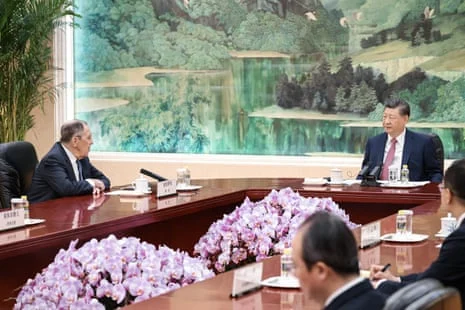
China’s Foreign Ministry has taken a more measured tone, welcoming all efforts toward a ceasefire and praising Pakistan for its role as a "fair and balanced" mediator. This diplomatic dance occurs as Russia also asserts its influence; Foreign Minister Sergei Lavrov recently reaffirmed Iran’s "inalienable right" to enrich uranium for civilian purposes during a visit to Beijing, signaling that Moscow may not fully align with the U.S.-led economic strangulation of Tehran.
Tensions With European Allies and the Vatican
While the U.S. finds common ground with China on shipping, it is facing a deepening rift with European partners. President Trump leveled sharp criticism at British Prime Minister Keir Starmer, specifically targeting the U.K.’s energy and immigration policies. The President expressed disappointment that the U.K. and other NATO allies did not join the naval blockade, stating, "When we needed them, they were not there."
This friction has put the "Special Relationship" under public scrutiny. Trump warned that a trade deal recently granted to the U.K. "can always be changed," using economic leverage to signal his displeasure with London’s lack of military participation. Despite these tensions, Buckingham Palace confirmed that King Charles III will proceed with a scheduled state visit to the U.S. later this month, a move Trump insisted would not be overshadowed by his disagreements with the Starmer government.
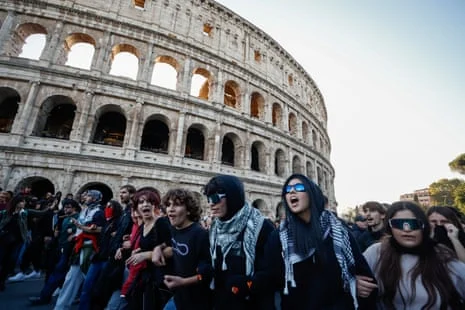
The diplomatic fallout has extended to the Vatican and Rome as well. President Trump doubled down on his public feud with Pope Leo, criticizing the pontiff’s stance on the Iran conflict. After calling the Pope "weak on crime" and "terrible for foreign policy," Trump ignored calls for an apology, instead highlighting the Iranian government’s alleged crackdown on domestic protesters. Italian Prime Minister Giorgia Meloni, a frequent political ally of Trump, described the attacks on the Pope as "unacceptable," prompting the President to publicly question her "courage."
Regional Escalation and the Lebanon Front
While the naval standoff dominates the headlines, the land war continues to expand. The Israeli military has intensified its strikes in southern Lebanon, targeting Hezbollah positions and issuing mandatory evacuation orders for all residents south of the Zahrani River. The United Nations reports that these orders now cover approximately 14% of Lebanon’s territory, affecting more than 100 towns and villages and displacing over a million people.

In response to the Israeli offensive and the ongoing diplomatic talks in Washington, Hezbollah launched a massive rocket barrage on Wednesday, targeting 13 towns in northern Israel simultaneously. The group has rejected the direct negotiations currently taking place between Lebanese and Israeli ambassadors in the U.S., which represent the first high-level diplomatic engagement between the two nations in decades.
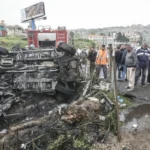
Lebanese President Joseph Aoun expressed hope that the Washington talks would mark "the beginning of the end" of the suffering in his country, but he warned that stability is impossible as long as Israel occupies Lebanese land. The humanitarian crisis in the region is worsening, with drone strikes hitting vehicles on major highways and civilian casualties rising in both southern Lebanon and the capital, Beirut.
Global Economic Consequences and the Energy Market
The threat to shipping beyond the Strait of Hormuz has sent ripples through the global economy. The International Monetary Fund (IMF) recently cut its growth forecasts for 2026, warning that a further escalation of the conflict could trigger a global recession. The blockade is currently removing nearly two million barrels of oil per day from the market, further tightening a supply chain already stressed by years of regional instability.
U.S. Treasury Secretary Scott Bessent has pushed back against the IMF’s warnings, characterizing them as an "overreaction." Bessent maintains that the underlying U.S. economy remains resilient and could still see growth exceeding 3% this year. President Trump has also attempted to calm domestic fears regarding the economy, predicting that gas prices will fall "very big and very soon" ahead of the upcoming midterm elections.
The next 48 hours are viewed as a critical window for the crisis. President Trump has suggested that a new round of peace talks could resume in Pakistan, though officials in Islamabad have noted that the Prime Minister and the head of the army are currently on a four-day foreign tour of Saudi Arabia, Turkey, and Qatar. This scheduling conflict suggests that any immediate breakthrough may be unlikely, even as the April 21 deadline for the expiration of the current two-week ceasefire approaches.
As the U.S. Navy maintains its blockade and Iran prepares its response, the international community remains on high alert. The transition from a localized naval standoff to a broad conflict spanning the Persian Gulf, the Sea of Oman, and the Red Sea would represent a dramatic expansion of the war, with consequences that would be felt in every corner of the global market. For now, the world waits to see if the "amazing two days" of diplomacy promised by the White House will materialize or if the region will descend into a wider maritime conflict.