Emergency management officials and political leaders are grappling with two major developments on Thursday as an out-of-control fire at the Geelong oil refinery threatens industrial stability while Nationals leader Matt Canavan ignites a fierce debate over the Coalition’s hardline immigration plan. The dual crises have centered national attention on the industrial hub of Corio and the halls of Parliament House, highlighting vulnerabilities in Australia’s energy infrastructure and a widening rift in the country’s social policy.
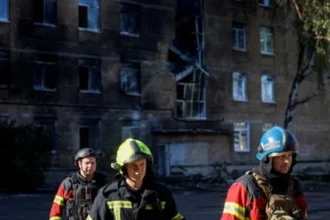
Fire Rescue Victoria (FRV) crews were dispatched late Wednesday night to the Viva Energy refinery in Geelong, where a massive blaze erupted under circumstances that remain under investigation. The facility is one of only two remaining crude oil refineries in Australia, making any disruption to its operations a significant concern for national fuel security. By early Thursday morning, thick plumes of acrid smoke continued to billow from the site, prompting urgent health warnings for residents in the surrounding suburbs.
Fire Crews Struggle to Contain ‘Unprecedented’ Blaze at Geelong Oil Refinery
The fire at the Geelong oil refinery has been described by local officials as a landmark emergency for the region. Geelong Mayor Stretch Kontelj, speaking to ABC Melbourne radio, characterized the scale of the incident as "unprecedented," noting that even veteran refinery managers could not recall a blaze of this magnitude in recent history. The fire reportedly broke out in a high-risk area of the plant, necessitating a massive response from specialized industrial firefighting units.
As of 6:00 a.m. Thursday, the blaze was reportedly being brought under control, though fire crews remained on-site to manage hotspots and prevent reignition. The complexity of petrochemical fires requires the use of specialized foam and cooling techniques to prevent the heat from compromising nearby storage tanks. Viva Energy, the operator of the refinery, issued a statement confirming that no injuries had been reported among the overnight shift workers. However, the company has yet to provide a full assessment of the structural damage to the facility’s processing units.
The Geelong oil refinery fire comes at a precarious time for Australia’s energy sector. Following the closure of the BP Kwinana refinery in Western Australia and the ExxonMobil Altona refinery in Melbourne in recent years, Australia has become increasingly dependent on imported refined fuels. The Geelong site, along with Ampol’s Lytton refinery in Queensland, represents the last vestige of domestic refining capacity, a status that has seen the federal government provide significant subsidies to ensure their continued operation.
Environmental and Health Warnings Issued for Corio and Surrounding Areas
Public health officials have issued a "stay indoors" advisory for residents in Corio and areas south of the refinery. The smoke from the Geelong oil refinery fire contains a cocktail of particulates and chemical byproducts inherent in petroleum processing. Residents have been urged to close all windows and doors, turn off air conditioning units that draw in outside air, and keep pets inside until the atmospheric conditions improve.

The environmental impact of the incident is also under scrutiny. The Environment Protection Authority (EPA) Victoria is expected to deploy air monitoring equipment to track the dispersion of the smoke plume. There are also concerns regarding the runoff of firefighting foam and water into local drainage systems, which could potentially impact the water quality of nearby Corio Bay. FRV commanders stated that containment booms were being utilized to mitigate any liquid discharge from the site.
While Viva Energy has assured the public that there is no "immediate impact" on fuel supplies, industry analysts warn that a prolonged shutdown of specific units at the Geelong plant could tighten the market for specialty fuels, including jet fuel and ultra-low-sulfur diesel. The refinery supplies approximately 50 percent of Victoria’s fuel needs, making its operational status a critical component of the state’s logistical backbone.
Matt Canavan Defends Coalition Immigration Plan Amid Values Debate
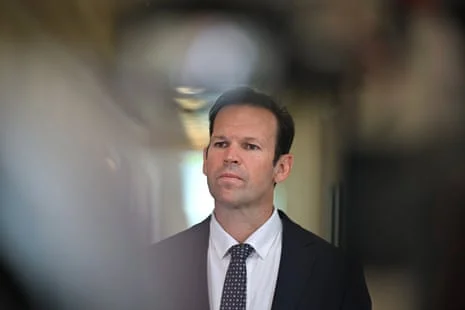
Simultaneously, the political landscape in Canberra has been dominated by a contentious defense of the Coalition’s immigration plan. Senator Matt Canavan, the leader of the Nationals in the Senate, appeared on the ABC’s 7.30 program to advocate for a significant overhaul of how Australia selects its future citizens. Canavan described the proposed crackdown as "fair and reasonable," arguing that the policy would be welcomed by migrant communities who value the "rigour" of the Australian naturalization process.
The Coalition immigration plan seeks to introduce more stringent vetting processes, which Canavan suggested should be based on a "discrimination of values." During a pointed exchange with host Sarah Ferguson, Canavan argued that while Australia should not discriminate based on race, religion, or gender, it has a sovereign right to exclude individuals whose values do not align with democratic principles or gender equality.
"It’s fair and reasonable that we set high standards to join the club of Australians," Canavan said, invoking the experience of his Italian grandparents who immigrated in the 1950s. He claimed that public support for the current migration program is "falling off a cliff," suggesting that the government has ignored the concerns of the electorate regarding social cohesion and infrastructure pressure.
The ‘Good Fences’ Controversy and Political Fallout
The interview took a literary turn when Canavan utilized a quote often attributed to the poet Robert Frost: "Having good fences make for good neighbours." The remark was intended to underscore the necessity of firm border controls and clear expectations for those entering the country. However, Ferguson was quick to point out the irony of the reference, noting that in Frost’s poem "Mending Wall," the line is delivered with a sense of skepticism regarding the necessity of barriers.
The Coalition immigration plan has drawn sharp criticism from human rights advocates and the Labor government, who argue that the policy risks stigmatizing migrant communities and creating a "two-tier" society. Critics contend that "values-based" testing is inherently subjective and could be used to unfairly target specific cultural groups. Canavan dismissed these concerns, stating that the policy is about protecting the Australian way of life rather than excluding people based on their background.

The debate over the Coalition immigration plan is expected to be a central pillar of the upcoming electoral cycle. With housing affordability and infrastructure strain at the forefront of the public consciousness, the opposition is betting that a hardline stance on migration will resonate with voters in suburban and regional areas. Conversely, the government has accused the Coalition of "dog-whistling" and endangering Australia’s reputation as a successful multicultural nation.
National Security and Social Cohesion in the Balance
The confluence of the Geelong oil refinery fire and the immigration debate highlights the broader challenges facing Australia in 2026. On one hand, the industrial accident in Corio exposes the fragility of the nation’s "just-in-time" fuel supply chain and the risks associated with a dwindling manufacturing base. On the other, the rhetoric surrounding the Coalition immigration plan reflects a nation struggling to define its identity in an era of global instability and shifting demographics.
For the residents of Geelong, the immediate priority remains the containment of the fire and the mitigation of health risks. Local businesses near the refinery have reported disruptions, and the long-term economic impact on the Viva Energy workforce remains to be seen. The company has promised a transparent investigation into the cause of the fire, but questions regarding the aging infrastructure of Australia’s remaining refineries are likely to persist.
In Canberra, the fallout from Canavan’s comments continues to reverberate through the halls of Parliament. The Nationals leader’s reference to his own Section 44 citizenship saga—in which he was eventually cleared by the High Court of being a dual citizen—was used to bolster his image as a "dinky-di Aussie." However, his opponents argue that his vision for the country is one of exclusion rather than the "fair go" that Australia traditionally prides itself on.
As fire crews continue their work at the Geelong oil refinery and politicians sharpen their arguments over the Coalition immigration plan, the nation remains at a crossroads. The resolution of the fire will provide a test for Australia’s emergency response capabilities, while the resolution of the immigration debate will ultimately be decided at the ballot box. Both events, though different in nature, underscore a period of significant tension and transition for the country.