The Australian federal government officially withdrew its controversial Freedom of Information (FoI) amendment bill from the Senate on Thursday, marking a significant legislative retreat following a lack of support from both the opposition and the Greens. Simultaneously, Victorian Attorney General Sonya Kilkenny announced a formal review of the state’s Open Courts Act to limit the proliferation of suppression orders, which critics argue have been increasingly used by high-profile defendants to evade public scrutiny. These developments coincided with a landmark address to the Australian Parliament by Canadian Prime Minister Mark Carney, who called for a new era of "strategic collaboration" between middle powers to navigate a fracturing global order.

Transparency and the Withdrawal of the FoI Amendment Bill
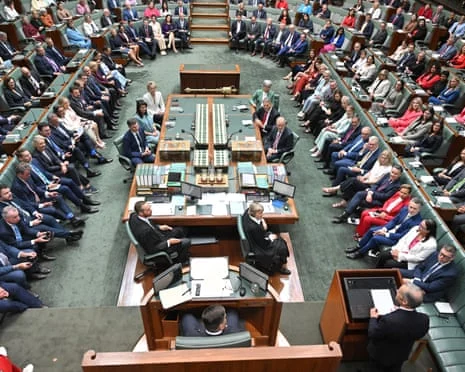
The decision to discharge the Freedom of Information amendment bill from the Senate represents a major backdown for the Labor government. The proposed legislation had faced intense criticism from transparency advocates, legal experts, and crossbench senators who argued the changes would significantly weaken the public’s right to access government information. Because a broad coalition of lawmakers was in favor of abandoning the bill, the motion to dump it passed without a formal vote, signaling the government’s recognition that the path to passage was non-existent.
During the session, several senators took the opportunity to rebuke the administration for introducing the measure in the first place. Greens Senator David Shoebridge remarked that the government had failed to "read the room," suggesting the bill belonged in a "dustbin" from which it should never have emerged. Independent Senator David Pocock echoed these sentiments, characterizing the Senate’s rejection as a vital check on executive power. Pocock noted that the move was essential to prevent the government from reducing the level of scrutiny applied to its internal processes.
The withdrawal was framed by Minister for Government Business Katy Gallagher as a pragmatic response to the Senate’s composition. Gallagher stated that the government remains committed to reforming the FoI system, acknowledging that the current framework requires updating to meet modern standards of transparency. However, she emphasized that the administration would "continue to engage" with stakeholders to develop a revised version of the legislation that could actually command a majority. Transparency advocates, including former senator Rex Patrick, hailed the move as a "victory for civil society," calling for any future reform process to be entirely independent of political influence.
Victoria Moves to Limit Suppression Orders for High-Profile Defendants
In a separate but equally consequential legal development, the Victorian government is preparing to curb the use of suppression orders that prevent the media from naming high-profile defendants. Attorney General Sonya Kilkenny confirmed on Thursday that she is seeking urgent advice on amending the Open Courts Act. The move follows a formal letter of protest sent by a coalition of the nation’s largest media organizations, including the ABC, the Guardian, and various commercial television networks.
The media collective warned that defendants are increasingly utilizing "mental health grounds" as a tactical maneuver to secure suppression orders, even in cases where such secrecy is not warranted by the facts. This trend, they argue, undermines the fundamental principle of open justice. Victoria has long been an outlier in this regard; a recent report from Monash University revealed that the state accounts for nearly half of all suppression orders issued across Australia, despite containing only one-third of the country’s population.
Kilkenny noted that while the mental health of defendants is a valid consideration, the justice system must also prioritize the needs and voices of victims. "We’ve heard from victims that the balance may not be right," Kilkenny told reporters outside Parliament. She emphasized that suppression orders should be "rare and targeted" rather than a default protection for the wealthy or influential. The review will look beyond mental health provisions to ensure the state’s legal framework aligns with the community expectation of transparency and accountability in the courtroom.
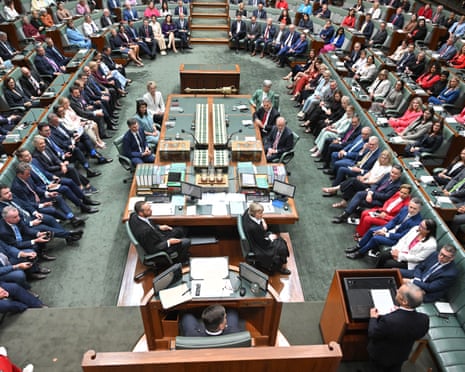
Mark Carney and the Strategy of "Middle Power" Collaboration
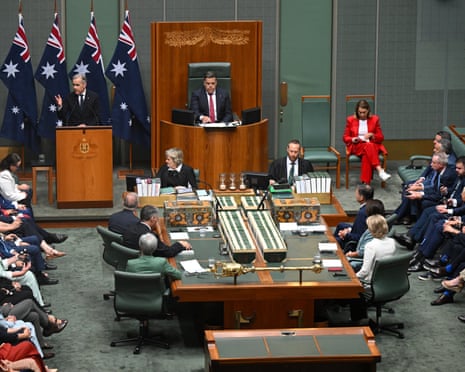
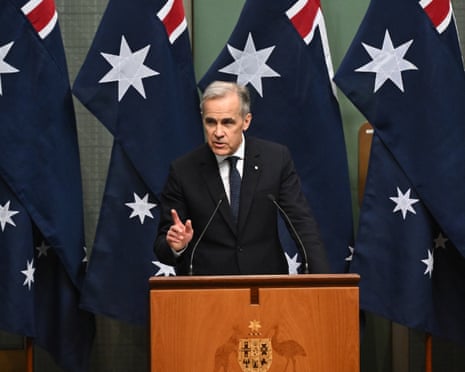
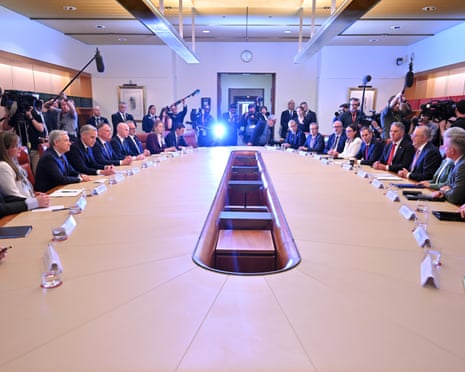
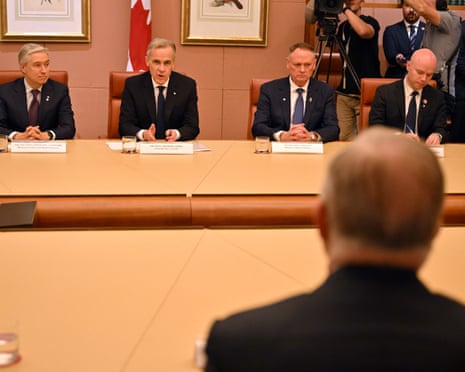
The Australian Parliament also hosted Canadian Prime Minister Mark Carney for a rare address to both houses. Carney’s visit, which included high-level meetings in the cabinet room with Prime Minister Anthony Albanese, focused on the evolving role of "middle powers" like Australia and Canada in a world increasingly dominated by "hyperscalers and hegemons." Carney described the two nations as "strategic cousins" rather than competitors, urging deeper cooperation in defense, trade, and technology.
A central theme of Carney’s address was the need for sovereign AI capability. He argued that middle powers must develop their own intelligence infrastructure—including secure data clouds and large language models—to avoid becoming overly dependent on foreign tech giants or geopolitical rivals. "Strategic autonomy will require sovereign intelligence infrastructure," Carney told the assembled lawmakers, noting that Canada and Australia share the values necessary to build ethical and resilient technological frameworks.
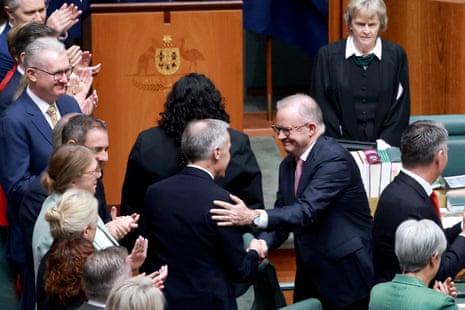
Carney also addressed the deteriorating situation in the Middle East, offering a nuanced critique of recent U.S. and Israeli strikes on Iran. While Carney stated that Canada supports the objective of preventing Iran from obtaining nuclear weapons, he described the unilateral strikes as "another example of the failure of the international order." He noted that the actions appeared to be inconsistent with international law, as they were conducted without United Nations Security Council support or broad consultation with allies. His remarks highlighted a growing desire among middle powers to reinvigorate multilateral institutions rather than relying on the "variable geometry" of ad hoc coalitions.
Regional Instability and the Middle East Evacuation Effort
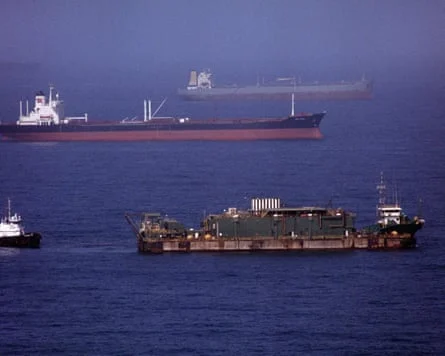
The geopolitical tensions discussed by Carney have immediate consequences for Australian citizens. Foreign Affairs Minister Penny Wong provided an update on Thursday regarding the government’s efforts to evacuate Australians stranded in the Middle East. Following the arrival of a flight in Sydney carrying more than 230 evacuees from Dubai, Wong announced that three additional flights were scheduled for departure.

The evacuation effort comes as the conflict continues to spread "rapidly and unpredictably." Wong expressed deep concern over reports that Iran had launched strikes on Turkey, a NATO member, marking the 11th country targeted by Iranian forces in the current cycle of violence. "This conflict is much more intense," Wong warned, urging Australians to reconsider any travel plans to the region. The Department of Foreign Affairs and Trade (DFAT) has deployed six teams to the Middle East to assist the estimated 115,000 Australians currently in the region, many of whom are rapidly registering for government assistance.
The human toll of the conflict was evident at Sydney’s international airport, where returning citizens shared stories of fear and displacement. Many had been caught in the crossfire while visiting family or conducting humanitarian work. The government’s priority remains the safe return of those in high-risk zones, though officials warned that flight schedules remain subject to sudden changes based on the security situation on the ground.

Domestic Policy: Indigenous Rights and Medicinal Cannabis
Amid the focus on international affairs, the federal government also announced a major domestic initiative. Minister for Indigenous Australians Malarndirri McCarthy confirmed a new parliamentary inquiry into racism, hate, and violence directed at First Nations people. The inquiry follows a series of high-profile incidents, including an alleged terror attack at a Perth rally and a white supremacist attack on a First Nations camp in Melbourne.
The joint standing committee will accept submissions until May, with a final report due in September. McCarthy emphasized that the rise of online racism has left many Indigenous families feeling "scared and angry." The inquiry aims to provide a platform for these communities to share their experiences and for the parliament to develop legislative responses to combat systemic hate.
In New South Wales, Premier Chris Minns signaled a potential shift in drug enforcement policy. During budget estimates, Minns announced that the state government would draft its own legislation to reform roadside drug testing for medicinal cannabis users. The move comes after criticism that the state had failed to act on recommendations from its 2024 drug summit. Minns argued that with over a million medicinal cannabis prescriptions in the state, the current "zero-tolerance" approach to driving—which does not account for impairment—is no longer fit for purpose, particularly for regional residents who rely on their vehicles for work and medical appointments.
Economic Outlook and Market Reaction
The political and geopolitical volatility has also left its mark on the Australian economy. The S&P/ASX 200 was expected to reverse some of its recent steep losses on Thursday, following reports that Iranian authorities might be seeking to restart negotiations with the United States. While the global market remains cautious, futures pricing indicated a 1% opening jump, erasing roughly half of the losses triggered by inflation fears and energy market disruptions.
Market analysts noted that while the outlook remains tied to the stability of oil flows, the prospect of diplomatic back-channels has temporarily bolstered investor confidence. However, with "geopolitical risk capable of flaring up again very quickly," financial institutions continue to advise a cautious approach to regional investments.
The confluence of these events—ranging from the collapse of a major transparency bill to the restructuring of international alliances—underscores a period of significant transition for Australian politics. As the government navigates a divided Senate and a volatile global landscape, the focus has increasingly shifted toward balancing domestic rights with the exigencies of national security and international cooperation.