Warner Bros. Pictures is set to release "The Bride!" in theaters and IMAX on March 6, marking a significant stylistic departure for director Maggie Gyllenhaal in her sophomore feature. The film, a radical reimagining of the 1935 Universal classic "The Bride of Frankenstein," shifts the gothic horror of the original into a vibrant, chaotic 1930s Chicago. Starring Jessie Buckley and Christian Bale, the production attempts to bridge the gap between classic monster cinema and modern feminist critique.
The narrative framework of "The Bride!" begins with a supernatural premise involving the author of the original 1918 novel, Mary Shelley. Buckley portrays a dual role, first appearing as a spectral, grieving Shelley who laments the historical silencing of her voice. This metaphysical rage manifests in 1930s Chicago, where Shelley’s spirit possesses Ida, a gangster’s moll played also by Buckley. After a fatal confrontation with a local kingpin, Ida’s body becomes the canvas for a scientific and existential experiment.

Christian Bale stars as "Frank," a century-old iteration of Frankenstein’s monster who has grown weary of his isolation. Seeking a companion, he enlists the help of Dr. Euphronious, portrayed by Annette Bening. Euphronious is depicted as a "mad scientist" whose academic pursuits involve the reanimation of the deceased. Following a sequence of grave-robbing and surgical intervention, Ida is resurrected as the titular Bride, though she emerges with no memory of her former life and a newfound, volatile persona.
The Artistic Vision Behind Gyllenhaal’s ‘The Bride!’
Maggie Gyllenhaal’s direction in "The Bride!" draws from a wide array of cinematic influences, moving beyond the shadow of James Whale’s 1935 masterpiece. While the original film featured Elsa Lanchester in a role that lasted only minutes and lacked dialogue, Gyllenhaal places the Bride at the center of the action. The director has stated during the film’s press tour that giving the character a voice was a primary objective of the project.
The visual language of the film is intentionally eclectic. Gyllenhaal utilizes a stifling black-and-white palette for the introductory sequences featuring Mary Shelley, only to explode into a saturated world of color as the story progresses. The production design incorporates "bisexual lighting"—heavy on pinks, purples, and blues—during nightclub sequences, contrasting with the grimy, neon-soaked streets of Chicago.

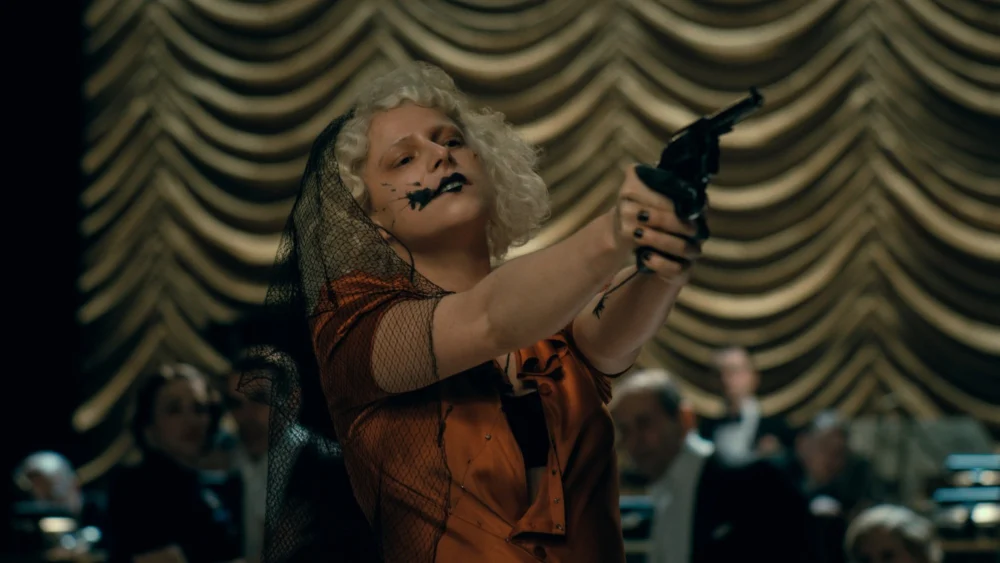
Critics have noted that the film functions as a "chaotic mix" of genres, blending elements of Arthur Penn’s "Bonnie and Clyde" with the camp sensibility of Mel Brooks’ "Young Frankenstein." The Bride herself is styled with a punk-inflected "alt-girl" aesthetic, featuring a shock of white hair and black bile stains that serve as a visual metaphor for the "darkness within." This stylistic choice distinguishes the film from more traditional horror revivals, leaning instead into a high-fashion, avant-garde territory.
A Feminist Reimagining of a Horror Icon in ‘The Bride!’
The thematic core of "The Bride!" centers on the reclamation of female agency and the consequences of systemic oppression. The film introduces the concept of a "brain attack," a term used by the Bride to describe the mental and emotional fallout of being controlled by men. This rhetoric sparks a movement within the film’s version of 1930s society, as other women begin to emulate the Bride’s defiant behavior and aesthetic.
Gyllenhaal’s script includes overt references to contemporary social movements, with the Bride uttering the phrase "me too" and speaking on behalf of the "angry dead." These elements suggest a lineage of female frustration that spans from the 19th-century author to the 20th-century moll. The film posits that the Bride’s "monstrosity" is not a result of her resurrection, but a reaction to a world that demands her submission.

The relationship between Frank and the Bride is portrayed with a sense of unconventional romance. Bale’s Frank is depicted as swooning over the Bride’s intellect and volatile moods rather than seeking a domestic partner. This dynamic subverts the traditional "Monster’s Mate" trope, presenting a partnership based on mutual alienation and shared rebellion against social norms.
Supporting Cast and the Critique of Institutional Allies
The film’s subplots provide a satirical look at gender dynamics through the characters of Detective Jake Wiles and Myrna Mallow. Peter Sarsgaard plays Wiles, a law enforcement officer tasked with tracking Frank and the Bride during their multi-state crime spree. Sarsgaard, who is Gyllenhaal’s real-life husband, portrays Wiles as a well-meaning but ultimately incompetent figure who receives public credit for work performed by his associate.
Penélope Cruz stars as Myrna Mallow, the true intellectual force behind the investigation. Despite her superior deductive skills, Mallow is relegated to the role of a "secretary" and faces constant condescension from the police department. This storyline serves as a parallel to the Bride’s struggle, highlighting how even "allied" men like Wiles benefit from a patriarchal system that overlooks female contribution.

The inclusion of Jake Gyllenhaal as Ronnie Reed, a singing and tap-dancing film star, adds a layer of meta-commentary on the power of cinema. Frank is shown to be a devotee of Hollywood movies, using them as a template for his own desires. The film suggests that the characters are often performing roles dictated by the silver screen, further blurring the line between reality and cinematic fantasy.
Technical Execution and Genre-Bending Elements in ‘The Bride!’
"The Bride!" is notable for its refusal to adhere to a singular tone, frequently pivoting from gruesome horror to choreographed musical numbers. One of the film’s most discussed sequences involves a "feral flashmob" at a high-society party, where guests are seemingly possessed by the spirit of Mary Shelley. This scene features a direct homage to "Young Frankenstein," with Bale’s character shouting the iconic line, "Puttin’ on the Ritz."
The film’s soundtrack and sound design contribute to its propulsive energy, utilizing sputtering dialogue and rhythmic editing to mirror the Bride’s internal state. The costume design by Malgosia Turzanska emphasizes the "dead but alive" nature of the protagonist, using burnt-orange silks and teal tights to create a look that is both regal and decaying.

Cinematographer Hélène Louvart, who previously collaborated with Gyllenhaal on "The Lost Daughter," manages the transition between various visual styles. From the gothic shadows of the laboratory to the dreamy dark blues of a grave-digging sequence, the camera work emphasizes the Bride’s need to be seen and heard. The film’s exhibitionist quality is reinforced by its IMAX release, which amplifies the scale of its "big swings" in style and performance.
Industry Impact and the Future of the Universal Monsters
The release of "The Bride!" comes at a time when major studios are increasingly looking to revitalize classic horror properties through the lens of prominent auteurs. Warner Bros. is positioning the film as a prestige genre piece, following the success of other revisionist takes on the Frankenstein mythos. The project also marks a significant step for Maggie Gyllenhaal as a filmmaker, demonstrating her ability to manage a large-scale studio production with a complex ensemble cast.
Early reactions suggest that "The Bride!" will be a polarizing entry in the horror genre, likely to attract a cult following among audiences who appreciate camp and transgressive storytelling. Its focus on the "furious and feminine" aligns it with other modern horror classics that use supernatural elements to explore real-world social anxieties.

As the film prepares for its March 6 debut, industry analysts are watching closely to see how audiences respond to its blend of high-brow themes and B-movie thrills. Regardless of its box office performance, "The Bride!" has already established itself as a bold reimagining of Mary Shelley’s legacy, proving that the story of Frankenstein’s creation remains a fertile ground for social and artistic rebellion. The film concludes not with a traditional resolution, but with a "yawp" of defiance, signaling that this version of the Bride is no longer content to remain silent.