FIFA has firmly upheld the previously announced schedule for the 2026 World Cup, denying Iran’s request to move its matches from the United States to Mexico amid escalating geopolitical tensions and concerns over player safety. The global football governing body stated its commitment to the established tournament plan, emphasizing that all participating nations are expected to compete as scheduled. This decision effectively closes the door on Iran’s diplomatic efforts to secure a venue change, underscoring FIFA’s adherence to its logistical and organizational frameworks.
Background to the Iranian Request
The Iranian football federation’s appeal stemmed from a desire to mitigate perceived security risks associated with playing in the United States, particularly in light of the ongoing military conflict involving Iran and its allies against Israel. The initial outbreak of hostilities on February 28 cast a shadow over Iran’s participation in the prestigious tournament, prompting a proactive stance from the nation’s sporting authorities. Iran had secured its place in the 2026 World Cup nearly a year prior, topping its qualifying group as the second Asian team to achieve this feat, following Japan.
Escalating Tensions and Public Statements
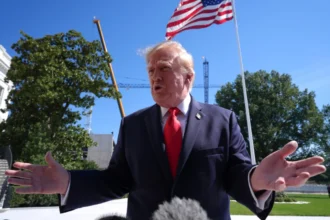
The situation intensified following remarks made by U.S. President Donald Trump, who, while extending a conditional welcome to Iran, expressed reservations about the appropriateness of their participation in the U.S. for their own safety. Trump stated, "I really don’t believe it is appropriate that they be there, for their own life and safety." These comments were met with a strong rebuttal from Iran’s national football team via social media, asserting that "no one can exclude Iran’s national team from the World Cup."
Further compounding the situation, Iranian football chief Mehdi Taj publicly declared on Monday that Iran would not travel to America if security assurances were not guaranteed. Taj explicitly stated, "When Trump has explicitly stated that he cannot ensure the security of the Iranian national team, we will certainly not travel to America." He then revealed ongoing negotiations with FIFA to shift Iran’s World Cup fixtures to Mexico, highlighting the urgency of their request.
Diplomatic Maneuvers and Mexican Response
Iran’s Ambassador to Mexico, Abolfazl Pasandideh, also voiced criticism of Washington’s perceived lack of cooperation regarding visa issuance and logistical support for the Iranian delegation. This diplomatic pressure aimed to underscore the perceived challenges Iran faced in its dealings with the U.S. government, thereby bolstering their case for a venue change.
Mexico, a co-host of the 2026 World Cup alongside the U.S. and Canada, had previously indicated a willingness to accommodate Iran’s request. Mexican President Claudia Sheinbaum stated on Tuesday that the country was prepared to host Iran’s first-round matches. She emphasized Mexico’s commitment to maintaining diplomatic relations with all nations, adding, "Mexico maintains diplomatic relations with every country in the world, therefore, we will wait to see what FIFA decides." This open stance from Mexico presented a potential alternative for Iran, but the ultimate decision rested with FIFA.
FIFA’s Stance and the 2026 World Cup Schedule
In its official statement, FIFA reiterated its position, stating, "FIFA is in regular contact with all participating member associations, including Iran, to discuss planning for the FIFA World Cup 2026." The organization underscored its forward-looking approach, adding, "FIFA is looking forward to all participating teams competing as per the match schedule announced on 6 December 2025." This declaration left no room for ambiguity regarding the governing body’s adherence to the established tournament itinerary.
The 2026 FIFA World Cup is a landmark event, set to be the first edition hosted across three North American nations: the United States, Mexico, and Canada. The tournament is slated to commence on June 11, with the opening match featuring South Africa against Mexico. Iran’s current schedule includes matches against New Zealand and Belgium in Los Angeles, and against Egypt in Seattle, all within the United States.
Broader Implications and Geopolitical Context
FIFA’s decision carries significant weight, not only for Iran but also for the broader context of international sports diplomacy. The governing body’s commitment to the predetermined schedule suggests a reluctance to allow geopolitical conflicts to dictate tournament logistics. This stance aims to maintain the integrity and predictability of major sporting events, which are often subject to complex international relations.
The situation also highlights the delicate balance that international sports organizations must strike between political realities and their mandate to foster global sporting participation. While FIFA’s primary focus is on the sport itself, the geopolitical backdrop can create challenges that require careful navigation. The Iranian federation’s request, though ultimately denied, reflects the real-world pressures faced by athletes and sporting bodies operating in politically charged environments.
The U.S. Department of State has previously assured that all qualified teams will receive the necessary visas to participate in the World Cup, irrespective of their country of origin. However, the concerns raised by Iran, particularly regarding President Trump’s remarks, underscore a perceived lack of political will or security guarantees from the host nation, according to Iranian officials. This perception, regardless of its objective validity, played a crucial role in Iran’s appeal to FIFA.
Impact on the Tournament and Participating Nations
By upholding the schedule, FIFA ensures a degree of certainty for all participating teams, host cities, and the millions of fans who will attend the matches. Any deviation from the established plan could trigger a cascade of logistical complexities, impacting broadcast schedules, travel arrangements, and security protocols across multiple venues. The unified front presented by FIFA, along with co-hosts Canada and Mexico, reinforces the collaborative nature of organizing such a massive global event.
The decision also sets a precedent for how FIFA might handle similar requests in the future, indicating a strong preference for maintaining established tournament structures. This approach prioritizes the organizational integrity of the World Cup, safeguarding it from potential disruptions stemming from international disputes. The focus now shifts to Iran’s response and whether they will proceed with their participation under the current schedule, despite their expressed security concerns.
The global football community will be closely watching Iran’s next steps, as their participation is a key element of the 2026 World Cup narrative. The organization’s firm stance, however, signals a clear message: the schedule for the 2026 FIFA World Cup remains immutable. This unwavering position by FIFA underscores their commitment to delivering the tournament as planned, irrespective of external pressures or political considerations. The focus is now on the teams to prepare and compete on the world’s biggest football stage, as per the confirmed schedule.