California Governor Gavin Newsom has ignited a significant debate within U.S. political circles, publicly comparing Israel to an "apartheid state" and advocating for a fundamental reconsideration of American military support for the nation. The provocative statements, made during an event promoting his new memoir, underscore growing divisions within the Democratic Party regarding U.S. foreign policy in the Middle East, particularly in light of the ongoing conflict in Gaza and shifting domestic political currents.
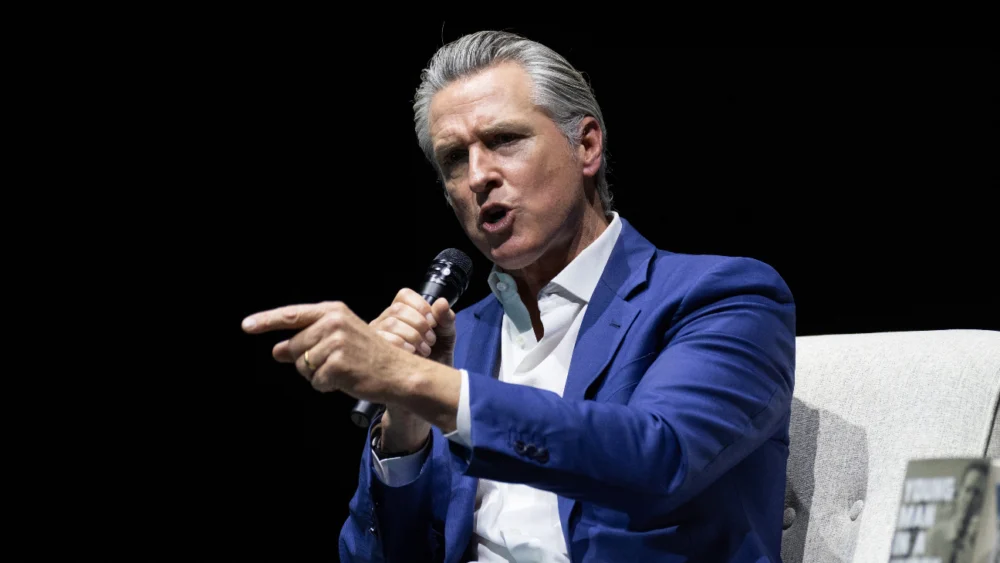
Newsom, widely anticipated to be a contender in the 2028 presidential race, made the remarks during an on-stage interview with Jon Favreau, host of "Pod Save America." When pressed on the future of the U.S.-Israel relationship and the necessity of reevaluating it, Newsom expressed profound dismay. "It breaks my heart, because the current leadership in Israel is walking us down the path where I don’t think you have a choice about that consideration," he stated, signaling a potential break from traditionally steadfast U.S. backing.
The "Apartheid State" Designation: Context and Controversy
The governor’s use of the term "apartheid state" is particularly charged, invoking the historical system of racial segregation and discrimination in South Africa. While highly controversial when applied to Israel, the designation has been increasingly utilized by human rights organizations and some international bodies to describe Israeli policies in the West Bank and Gaza Strip. Organizations such as Amnesty International and Human Rights Watch have published extensive reports detailing practices they argue constitute apartheid against Palestinians.
Newsom explicitly referenced New York Times columnist Thomas Friedman, noting that Friedman and "others are talking about [Israel] appropriately as sort of an apartheid state." Friedman has been a consistent voice warning that Israel’s trajectory, particularly under its current right-wing government, risks transforming it into an apartheid state. His recent columns have emphasized the potential for West Bank annexation and the weakening of democratic institutions as key drivers of this concern, arguing that such developments would significantly undermine American interests in the broader Middle East.
A Call to Rethink U.S. Military Support for Israel
For decades, U.S. military support for Israel has been a cornerstone of American foreign policy, rooted in shared security interests and a deep bilateral alliance. The United States provides billions of dollars annually in security assistance, including advanced weaponry and defense technology, under multi-year agreements. This aid is often viewed as critical for Israel’s qualitative military edge in a volatile region.
Newsom’s suggestion that this support should be rethought represents a significant departure from mainstream Democratic discourse of the past. It reflects a growing sentiment within the party’s progressive wing that unconditional aid to Israel must be reevaluated in the context of the humanitarian crisis in Gaza and the perceived lack of progress toward a two-state solution. Such a reevaluation, if pursued, could have profound implications for Israel’s defense capabilities, regional power dynamics, and the U.S.’s role as a mediator in the Middle East.
Underlying Drivers: Gaza and Shifting Democratic Sentiments
Newsom’s comments are not isolated but emerge from a complex confluence of events, primarily the devastating impact of the ongoing conflict in Gaza. The Israeli military operation, launched in response to the October 7th attacks, has led to a catastrophic humanitarian situation, with widespread destruction, mass displacement, and a staggering death toll. Images and reports from Gaza have fueled international condemnation and intensified calls for a ceasefire and greater accountability.
Domestically, the war has accelerated a dramatic shift in the Democratic Party’s base regarding Israel. Polling data and electoral trends indicate a marked decline in pro-Israel sentiment among Democratic voters, particularly younger demographics and progressives. This shift has made even "minor links" to Israel an electoral liability for Democratic candidates in primary races, forcing many politicians to adjust their positions or face significant challenges from the left. Newsom’s statements can be seen as an attempt to align himself with this evolving base, which increasingly advocates for Palestinian rights and a more balanced U.S. approach to the Israeli-Palestinian conflict.
Critique of Benjamin Netanyahu’s Leadership
Beyond the broader policy considerations, Newsom also directed pointed criticism at Israeli Prime Minister Benjamin Netanyahu. The California governor has previously slammed Netanyahu on multiple occasions, and his latest remarks continued this trend. "The issue of [Netanyahu] is interesting," Newsom observed, highlighting the Israeli leader’s precarious political position.
Newsom detailed Netanyahu’s domestic challenges, noting he "has his own domestic issues," including ongoing corruption trials that threaten his political career. He also pointed to an upcoming election, stating Netanyahu "is potentially on the ropes" and is politically vulnerable. Furthermore, Newsom highlighted the influence of hardline elements within Netanyahu’s coalition who "want to annex the West Bank," a move that would effectively end any realistic prospect of a two-state solution and further entrench Israeli control over Palestinian territories. These domestic pressures, Newsom suggested, contribute to Netanyahu’s current policies and their broader implications.
Newsom’s Political Calculus and the 2028 Race
Gavin Newsom’s outspoken criticism of Israel and its leadership, coupled with his call to rethink U.S. military support, carries significant political weight, especially given his likely presidential ambitions. By taking a more progressive stance on the Israeli-Palestinian conflict, Newsom is positioning himself to appeal to the increasingly influential left wing of the Democratic Party, which is demanding a more critical approach to Israel.
This strategy, however, is not without risks. Historically, robust support for Israel has been a bipartisan consensus, and a strong pro-Israel lobby remains influential in Washington. Newsom’s remarks could alienate more centrist Democrats and traditional Jewish voters who remain strong supporters of Israel. His intervention signals a potential fracturing of the Democratic Party on foreign policy issues, forcing other prospective 2028 candidates to articulate their own positions on this contentious subject.
Broader Foreign Policy Implications
The implications of Newsom’s statements extend far beyond California politics, potentially signaling a significant shift in U.S. foreign policy discourse. Should a future Democratic administration adopt a similar posture, it could fundamentally alter the U.S.-Israel strategic alliance, recalibrate American engagement in the Middle East, and potentially embolden other nations to apply similar pressure on Israel.
A reevaluation of military aid would not only impact Israel’s defense capabilities but also send a powerful message about U.S. priorities regarding human rights and international law in the region. It could also prompt a re-examination of American diplomatic efforts to resolve the Israeli-Palestinian conflict, potentially moving towards a more assertive role in advocating for Palestinian statehood and rights. The ongoing debate within the Democratic Party, now amplified by a prominent figure like Newsom, suggests that the future of U.S. policy toward Israel is poised for a potentially transformative period.
Newsom’s intervention underscores the profound impact of the Gaza conflict on global perceptions and domestic political landscapes. His comparison of Israel to an "apartheid state" and his call for a review of military aid represent a stark challenge to the long-standing U.S. foreign policy consensus, setting the stage for an intense and crucial debate over America’s role in the Middle East and its relationship with a key ally. The unfolding situation suggests that the traditional framework of U.S.-Israel relations is under unprecedented scrutiny, with calls for change resonating from increasingly influential corners of American politics.