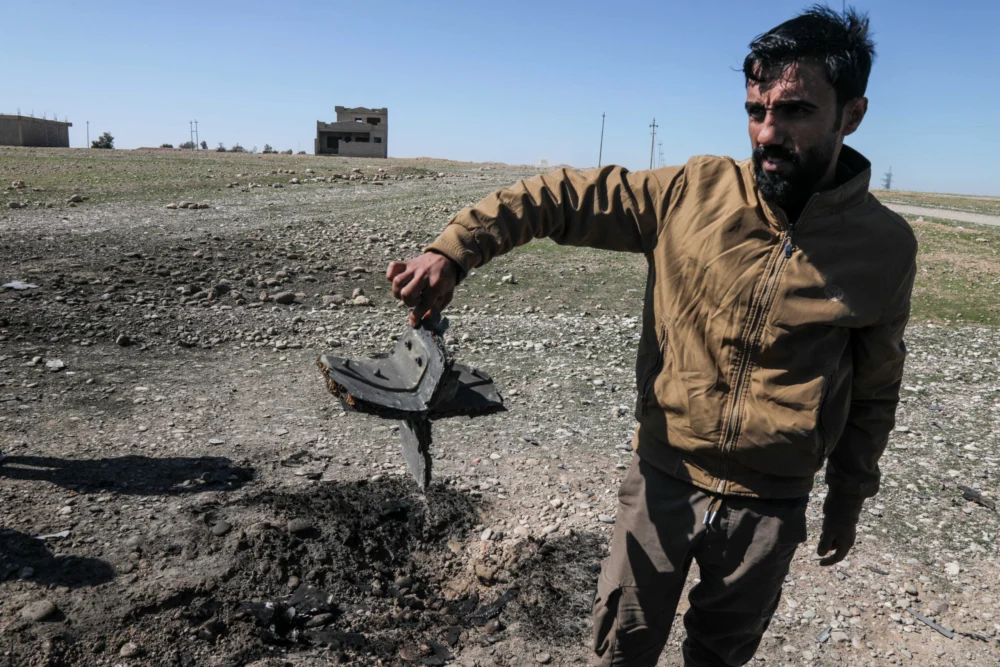
A significant wave of drone attacks, reportedly numbering in the hundreds, struck multiple locations across Kuwait, Iraq, Saudi Arabia, and the United Arab Emirates on Wednesday, targeting facilities hosting U.S. troops and diplomatic outposts. The Iranian Revolutionary Guard Corps (IRGC) claimed responsibility for what it described as "first powerful steps" in its ongoing retaliatory campaign against the United States and its allies. These coordinated strikes mark a dramatic escalation in regional tensions, following a series of intensified operations by Israel and the U.S. in the region.
Escalating Drone Barrage Across the Gulf
The IRGC asserted that 230 drones were deployed in the assaults, aiming at various sites frequented by American military personnel. Among the primary targets were the Ali Al Salem Air Base and Camp Arifjan in Kuwait, and a base in Erbil, northern Iraq. This claim by the IRGC underscores Iran’s declared intent to retaliate against perceived aggression, signaling a deepening of the conflict that has destabilized the Middle East.
In Kuwait, the Ministry of Health confirmed a tragic casualty, reporting the death of an 11-year-old girl. She succumbed to injuries sustained from falling shrapnel during the aerial assault. Emergency services attempted resuscitation en route to Al-Amiri Hospital, but the girl’s injuries proved fatal. This civilian toll highlights the devastating collateral damage that can arise from such widespread drone operations.
Attacks Ripple Through Iraq and Saudi Arabia
Iraq experienced multiple drone incursions. Al Jazeera Arabic reported a drone strike targeting a logistical support facility for the U.S. embassy in Baghdad, situated near the capital’s international airport. This incident followed a similar, albeit foiled, drone attack near the airport the previous day, according to Iraq’s security media cell.
Further north, in the Kurdish region of Iraq, security sources informed Reuters that two drones struck a U.S. military base and an adjacent hotel in Erbil. These strikes in Erbil occurred one day after a building in Sulaimaniyah, also within the Iraqi Kurdish region, was hit by a drone strike. Verified footage circulating online depicted flames erupting from the damaged building, accompanied by reports of a significant explosion.
Saudi Arabia’s Ministry of Defense announced that its forces successfully intercepted and destroyed a drone over the Kingdom’s Eastern Province. While the ministry confirmed the interception, it provided limited details regarding the drone’s origin or whether the incident resulted in any damage or casualties. The Eastern Province is a key industrial and oil-producing region, making any aerial threat there a matter of significant concern.
UAE and Diplomatic Targets in the Crosshairs
The United Arab Emirates also reported drone activity, with strikes reportedly targeting the U.S. consulate in Dubai and a port facility in Fujairah. These attacks on civilian and commercial infrastructure underscore the expanding scope of Iran’s retaliatory actions.
The ripple effects of these drone campaigns extended to diplomatic missions. The U.S. embassy in Saudi Arabia and the U.S. consulate in the UAE were subjected to drone attacks on Tuesday. In response to the escalating threats, the U.S. State Department announced on Wednesday that it had authorized the evacuation of non-emergency government personnel from these locations. This measure reflects a heightened security posture and concern for the safety of U.S. personnel stationed in the region.
Context of the Escalation: A Retaliatory Cycle
The current wave of drone attacks is framed by the IRGC as a direct response to what Iran perceives as aggression from the U.S. and Israel. Iran initiated its aerial campaign against Israeli targets and U.S. military assets in Gulf states following initial U.S.-Israeli strikes on February 28. These strikes, according to Iranian state media and subsequent reports, were allegedly in retaliation for the killing of Iranian Supreme Leader Ayatollah Ali Khamenei in what Iran has characterized as U.S.-Israeli attacks. This sequence of events suggests a dangerous tit-for-tat escalation, with each side framing its actions as defensive or retaliatory.
Shifting Dynamics and Persistent Threats
Despite the substantial number of drones reportedly deployed, Al Jazeera’s correspondent Zein Basravi, reporting from Doha, Qatar, noted a potential decrease in the volume and frequency of attacks across the Gulf. However, Basravi cautioned that even a reduced intensity of attacks could still pose significant challenges.
"The issue is that it does not take too many attacks to close airspace or cause disruptions," Basravi stated. "So even if Iran is able to maintain a low level of attacks, that will continue being a problem for the GCC [Gulf Cooperation Council] countries caught up in this conflict." This assessment highlights the asymmetric impact of drone warfare, where even limited strikes can have disproportionately large economic and logistical consequences for civilian populations and regional stability.
Economic and Political Ramifications
The sustained drone activity and the threat of further escalation carry significant economic implications for the Gulf region, a vital hub for global energy supplies and international trade. Disruptions to air traffic, port operations, and the potential for damage to critical infrastructure can lead to increased insurance costs, impact investment confidence, and affect commodity prices.
Politically, these attacks place Gulf Cooperation Council (GCC) member states in a precarious position, caught between the escalating conflict between Iran and the U.S./Israel. While some Gulf nations have historically maintained complex relationships with Iran, they are also deeply intertwined with the United States through security agreements and economic ties. The ongoing drone war forces these countries to navigate heightened security concerns while attempting to avoid direct involvement in a wider regional conflagration.
Public Anxiety and Security Measures
The reports of drone attacks, even those intercepted or failing to cause significant damage, contribute to a climate of public anxiety across the affected nations. Citizens are exposed to the immediate threat of falling debris and the pervasive sense of insecurity that accompanies aerial assaults. Governments are compelled to bolster air defense systems and implement enhanced security protocols to protect both critical infrastructure and civilian populations.
The decision by the U.S. State Department to authorize the evacuation of non-emergency personnel underscores the seriousness with which Washington is treating the security situation. This move, while aimed at protecting U.S. citizens, also signals a lack of confidence in the immediate de-escalation of the conflict and potentially foreshadows further security measures or a shifting diplomatic stance.
The Future of Regional Security
The sustained drone attacks by Iran represent a calculated strategy to project power and exert pressure on its adversaries. While the IRGC portrays these actions as defensive responses, the broad scope of the targets, including civilian areas and diplomatic facilities, raises concerns about Iran’s broader objectives and its willingness to risk wider regional destabilization.
The international community is watching closely as the conflict unfolds. The interconnected nature of global energy markets and international security means that instability in the Persian Gulf has far-reaching consequences. The coming days and weeks will be critical in determining whether this cycle of escalation can be contained or if the region is headed toward a more protracted and devastating conflict, with the constant threat of drone warfare looming over its skies.