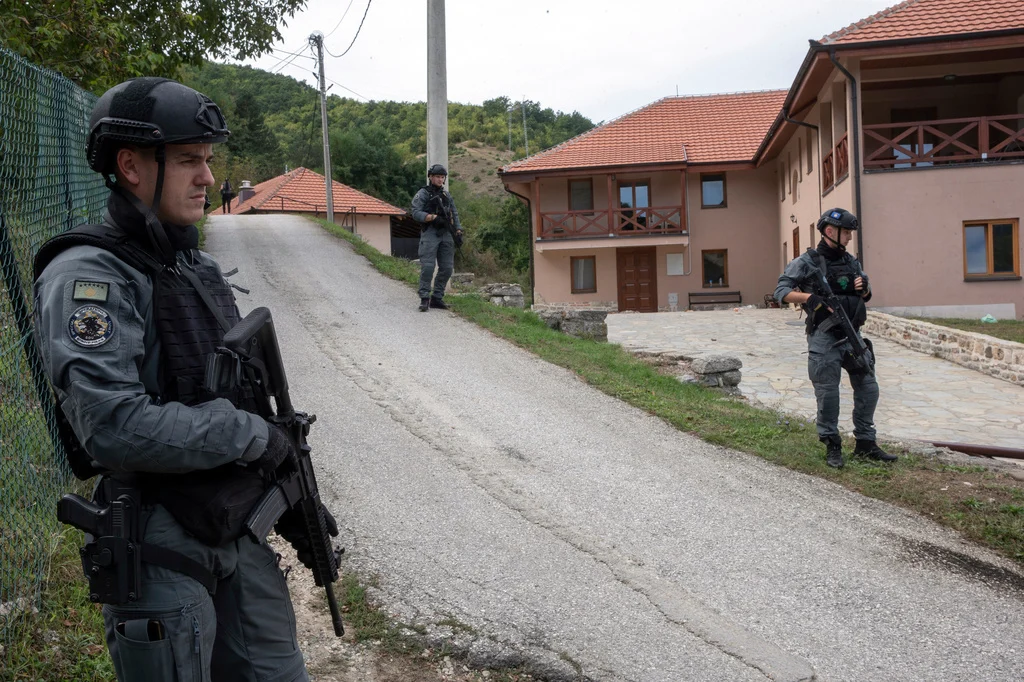
A court in Kosovo has handed down significant prison sentences to three ethnic Serbs convicted of terrorism charges in connection with a violent incursion in the village of Banjska in September 2023, an incident that escalated into a deadly clash with police. The verdicts mark a crucial judicial development in the aftermath of an event that significantly heightened tensions between Kosovo and Serbia, reigniting long-standing regional disputes.
Landmark Sentencing in Banjska Attack Trial
The Basic Court in Pristina delivered its verdicts on Friday, sentencing Blagoje Spasojevic and Vladimir Tolic to life imprisonment, while Dusan Maksimovic received a 30-year jail term. These sentences stem from their involvement in what authorities have described as a "well-organized plan" to forcibly annex the northern region of Kosovo, an area predominantly inhabited by ethnic Serbs, and integrate it with Serbia. The judge, Ngadhnjim Arrni, emphasized the calculated nature of the assault, highlighting the use of heavy weaponry in the attempted secession.
During the proceedings, Spasojevic maintained his innocence regarding any direct killings, acknowledging the incident as a personal "mistake" but refuting the label of "terrorist." His statement underscores the complex legal and emotional landscape surrounding the Banjska attack, where accusations of terrorism are weighed against individual claims of involvement and intent. The court’s decision reflects a firm stance by Kosovo’s judiciary on acts perceived as undermining its sovereignty and territorial integrity.
The Banjska Incursion: A Shadow Over Kosovo-Serbia Relations
The Banjska attack, which occurred on September 24, 2023, was the most severe outbreak of violence in Kosovo since its declaration of independence from Serbia in 2008. The incident began when an armed group ambushed a Kosovo police patrol in the village of Banjska, located in the north of the country. The ensuing firefight resulted in the death of one Kosovo police officer, while three of the assailants were also killed. The heavily armed group then barricaded themselves in a nearby monastery.
Following a prolonged standoff, Kosovo police engaged the gunmen, leading to the deaths of the remaining attackers. The scale and organization of the operation immediately drew international attention and intensified the already strained relations between Kosovo and its former suzerain, Serbia. The incident raised alarms about the potential for renewed ethnic conflict in the Western Balkans, a region with a history marked by brutal wars in the 1990s.
Milan Radoičić: The Mastermind Behind the Attack
Publicly admitting to leading and organizing the Banjska attack was Milan Radoičić, a prominent Kosovo Serb businessman and politician with close ties to Serbia’s ruling populist party and President Aleksandar Vučić. Radoičić’s confession, made after he was identified through drone footage by Kosovo security officials, placed a significant spotlight on Serbia’s alleged role in the incident. Kosovo authorities have consistently accused Serbia of orchestrating the attack, a charge Belgrade vehemently denies, asserting that the gunmen acted independently.
Radoičić is among a larger group of 45 individuals initially indicted in connection with the armed incident. However, Friday’s trial focused specifically on the three individuals who were in custody at the time of the verdicts. The broader investigation continues, with the possibility of further indictments and trials that could have significant implications for regional diplomacy and security.
The Deep-Rooted Ethnic Divide in Northern Kosovo
The region of northern Kosovo, where the Banjska attack took place, has long been a flashpoint for ethnic tensions. Approximately 50,000 ethnic Serbs reside in this area, many of whom do not recognize the institutions of Pristina and continue to view Belgrade as their legitimate capital. This demographic and political reality has frequently led to clashes with Kosovo police and international peacekeeping forces, underscoring the persistent challenges in integrating the north into the broader Kosovo state.
The legacy of the 1998-99 war, which claimed over 10,000 lives, continues to shape the political and social landscape of Kosovo. The conflict erupted when ethnic Albanian separatists launched a rebellion against Serbian rule, ultimately leading to NATO intervention and Serbia’s loss of control over Kosovo. The current judicial proceedings in Banjska are intrinsically linked to this historical context, representing a continuation of the struggle for sovereignty and identity.
International Reactions and Diplomatic Ramifications
The Banjska attack and the subsequent judicial proceedings have drawn significant attention from the international community. Western nations, including the United States and European Union member states, have largely supported Kosovo’s sovereignty and territorial integrity, while also calling for de-escalation and adherence to the rule of law. The EU, in particular, has been actively involved in mediating dialogue between Kosovo and Serbia, aiming for normalization of relations, which is a prerequisite for both countries’ aspirations for EU membership.
Serbia’s denial of involvement, coupled with its rhetoric regarding the protection of Serbs in Kosovo, has created a diplomatic impasse. The United States and other NATO members have expressed concern over Serbia’s military build-up near the border and its alleged support for paramilitary groups. The verdicts in Pristina are likely to be closely scrutinized by both Belgrade and the international community, potentially influencing future diplomatic engagement and the ongoing efforts to stabilize the Western Balkans.
The Broader Implications for Regional Security
The sentencing of the three Serb separatists in Kosovo serves as a stark reminder of the fragility of peace in the Western Balkans. The region remains susceptible to external influences and internal ethnic grievances, which can be exploited to fuel instability. The Banjska attack demonstrated a level of organization and armament that suggests a more sophisticated operational capability than previously observed in such incidents.
The conviction and sentencing of individuals involved in the attack are crucial for Kosovo’s efforts to assert its authority and deter future acts of aggression. However, the underlying political issues that contribute to such violence—namely, the unresolved status of Kosovo and the competing narratives of national identity—remain a significant challenge. The international community’s role in facilitating dialogue, promoting reconciliation, and ensuring accountability will be critical in preventing a recurrence of such deadly events.
Looking Ahead: The Path to Lasting Peace
The legal ramifications of the Banjska attack are far from over, with the ongoing investigation into the broader conspiracy and the potential for further trials. The convictions in Pristina represent a significant step in Kosovo’s pursuit of justice and accountability. However, achieving lasting peace and stability in the region will require sustained diplomatic efforts, a commitment to addressing the root causes of ethnic tensions, and the willingness of all parties to engage in constructive dialogue.
The sentences handed down to Spasojevic, Tolic, and Maksimovic send a clear message about the consequences of engaging in acts of terrorism and secessionist violence. Yet, the path forward necessitates a comprehensive approach that tackles not only the symptoms of conflict but also its underlying causes. The future of Kosovo and its relationship with Serbia hinges on the ability of both sides, with the support of the international community, to forge a sustainable and peaceful coexistence based on mutual respect and adherence to international norms. The Banjska incident, while a moment of crisis, could also serve as a catalyst for renewed efforts towards comprehensive reconciliation and regional integration.