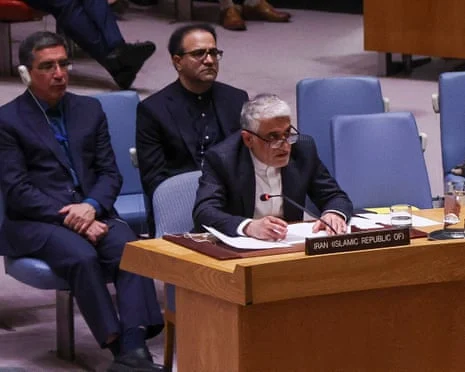
The Middle East plummeted into a new phase of uncertainty Monday as a U.S.-led maritime blockade of Iranian ports commenced, coinciding with a defiant rejection by Hezbollah of upcoming diplomatic negotiations between Lebanon and Israel. The blockade, which took effect at 1400 GMT, marks a significant escalation in the six-week-old conflict between the U.S.-Israeli coalition and the Islamic Republic of Iran, shifting the theater of war from kinetic strikes to a grueling test of economic endurance. Simultaneously, the Lebanese militant group Hezbollah has signaled its intention to sabotage potential peace efforts, with senior officials stating they will not be bound by any agreements reached during face-to-face talks scheduled to take place in Washington, D.C.
The dual developments have cast a shadow over a fragile two-week ceasefire and complicated the efforts of international mediators in Pakistan and Qatar. While the Trump administration maintains that "maximum pressure" through the blockade of the Strait of Hormuz will force Tehran to the negotiating table, the rhetoric from non-state actors like Hezbollah suggests that a regional resolution remains elusive. The blockade specifically targets ships entering or departing Iranian ports and coastal areas, though U.S. Central Command (CENTCOM) clarified that vessels utilizing non-Iranian ports in the Gulf will not be impeded.
The Maritime Blockade of the Strait of Hormuz Begins
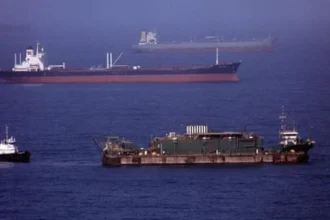
The implementation of the blockade in the Strait of Hormuz represents a high-stakes gamble with the global energy supply. Before the current conflict, approximately 20% of the world’s oil and gas moved through this narrow waterway, a critical choke point connecting the Persian Gulf to the Gulf of Oman. President Donald Trump, speaking from the White House, confirmed that the blockade would apply to all Iranian ports along the strait. He warned that any Iranian attack boats or naval assets that challenge the U.S. perimeter would be "destroyed" immediately.

Though CENTCOM made no formal televised announcement, maritime advisories were issued to seafarers and the United Kingdom Maritime Trade Operations (UKMTO). These advisories indicate that the blockade will be enforced regardless of a vessel’s flag if its destination or origin is an Iranian terminal. President Trump claimed on Monday that 34 ships had passed through the strait on Sunday without incident, though he provided no specific evidence to support the figure. He suggested that the "other side" had already reached out to the U.S. expressing a desperate desire to "make a deal," a claim that Iranian officials have yet to corroborate.
Hezbollah Urges Lebanon to Pull Out of Talks with Israel
As the naval pressure on Iran intensified, the political situation in Beirut grew increasingly volatile. Hezbollah, the Iranian-backed militant group and political powerhouse in Lebanon, has launched a campaign to delegitimize upcoming talks between Lebanese and Israeli ambassadors in Washington. These talks would represent the first time in decades that envoys from the two nations—which have no formal diplomatic relations—would meet face-to-face for direct negotiations.
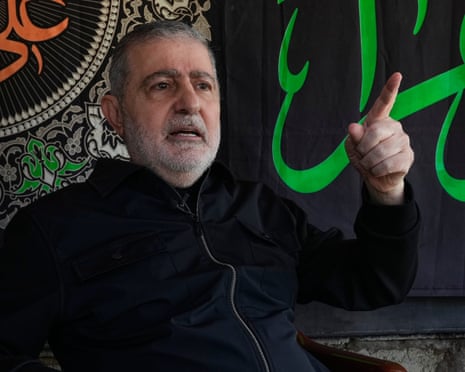
Wafiq Safa, a high-ranking member of Hezbollah’s political council, told the Associated Press that the group is "not interested in or concerned with" the outcomes of the negotiations. "As for the outcomes of this negotiation between Lebanon and the Israeli enemy, we are not interested in or concerned with them at all," Safa stated. This sentiment was echoed by Hezbollah leader Naim Kassem, who delivered a televised address urging the Lebanese government to withdraw from the process entirely. Hezbollah’s stance creates a significant hurdle for the Lebanese government, which has officially expressed a commitment to disarming the group as part of a broader peace initiative.
The Humanitarian Crisis and the Cost of Conflict in Lebanon
The push for negotiations comes amid a staggering human toll in Lebanon. According to the Lebanese Health Ministry, at least 2,055 people have been killed in Israeli strikes since the latest round of fighting began. The casualties include 252 women, 165 children, and 87 medical workers. Furthermore, over 6,588 people have been wounded, and more than 1 million residents have been displaced from their homes, creating a secondary crisis of internal migration and resource scarcity.
The current escalation was triggered on March 2, when Hezbollah launched a barrage of rockets into northern Israel following a joint U.S.-Israeli operation against Iranian targets. Since then, the conflict has expanded into a multi-front war involving air strikes, naval maneuvers, and targeted assassinations. While the Lebanese government had called for direct talks early in the war, the internal rift between the state and Hezbollah remains the primary obstacle to a sustainable ceasefire. Israel only announced its approval for the Washington talks last week, signaling a cautious willingness to explore a diplomatic exit.
Nuclear Diplomacy and the Enrichment Standoff
In the background of the military escalation, a separate diplomatic battle is being waged over Iran’s nuclear program. Reports indicate that during recent weekend talks in Pakistan, Iranian negotiators proposed a five-year suspension of uranium enrichment. However, the Trump administration reportedly rejected the offer, insisting on a minimum 20-year moratorium. The New York Times reported that while both sides are trading proposals, they remain "far apart" on the duration and verification mechanisms of any potential nuclear agreement.
U.S. Vice President JD Vance provided a more optimistic outlook during an interview with Fox News, suggesting that "some progress" was made in Islamabad. Vance noted that the Iranians had "moved in our direction" regarding the removal of nuclear material and the establishment of a mechanism to prevent future enrichment. "There really is, I think, a grand deal to be had here," Vance said, though he cautioned that the Iranian negotiators appeared unable to finalize an agreement without direct approval from the highest levels of leadership in Tehran. Vance added that the U.S. would be "very happy" to see Iran treated as a "normal country" with a "normal economy," provided its nuclear ambitions are permanently curtailed.
Trump’s Bellicose Rhetoric and Religious Friction
The domestic political atmosphere in the United States has also been colored by President Trump’s characteristic rhetoric. During a last-minute press conference at the White House—which notably began after the President received a McDonald’s delivery—Trump used aggressive language to describe the U.S. position. "Iran will not have a nuclear weapon, and we’re going to get the dust back," Trump said, referring to nuclear materials. "We’ll get it back, either we’ll get it back from them, or we’ll take it." When asked about potential ultimatums, he remarked that any consequences for non-compliance "won’t be pleasant."
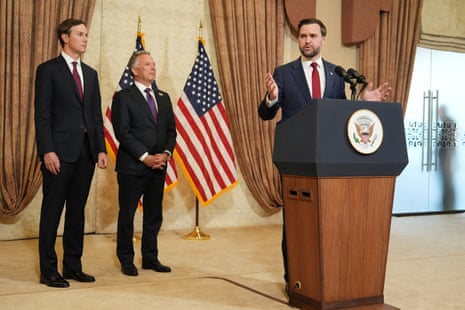
The President also opened a new rhetorical front by criticizing Pope Leo XIV on social media. After the Pontiff called for an immediate end to the war to prevent further loss of life, Trump accused the Pope of attempting to appease the "radical left." The Vatican responded by stating the Pope had "no intention to debate" the President but would continue to advocate for peace. Vice President Vance joined the fray, urging the Vatican to "stick to matters of morality" rather than geopolitical strategy.
Global Impact and "Fuel Diplomacy" in the Pacific
The blockade of the Strait of Hormuz has sent shockwaves far beyond the Middle East, prompting nations dependent on Gulf energy to scramble for alternatives. Australian Prime Minister Anthony Albanese departed Sydney on Tuesday for a four-day mission to Brunei and Malaysia, a trip being described by analysts as "fuel diplomacy." Australia is seeking long-term assurances for its supply of petrol and diesel, as the uncertainty in the Middle East threatens to disrupt global shipping lanes.
Brunei currently provides approximately 9% of Australia’s diesel, while Malaysia stands as the country’s third-largest supplier. Engineering experts, including Professor Hussein Dia of Swinburne University, suggest that the Australian government is "planning for a prolonged period of uncertainty." While there is no immediate shortage in Australia, the mission aims to maintain the flow of energy and prevent price spikes that could cripple the domestic economy.
Future Outlook and Regional Stability
The convergence of the naval blockade and Hezbollah’s political defiance suggests that the Middle East is entering a period of maximum volatility. While the U.S. and Iran are engaged in "continued engagement" through backchannels and mediators in Pakistan, the public stance of both nations remains uncompromising. The upcoming Washington talks between Lebanese and Israeli envoys represent a glimmer of hope for a localized ceasefire, but without the cooperation of Hezbollah, any agreement may exist only on paper.
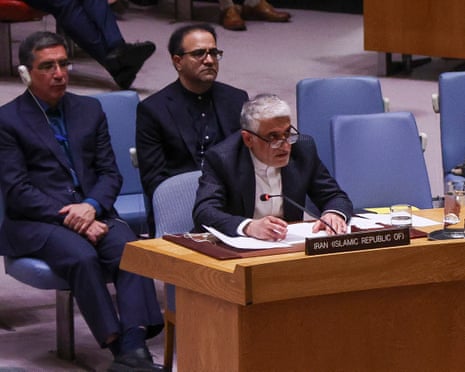
As the maritime blockade of the Strait of Hormuz continues, the international community is watching closely for any sign of a kinetic response from Tehran. For now, the conflict remains a high-stakes game of economic pressure and diplomatic maneuvering, with millions of lives hanging in the balance across Lebanon, Israel, and the wider Persian Gulf. The success of the "grand deal" envisioned by the White House depends not only on the endurance of the Iranian economy but on the ability of regional governments to rein in the militant factions that have defined the conflict for decades.