United Nations Secretary-General António Guterres issued a stark warning to the Security Council on Thursday, stating that the Middle East crisis is “getting out of control” as the United States military conducted its 13th consecutive night of aerial strikes against Iranian targets. The escalation comes as President Donald Trump signaled he is nearing a decision on whether to launch a “massive attack” on Iran, a move that could potentially dwarf the military operations witnessed over the past several months. Iranian state media reported multiple explosions in the southern city of Ahvaz late Thursday, while Kuwaiti air defenses were seen intercepting what they described as hostile missile and drone threats launched from Iranian territory.
Addressing an emergency meeting of the Security Council, Guterres described the region as teetering on the “edge of the unimaginable.” He warned that the cycle of escalation is pulling the international community into an ever-widening circle of confrontation where political objectives are being obscured by the violence itself. The UN chief’s remarks reflect a growing consensus among global diplomats that the window for a negotiated settlement is closing, as one crisis begins to feed the next across several regional theaters.
Guterres Warns Middle East Crisis is Getting Out of Control
The Secretary-General’s plea for de-escalation arrived as U.S. Central Command (CENTCOM) confirmed that its latest round of strikes targeted Islamic Revolutionary Guard Corps (IRGC) infrastructure. According to a CENTCOM statement, the operations are specifically designed to hold Tehran accountable for continued threats to commercial shipping in the region. The U.S. military reported targeting maritime capabilities, missile storage facilities, and air defense assets, claiming these strikes are necessary to degrade Iran’s ability to attack civilian mariners.
The military situation is further complicated by President Trump’s recent comments to media outlets, where he acknowledged the potential consequences of a larger-scale offensive but noted that he is “close to making a decision.” Trump stated that while Israel would join such an operation immediately if asked, the United States currently has the capacity to act independently. This rhetoric has caused significant alarm in European capitals, leading the United Kingdom to temporarily withdraw its diplomatic staff from Tehran and Germany to pull its naval vessels from the Red Sea.

Maritime Blockades Escalate the Middle East Crisis
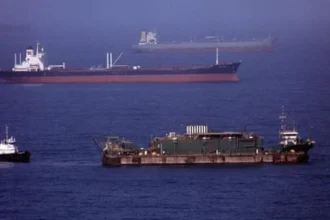
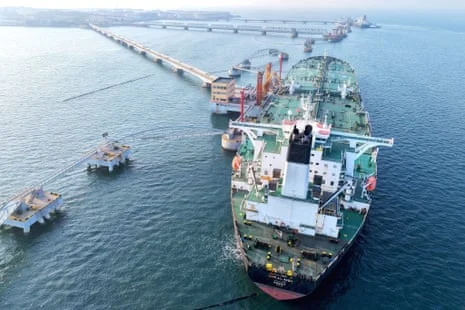
A new and dangerous front has opened in the Red Sea, where the Yemen-based Houthi militia has declared a naval blockade against Saudi Arabia. On Wednesday, the Iran-backed group claimed responsibility for drone and missile strikes on two Saudi Arabian oil tankers, the Encelia and the Layla. Saudi state media confirmed that the Encelia was set ablaze during the attack, though all crew members were reported safe. This maritime embargo threatens a vital global artery that connects the Suez Canal to the Gulf of Aden, handling roughly a quarter of the world’s container trade.
In response to the Houthi actions, President Trump used social media to warn that the U.S. would hold Iran directly responsible for the behavior of its “proxies.” He threatened “major military punishment” against Iranian infrastructure, including power plants and bridges in or near Tehran, should the interference with international commerce continue. U.S. Secretary of State Marco Rubio echoed these sentiments, suggesting that the Houthis had been “snookered” by Tehran into a conflict they had previously managed to avoid.
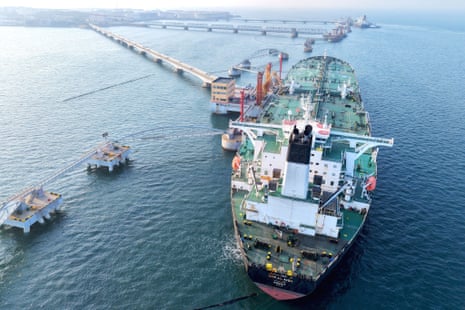
Despite the declared blockade, shipping data on Thursday showed that two massive Chinese crude carriers, carrying four million barrels of Saudi oil, successfully transited the Bab el-Mandeb strait. Analysts suggest the Houthis may be selective in their targeting, allowing vessels with Chinese crews or flags to pass while focusing their aggression on Saudi-linked or Western-affiliated shipping. However, other tankers have begun making “U-turns” in the Red Sea or rerouting around the Cape of Good Hope, a journey that adds millions of dollars in costs and weeks of travel time.
Economic Fallout as Middle East Crisis Drives Oil Prices Past $100
The intensifying Middle East crisis has sent shockwaves through global energy markets, with Brent crude surging past the symbolic $100-per-barrel mark for the first time since May. Prices jumped more than 7% following the reports of the Houthi attacks on Saudi tankers and the U.S. threats of expanded strikes. European Central Bank President Christine Lagarde warned that a sustained energy shock could lead to higher inflation and necessitate aggressive interest rate hikes in the eurozone.
While the crisis has pressured consumers, it has resulted in record-breaking profits for global energy giants. TotalEnergies reported that its net profit doubled to $5.4 billion in the second quarter, while Norway’s state-owned Equinor saw its profits nearly double to $11.5 billion. These companies have benefited from filling the supply gap created by the near-halt of shipping through the Strait of Hormuz, where the IRGC has reportedly stopped several tankers from passing, claiming the waterway is under their total control.
Geopolitical Shifts and the Abraham Accords
In an attempt to stabilize the region through diplomacy, the Trump administration announced a landmark civil nuclear cooperation agreement with Saudi Arabia. However, the deal has become a point of contention after the White House clarified that the agreement is strictly “contingent” on Saudi Arabia joining the Abraham Accords and normalizing relations with Israel. This condition marks a significant shift in U.S. policy, as the kingdom has historically resisted normalization without a clear path toward Palestinian statehood.
Israeli Prime Minister Benjamin Netanyahu praised the potential move, calling Saudi Arabia’s entry into the accords a “historic leap forward for peace.” However, the timing of the nuclear deal has drawn criticism from some members of the U.S. Congress, who argue that allowing Riyadh to develop a civilian nuclear program—including potential uranium enrichment—could trigger a regional arms race. Critics point out the irony of the U.S. fighting a war to prevent Iranian nuclear enrichment while simultaneously offering similar technology to Saudi Arabia.
Domestic Challenges and Munition Shortages Amid the Middle East Crisis
The sustained nature of the conflict is beginning to strain U.S. military readiness. Defense Secretary Pete Hegseth appeared before the Senate this week to request $67 billion in emergency funds, warning of critical shortfalls in munitions and air defense interceptors. Military leaders are reportedly concerned that the rate at which the U.S. is expending advanced weaponry against Iran is compromising the nation’s ability to deter other global adversaries, such as China.
Simultaneously, the U.S. House of Representatives passed a war powers resolution for the second time, directing President Trump to withdraw U.S. forces from the conflict with Iran. While the measure is largely symbolic—as the administration maintains such resolutions are unconstitutional—it reflects a deep partisan divide in Washington. With mid-term elections approaching and the president’s poll numbers declining, the administration is facing domestic pressure to find a resolution to a war that is becoming increasingly unpopular.
The Human Cost and Internal Regional Tensions
The humanitarian impact of the Middle East crisis continues to mount. Iranian state media reported that a U.S. strike near the Shalamcheh border crossing with Iraq killed two people and wounded 11 others. The crossing was reportedly crowded with hundreds of religious pilgrims participating in the annual Arbaeen pilgrimage, a journey that draws millions of Muslims to the holy city of Karbala. Analysts have questioned the strategic value of targeting a border terminal used by civilians, noting that such actions often serve to further radicalize local populations.

In Tehran and other major Iranian cities, the psychological toll is evident. Citizens report a state of constant anxiety, with parents stocking up on food and medicine in anticipation of a “massive attack.” Healthcare workers in Tabriz noted that political ultimatums from Washington cause immediate surges in stress-related admissions and medical shortages. The threat of total war has created a climate of uncertainty that permeates every level of Iranian society.
Adding to the regional instability, internal tensions in Israel reached a boiling point as National Security Minister Itamar Ben Gvir led hundreds of settlers into the Al-Aqsa compound in Jerusalem. The move was condemned by the Palestinian Ministry of Religious Endowments as a provocation intended to “ignite a religious war.” This internal friction, combined with the external U.S.-Iran conflict, has created a volatile environment where a single miscalculation could lead to a total regional collapse.
Strategic Deadlock and the Path Forward
As the U.S. enters its 14th night of potential strikes, the strategic objectives of both Washington and Tehran remain entrenched. Secretary of State Marco Rubio maintains that Iran is “begging” for a deal but remains unwilling to adhere to U.S. terms. Conversely, Iranian officials, such as Parliamentary Speaker Mohammad Bagher Ghalibaf, have mocked U.S. efforts, suggesting that the “punishment” of Iran has only resulted in self-inflicted economic damage for the West through triple-digit oil prices.
The international community continues to look toward mediators like Oman to resume talks between the warring parties. However, with the U.S. military maintaining a presence of 50,000 service members in the region and Iran vowing an “eye for an eye” response to any infrastructure damage, the prospects for a ceasefire remain dim. The Middle East crisis is currently defined by a dangerous dynamic where each escalation triggers the next, moving the world closer to a confrontation that the UN warns could be truly unimaginable.