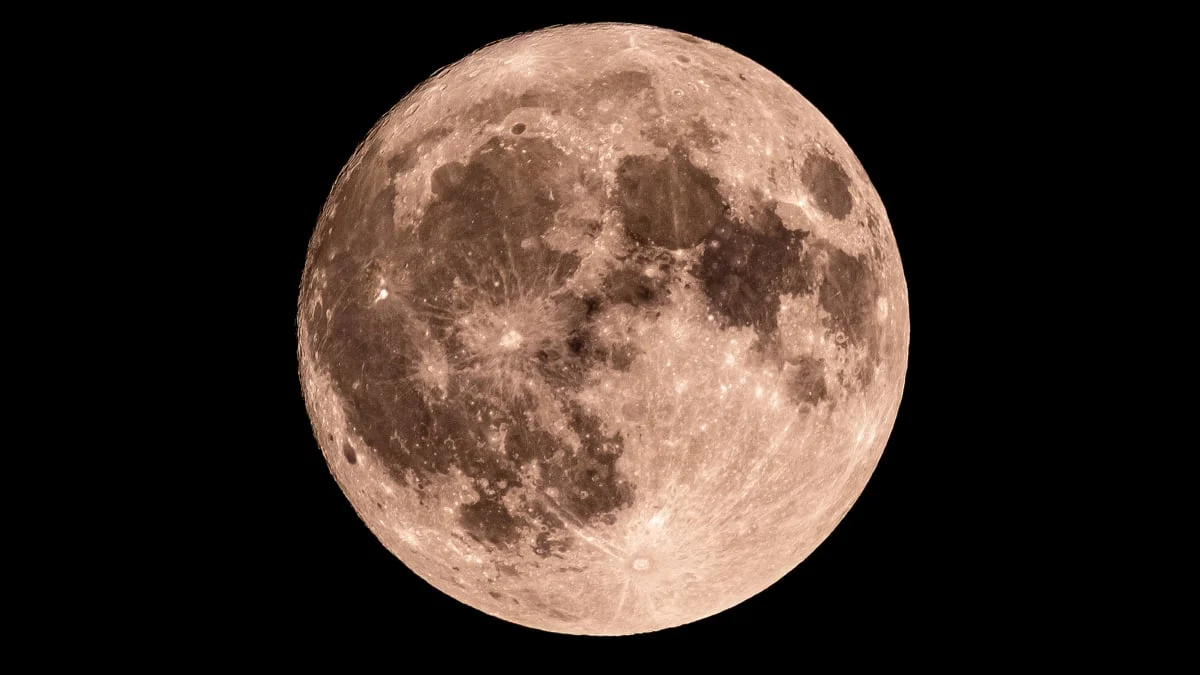
As of Friday, March 20, 2026, the moon is currently in its waxing crescent phase, with approximately 2% of its Earth-facing surface illuminated by the sun. This thin sliver of light marks the beginning of a new lunar cycle, following the recent new moon phase where the lunar disk was entirely obscured from view. According to data provided by NASA’s Daily Moon Guide, the moon will continue to gain visibility each night as it moves through its orbit, progressing toward the first quarter and eventually reaching its full illumination at the start of the following month.
The appearance of the moon on March 20, 2026, serves as a significant marker for astronomers and casual observers alike. During the waxing crescent phase, the moon is positioned in the sky such that only a small fraction of its daylight side is visible from Earth’s perspective. For observers in the Northern Hemisphere, this sliver of light appears on the right side of the lunar disk, while those in the Southern Hemisphere see the illumination on the left. This phase is often characterized by "Earthshine," a phenomenon where the dark portion of the moon is faintly visible due to sunlight reflecting off the Earth and onto the lunar surface.
The Science Behind the Moon Phase Today Explained
The lunar cycle is a result of the moon’s 29.5-day orbit around Earth, a period known as a synodic month. During this journey, the relative positions of the sun, Earth, and moon change constantly, altering the amount of sunlight that reflects off the lunar surface toward terrestrial observers. Although the sun always illuminates exactly half of the moon, the portion of that illuminated half visible from Earth depends on the moon’s orbital position. On March 20, 2026, the moon is located just past its alignment between the Earth and the sun, allowing only a 2% margin of light to reach our eyes.
Astronomers categorize this progression into eight distinct phases, each representing a specific stage in the moon’s journey. The cycle begins with the new moon, followed by the waxing crescent, first quarter, and waxing gibous. The midpoint of the cycle is the full moon, after which the process reverses through the waning gibbous, third quarter, and waning crescent phases before returning to a new moon. The transition observed on March 20, 2026, represents the very early stages of growth, or "waxing," which indicates that the visible portion of the moon is increasing.
Tracking the Progress Toward the April 1 Full Moon
Following the current waxing crescent phase, the moon will appear larger and brighter in the night sky with each passing day. In North America, the next full moon is projected to occur on April 1, 2026. However, due to the nuances of global time zones, observers in other parts of the world, including parts of Asia, Europe, and Australia, will witness the full moon on April 2. This discrepancy is a standard occurrence in celestial mechanics, as the exact moment of the full moon—defined as the point when the moon is 180 degrees opposite the sun in geocentric longitude—happens simultaneously everywhere, but the local clock time varies.
The April 1 full moon is often referred to in various cultural and agricultural traditions as the "Pink Moon." This name, popularized by the Old Farmer’s Almanac, does not refer to the actual color of the moon but rather to the blooming of creeping phlox, a pink wildflower common in North America during the early spring. For scientific observers, this upcoming full moon will provide an opportunity for high-visibility lunar photography and tidal studies, as the alignment of the sun and moon during this phase results in higher-than-average "spring tides."
Understanding the Eight Phases of the Lunar Cycle
To fully grasp the significance of the moon phase today explained for March 20, 2026, it is essential to understand the characteristics of all eight lunar stages. The new moon occurs when the moon is positioned between Earth and the sun, rendering the side facing us dark and invisible. Following this is the waxing crescent, which is the current phase as of March 20, where a thin sliver of light begins to emerge.
As the moon continues its orbit, it reaches the first quarter phase, where exactly half of the right side is illuminated. This is followed by the waxing gibbous phase, during which more than half of the moon is lit, though it has not yet reached full capacity. The full moon represents the peak of the cycle, with the entire face of the moon illuminated. After this peak, the moon enters the waning gibbous phase, losing light from the right side. The third quarter phase shows the left half illuminated, and the cycle concludes with the waning crescent, a final sliver of light on the left before the moon returns to its new phase.
Atmospheric and Environmental Impacts on Lunar Visibility
The visibility of the 2% waxing crescent on March 20, 2026, is heavily dependent on local atmospheric conditions and light pollution. Because the waxing crescent follows the sun across the sky, it is typically visible shortly after sunset, hanging low in the western horizon. To see the 2% illumination clearly, observers require a clear view of the horizon, free from tall buildings or dense cloud cover. The presence of aerosols, humidity, and urban light can often obscure such a thin crescent, making it a prized sight for dedicated stargazers.
Furthermore, the moon’s altitude in the sky on March 20 will affect its perceived color and clarity. When the moon is near the horizon, its light must pass through a thicker layer of Earth’s atmosphere, which can scatter shorter wavelengths of light and give the crescent a subtle orange or reddish hue. This atmospheric refraction is the same principle that causes colorful sunsets and is particularly noticeable when the moon is at such a low percentage of illumination.
The Role of Lunar Phases in Space Exploration and Technology
The tracking of lunar phases is not merely a hobby for astronomers but a critical component of modern space exploration. As NASA and its international partners continue to develop the Artemis program, which aims to establish a sustainable human presence on the moon, the timing of lunar phases becomes vital for mission planning. The amount of sunlight hitting the lunar surface determines the power generation capabilities of solar-powered rovers and habitats, as well as the thermal environment that equipment must endure.
For the missions planned around the 2026 timeframe, understanding the transition from a waxing crescent to a full moon is essential for landing site selection and surface operations. During the waxing crescent phase seen on March 20, the long shadows cast across the lunar surface provide geologists with a high-contrast view of the moon’s topography, including craters and mountain ranges. This contrast is often lost during a full moon, when the direct overhead sunlight washes out surface details, making the crescent phases ideal for certain types of topographical mapping.
Cultural and Biological Significance of the Lunar Cycle
Beyond the realm of physics and exploration, the lunar cycle continues to influence various aspects of human culture and biological rhythms. Many religious and traditional calendars, including the Islamic, Hebrew, and Chinese calendars, rely on the sighting of the new crescent moon to determine the start of months and significant holidays. The 2% waxing crescent on March 20, 2026, could serve as a primary indicator for the beginning of lunar months in several of these traditions.
In the natural world, the moon’s phases trigger specific behaviors in wildlife. Many species of marine life synchronize their spawning cycles with the phases of the moon to take advantage of the varying tidal strengths. The transition from the waxing crescent toward the April 1 full moon will lead to a gradual increase in tidal range, impacting coastal ecosystems and navigation for maritime industries. While the myth of the "lunar effect" on human behavior remains largely unsupported by rigorous scientific data, the moon’s physical impact on the Earth’s oceans and light levels remains a cornerstone of terrestrial ecology.
Future Astronomical Events in 2026
The lunar phase on March 20, 2026, is part of a broader year of significant astronomical activity. Later in 2026, a total solar eclipse is expected to occur on August 12, passing over parts of the Arctic, Greenland, Iceland, Spain, and Portugal. Such events are only possible because of the precise orbital mechanics that dictate the phases we see daily. The waxing crescent of March is a quiet but necessary step in the celestial clockwork that leads to these grander spectacles.
As the moon continues its journey toward the April 1 full moon, educators and scientific institutions often use these periods to promote STEM engagement. Public observatories frequently host "star parties" during the waxing crescent phase because the moonlight is dim enough to allow for the viewing of distant stars and deep-sky objects, yet the moon itself remains a stunning target for telescopic observation. The 2% illumination on March 20 offers a unique opportunity for students to observe the "terminator line"—the dividing line between day and night on the moon—where the shadows are most dramatic.
Conclusion of the March 20 Observation Window
As the night of March 20, 2026, concludes, the moon will set shortly after the sun, disappearing below the horizon and preparing for another day of its eastward trek across the sky. By the following evening, the illumination will have increased slightly, continuing the predictable and ancient cycle that has guided humanity for millennia. The transition from this delicate 2% crescent to the brilliant full moon on April 1 remains a testament to the orderly mechanics of our solar system and a reminder of the moon’s enduring role as Earth’s constant companion.