North Korea has formally expressed its endorsement of Iran’s decision to appoint Mojtaba Khamenei as the nation’s new supreme leader, simultaneously reiterating its condemnation of what it terms an "unlawful military attack" by the United States and Israel against Tehran. The pronouncement from Pyongyang underscores a deepening alignment between the two nations, both of which face significant international pressure and sanctions from Western powers.
Pyongyang’s Stance on Iranian Leadership Transition
The official Korean Central News Agency (KCNA) reported Wednesday that a spokesperson for North Korea’s Ministry of Foreign Affairs stated Pyongyang "respects the right and choice of the Iranian people to elect their Supreme Leader." This statement directly addresses the recent selection of Mojtaba Khamenei, the son of the late Supreme Leader Ayatollah Ali Khamenei, who was reportedly killed in a U.S.-Israeli strike on February 28th. The Assembly of Experts, a deliberative body responsible for appointing and overseeing the supreme leader, confirmed Mojtaba Khamenei’s ascension, marking a significant moment in Iranian political history.
The North Korean foreign ministry spokesperson emphasized that the international community should recognize Iran’s sovereign right to determine its own leadership. "We express grave concern and strongly condemn the aggression of the United States and Israel, which, by launching an unlawful military attack against Iran, are undermining the foundations of regional peace and security and increasing instability in the international landscape," the spokesperson was quoted as saying by KCNA. This rhetoric mirrors Pyongyang’s long-standing accusations against the U.S. and its allies regarding perceived interference in the internal affairs of sovereign nations.
The spokesperson further elaborated on the condemnation, characterizing the attacks as undermining "the political system and territorial integrity of a country." Such actions, the statement asserted, are "unacceptable and must be condemned and rejected by the entire world." This strong denunciation highlights North Korea’s consistent policy of opposing perceived acts of aggression and its solidarity with nations facing external pressure.
Broader Context: The Iran-North Korea Axis
The public endorsement from Pyongyang arrives at a critical juncture in the Middle East, with Iran embroiled in a conflict that has significantly heightened regional instability. North Korea’s swift and unequivocal support for Iran’s new leadership and its vehement criticism of the U.S. and Israel signal a strengthening geopolitical partnership between the two heavily sanctioned states. Both nations have historically found common ground in their opposition to U.S. foreign policy and their pursuit of strategic autonomy in the face of international sanctions and diplomatic isolation.
This alignment is not new. Following the commencement of hostilities involving Iran approximately twelve days prior to the North Korean statement, Pyongyang had already condemned the actions as "gangster-like conduct" in the Middle East. This consistent messaging suggests a coordinated effort to project a united front against what they perceive as unilateral aggression by Western powers.
North Korea’s Own Military Posturing
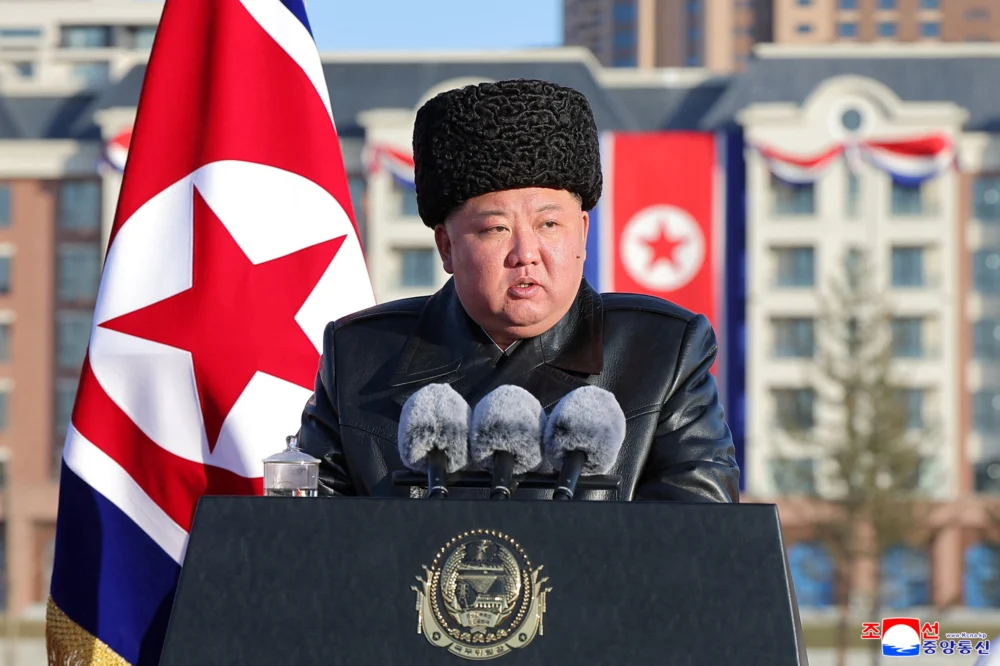
The timing of North Korea’s statement on Iran also coincides with its own assertive military demonstrations. KCNA reported on Wednesday that North Korean leader Kim Jong Un had personally overseen the test-firing of strategic cruise missiles from the country’s newest and largest naval destroyer, the Choe Hyon. This display of military capability underscores Pyongyang’s ongoing commitment to enhancing its defense arsenal and projecting strength on the global stage.

During the missile test, Kim Jong Un reportedly emphasized the "important strategic task of maintaining and expanding a powerful and reliable nuclear war deterrent." This statement reiterates North Korea’s strategic doctrine, which centers on the deterrence of potential threats through the development and maintenance of nuclear weapons. The test from the Choe Hyon marks the second such exercise overseen by Kim on the new destroyer, following his previous commendation of the Navy’s armament with nuclear capabilities.
Implications of the U.S.-Israel War on Iran
The conflict that triggered North Korea’s latest statements began twelve days prior, with U.S. and Israeli forces launching military operations against Iran. While the specific details of the attacks and Iran’s alleged role in escalating regional tensions remain a subject of intense international debate and varying reports, the impact has been significant. The conflict has led to widespread concern about a broader regional conflagration, drawing in various actors and potentially destabilizing global energy markets.
North Korea’s vocal support for Iran in this context can be interpreted as a strategic maneuver to bolster its own standing and to challenge the established international order. By aligning itself with Iran, Pyongyang seeks to demonstrate that it is not isolated and that it possesses allies willing to publicly support its positions, even when those positions are at odds with dominant global powers.
Geopolitical Ramifications and Public Impact
The deepening ties between North Korea and Iran, coupled with their shared anti-Western rhetoric, have significant geopolitical ramifications. It suggests a growing network of states seeking to counterbalance U.S. influence and challenging the norms of international security. For the United States and its allies, this burgeoning axis represents a complex challenge that requires careful diplomatic and strategic consideration.
The public impact of these developments is multifaceted. In North Korea, state media often uses external conflicts and condemnations of adversaries to reinforce domestic narratives of national resilience and the need for strong leadership. Similarly, in Iran, the narrative of external aggression can be used to rally public support and consolidate political power. For the global public, these events contribute to an environment of heightened geopolitical uncertainty, particularly concerning the proliferation of weapons of mass destruction and the potential for wider conflicts.
U.S. Policy Towards North Korea and Iran
The U.S. has for decades led international efforts to dismantle North Korea’s nuclear program, but has seen limited success in influencing Pyongyang’s strategic decisions. North Korea maintains that its nuclear arsenal is essential for deterring invasion by South Korea and its allies, particularly the United States. Despite ongoing efforts to engage North Korea in dialogue, including potential high-level talks indicated by the Trump administration, a breakthrough has remained elusive. Kim Jong Un has previously suggested that improved relations are possible if Washington acknowledges North Korea’s status as a nuclear power.
Similarly, U.S. policy towards Iran has been characterized by a combination of sanctions, diplomatic pressure, and military deterrence, particularly in response to its nuclear program and regional activities. The recent escalation of conflict involving Iran adds another layer of complexity to these long-standing challenges.
Future Outlook and Regional Stability
The public statements from North Korea regarding the leadership transition in Iran and the ongoing conflict in the Middle East are more than just diplomatic niceties; they signal a shared strategic outlook and a willingness to challenge the existing international order. As the conflict in the Middle East continues to unfold, and as North Korea persists with its weapons development programs, the international community faces the challenge of managing these intertwined security concerns. The actions and statements from capitals like Pyongyang and Tehran will undoubtedly continue to shape the geopolitical landscape, demanding sustained attention and a nuanced approach from global policymakers. The coming weeks and months will likely reveal the extent to which this alignment between North Korea and Iran influences regional dynamics and the broader international security environment.