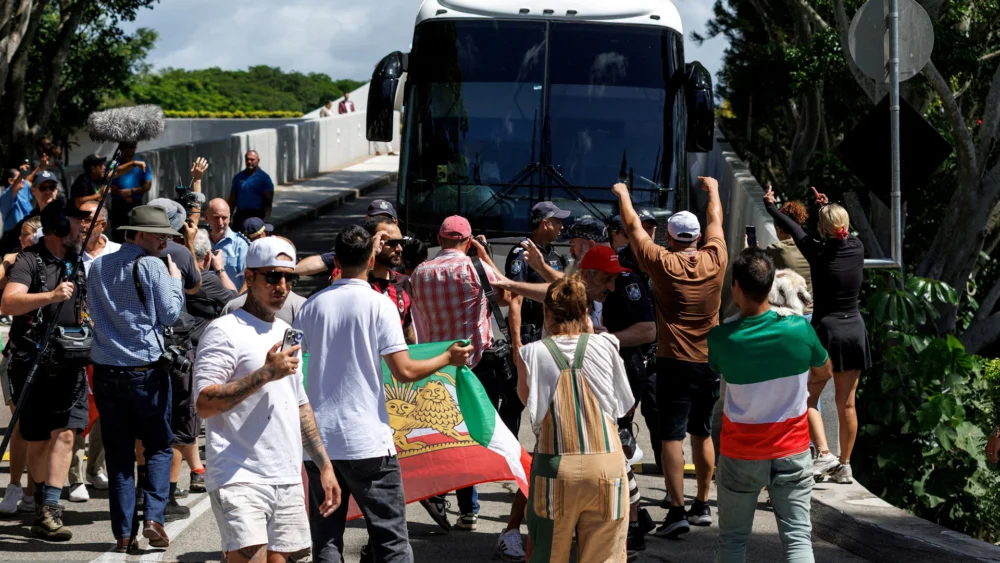
A group of demonstrators intercepted the bus transporting Iran’s national women’s football team as they attempted to depart from a hotel in Australia, en route to the airport, following reports that five players had absconded seeking asylum. The incident highlights the growing concerns for the safety of the remaining athletes, who are alleged to have faced pressure to remain silent during the national anthem at a recent match.
Escalation of Tensions Surrounding Iranian Women’s Football Team
The dramatic scene unfolded as the Iranian women’s football squad prepared to travel, only to be confronted by protesters who physically impeded their departure. This disruption is a stark manifestation of the mounting international scrutiny and internal dissent surrounding the team’s participation in the Women’s Asian Cup and the broader political climate in Iran. The protesters’ actions underscore a deep-seated anxiety for the welfare of the athletes, particularly in light of the reported defections and the potential repercussions for those who remain.
Five Players Seek Asylum Amidst Growing Concerns
The catalyst for the heightened tensions appears to be the clandestine departure of five key players from the team. These athletes reportedly sought asylum in Australia, citing fears for their safety and freedom should they be compelled to return to Iran. Their decision to seek refuge is a significant development, shedding light on the perceived risks faced by individuals, especially women, who dare to express dissent or seek alternatives to the prevailing political regime.
The defection of the five players has cast a long shadow over the team’s presence at the tournament, raising serious questions about the conditions under which they are expected to compete and represent their country. Their actions serve as a powerful statement about the perceived lack of safety and freedom within Iran, particularly for women navigating increasingly restrictive social and political landscapes.
Allegations of Pressure to Remain Silent
Further compounding the situation are allegations that the remaining players on the bus were pressured to remain silent during the playing of the Iranian national anthem. This act of perceived complicity, or forced neutrality, has drawn criticism from human rights advocates and diaspora groups who see it as a tacit endorsement of the current Iranian government. The protesters’ blockade is, in part, a response to this perceived silence and a plea for the players to acknowledge the ongoing human rights crisis in their homeland.
The pressure to conform extends beyond the sporting arena, reflecting a broader societal crackdown on dissent within Iran. For athletes, the stakes are particularly high, as their public platform can be both a tool for advocacy and a target for repression. The decision to stand silent or not during national anthems has become a potent symbol of allegiance or resistance in many contexts, and the Iranian women’s football team’s situation is no exception.
Background of Political and Social Climate in Iran
The events surrounding the Iranian women’s football team are inextricably linked to the broader socio-political landscape of Iran. For years, women in Iran have been at the forefront of movements advocating for greater freedoms and an end to discriminatory practices. The recent wave of protests, often spearheaded by women, against the mandatory hijab and other restrictive laws has highlighted a deep societal yearning for change.
The government’s response to these protests has been met with widespread condemnation from international human rights organizations. Reports of crackdowns, arrests, and even violence against protestors have painted a grim picture of the state of human rights in the country. It is within this context of fear and repression that the athletes’ decisions, both to defect and to potentially remain silent, must be understood.
The national football team, particularly the women’s team, has often found itself caught in the crosshairs of this political tension. Their performances on the international stage are scrutinized not only for their athletic merit but also for any implicit or explicit political statements they might make, or be perceived to make.
The Role of the Women’s Asian Cup
The Women’s Asian Cup, held in Australia, provides a significant international platform for the Iranian women’s football team. While the tournament is primarily a sporting event, its geopolitical implications are undeniable. The presence of the Iranian team, especially in the current climate, attracts considerable attention from media, human rights groups, and the Iranian diaspora.
For the players, the tournament offers an opportunity to showcase their talent and achieve sporting success. However, it also places them in a vulnerable position, where their actions and allegiances can be interpreted through a political lens. The reported defections and the subsequent protest underscore the immense pressure and difficult choices these athletes face.
The organizing body of the tournament and the host nation, Australia, now find themselves in a delicate situation, balancing sporting protocols with human rights concerns. The incident raises questions about the responsibilities of international sports federations in ensuring the safety and well-being of athletes from countries with problematic human rights records.
Implications for Iranian Women in Sports
The plight of the Iranian women’s football team has far-reaching implications for women in sports across Iran. It highlights the challenges they face in pursuing their athletic ambitions while navigating a restrictive societal framework. The bravery of the players who have sought asylum, and the courage of those who have spoken out against the regime, serves as an inspiration to many.
Conversely, the potential dangers faced by the remaining players underscore the risks associated with challenging the status quo. The incident may deter some from participating in national teams or pursuing careers in sports, fearing reprisal or ostracization. This could have a detrimental effect on the development of women’s sports in Iran.
The international community’s response to this situation will be crucial. Increased pressure on the Iranian government to respect human rights and allow greater freedoms for women could create a more conducive environment for female athletes. Sanctions or other forms of diplomatic pressure might also be considered, though their effectiveness can be debated.
Protesters’ Demands and Motivations
The protesters who blockaded the bus were motivated by a complex mix of solidarity, concern, and a desire for accountability. They represent a segment of the Iranian diaspora and their allies who are deeply troubled by the human rights situation in Iran and the perceived complicity of athletes. Their actions are a direct plea for the Iranian government to cease its repressive practices and for the international community to pay closer attention.
Their demands likely include assurances of safety for the remaining players, an investigation into any alleged coercion, and a broader call for political reform in Iran. The blockade, while disruptive, was intended to draw maximum attention to the plight of the athletes and to prevent their forced return to a potentially dangerous environment.
The act of blocking the bus also serves as a symbolic act of defiance, mirroring the protests happening within Iran. It demonstrates that the struggle for freedom and human rights extends beyond national borders and involves a global network of support.
Broader Consequences and Future Outlook
The incident at the airport is likely to have significant consequences for Iran’s national women’s football team and its international standing. It could lead to increased scrutiny of the team’s activities by FIFA and other sporting bodies. Furthermore, it may impact future sponsorship deals and international collaborations for Iranian sports federations.
The defections and the subsequent protest will undoubtedly fuel calls for greater accountability from the Iranian government. Human rights organizations will likely continue to advocate for the rights of women and athletes in Iran, using this incident as a focal point.
The future outlook for the Iranian women’s football team remains uncertain. The team’s participation in future tournaments could be jeopardized if the political climate does not improve or if safety concerns for the athletes cannot be adequately addressed. The bravery of those who have spoken out, however, offers a glimmer of hope for a future where women in Iran can pursue their dreams without fear. The world will be watching closely to see how these complex issues unfold.