"Ready or Not 2: Here I Come," the highly anticipated follow-up to the cult-favorite 2019 horror-comedy, premiered at the SXSW Film Festival, delivering a chaotic and often gruesome experience that, while entertaining, ultimately falls short of the inventive dark magic of its predecessor. Despite the return of lead actress Samara Weaving and a bolstered cast including Sarah Michelle Gellar, the film struggles to justify its expanded universe, offering a "good enough time" that feels like a noticeable step down from the original’s sharp wit and singular vision.
The Original’s Unforgettable Debut
The 2019 "Ready or Not" carved out a distinct niche in the horror landscape, earning critical acclaim and a devoted fanbase for its unique blend of brutal violence, satirical dark comedy, and a surprisingly simple yet effective premise. The story centered on Grace, a new bride who discovers her eccentric, ultra-wealthy in-laws demand a deadly game of hide-and-seek as part of a demonic ritual. Its strength lay in this straightforward concept: a high-stakes, ultra-violent rendition of a children’s game, underscored by a "deal with the devil" lore that was just complex enough to be intriguing without becoming convoluted.
Much of the original’s success was attributed to Samara Weaving’s tour-de-force performance as Grace, the "final girl" protagonist. Her portrayal was a masterclass in visceral terror and resilience, marked by shrieks so blood-curdling they bordered on operatic. The film also expertly wove in character comedy, portraying the new in-laws as not only evil but often comically inept in their murderous pursuits, adding layers of dark humor to the escalating horror. This combination of elements resonated deeply with audiences and critics alike, establishing the original film as a modern genre classic.
The Perilous Path of the Horror Sequel
The decision to craft a sequel for a successful horror film often presents a significant challenge. Directors Matt Bettinelli-Olpin and Tyler Gillett, alongside writers Guy Busick and R. Christopher Murphy—the same creative team behind the original and known for their work on modern horror revivals like the recent Scream films—returned for "Ready or Not 2: Here I Come." Their ambition was clear: to double down on the elements that made the original a hit. However, the history of horror cinema is replete with examples where expanding a beloved, self-contained narrative often leads to diminishing returns, a trap the sequel appears to stumble into.
Grace, who barely survived her wedding night from hell in the first film, finds herself immediately thrust back into another deadly ordeal. The film opens with her still reeling from the events, barely having a moment to collect herself before being forced into yet another "most dangerous game." This immediate re-entry into the nightmare underscores the film’s commitment to high-octane action, but also signals a narrative choice to forgo the slow burn of discovery that made the original so compelling.
Expanding the Demonic Universe in ‘Ready or Not 2: Here I Come’
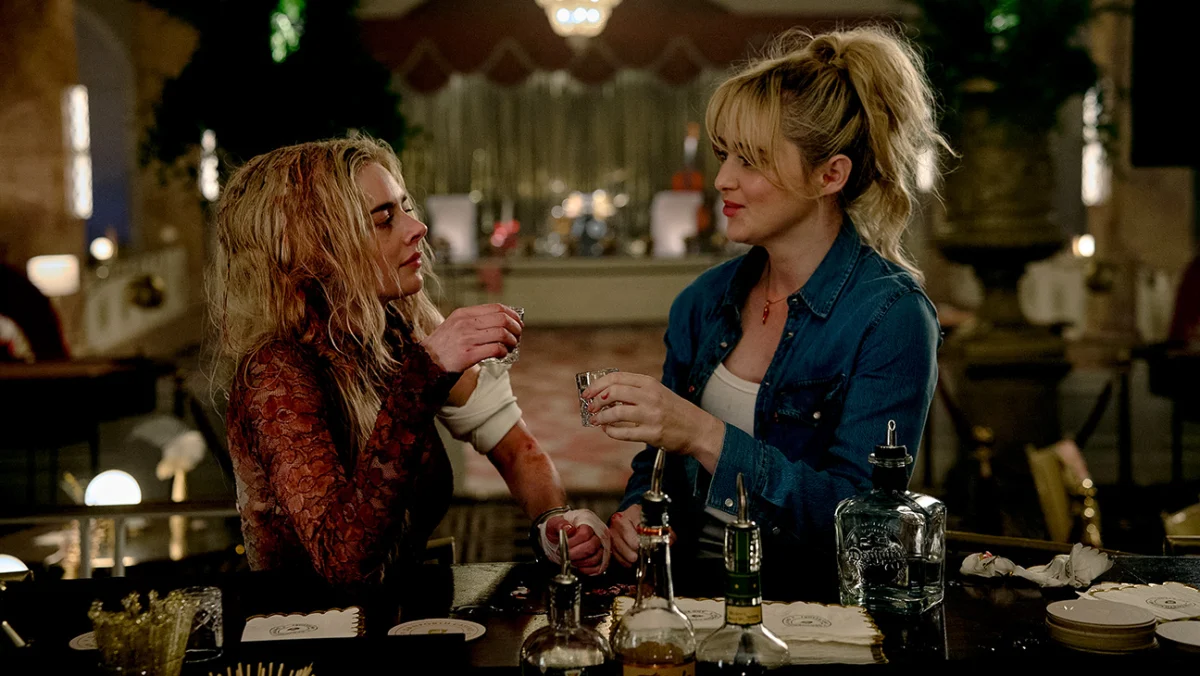
"Ready or Not 2: Here I Come" significantly broadens the scope of its demonic mythology. Where Grace was the sole target in the original, she is now joined by her similarly scrappy and thematically named sister, Faith, portrayed by Kathryn Newton. This addition aims to heighten Grace’s emotional stakes, creating a personal connection beyond mere survival. The narrative also reveals that the Le Domas family, Grace’s original tormentors, were not an isolated anomaly but merely one of six ultra-wealthy, Satan-worshipping clans scattered across the globe, and notably, not even the most influential.
This honor now falls to the Danforths, a casino-owning dynasty whose patriarch, played in a brief but memorable cameo by director David Cronenberg, possesses immense power, capable of influencing global conflicts with a single phone call. In a world increasingly aware of the disproportionate power wielded by billionaires, this plot point, suggesting one could end a war as casually as another might start it, lands as one of the film’s most unsettlingly plausible ideas. With the Le Domas lineage eradicated, the coveted high seat on the council of Mr. Le Bail—the demonic entity at the heart of the rituals—is now vacant. The remaining five families converge at the Danforths’ sprawling Connecticut estate, all vying to be the first to kill Grace and secure their family’s claim to the infernal throne.
Analysis: Strengths, Weaknesses, and the Weight of Expectation
The sequel attempts to replicate the original’s blend of over-the-top violence and satirical critique of the ultra-rich. The thrill of watching obscenely wealthy individuals flail ineptly with retrograde weapons, whine about their unrelatable problems, or meet inventively gruesome ends remains a core appeal. The film’s class commentary, though still broadly simplistic—boiling down to "the 0.00000001% sure do suck"—continues to provide a cathartic spectacle for audiences.
Samara Weaving remains a powerfully magnetic lead, embodying Grace with a ferocious determination that anchors the chaos. Her iconic Chucks-and-bloodstained-gown look, a revelation in the first film, now elicits cheers from the audience, signaling its status as a recognized symbol of genre defiance. However, her role this time provides fewer opportunities for the operatic shrieks that defined her initial performance, a subtle but notable shift in character emphasis.
The new additions to the cast bring their own energy. Sarah Michelle Gellar and Shawn Hatosy deliver a believable toxic sibling dynamic as the Danforth twins, Ursula and Titus, who have seemingly trained their entire lives for this brutal occasion. Francesca (Maia Jae), the jilted fiancée of Grace’s late husband and daughter of a Spanish TV host (Néstor Carbonell), introduces a compelling personal vengeance arc. A viewing room where younger heirs watch the unfolding game offers some of the film’s strongest comic moments, as these privileged, trash-talking observers quickly descend into terrified panic when the stakes become horrifyingly real for their own bloodline.
However, with these new pleasures come significant narrative perils. The expansion of the lore, intended to deepen the mythology, instead becomes overly convoluted. It necessitates the introduction of a new character, Mr. Le Bail’s unflappable lawyer, played by Elijah Wood, primarily as an exposition machine. While Wood, known for excelling in quirky roles, is ideally cast, his character exists almost solely to explain and re-explain the increasingly complex rules, bogging down the pacing.
The pressure to raise the stakes, a common pitfall for sequels, also impacts "Ready or Not 2: Here I Come." Faith, despite Kathryn Newton’s capable performance, functions less as a fully fleshed-out second protagonist and more as a prop. Her presence primarily serves to give Grace more emotional investment, saddling her with guilt over their estrangement or providing opportunities for noble sacrifice. Furthermore, in its attempt to introduce an even bigger, badder villain, the film overshoots its mark. It raises the specter of domestic violence in ways that feel uncomfortably plausible, clashing with the otherwise cartoonish gore and dark humor, thus undermining the film’s tonal consistency.
Broader Implications and Industry Context
"Ready or Not 2: Here I Come" exemplifies a current trend in horror cinema: the impulse to expand successful standalone films into broader cinematic universes. While this approach can sometimes yield rich narratives, it often risks diluting the original’s focused impact. The film grapples with the tension between fan service—giving audiences more of what they loved—and creative innovation. The enthusiastic response at its SXSW premiere to Weaving’s return and the familiar elements highlights the audience’s desire for continuity, even as critics note the narrative compromises.
The film’s exploration of extreme wealth, secret societies, and ritualistic violence, however shallow, continues to tap into contemporary anxieties about power and privilege. While it may not offer profound social commentary, its visceral depiction of the grotesque lengths the elite will go to maintain their status, even in a fantastical context, resonates with a public increasingly critical of unchecked power.
Looking Ahead: A Future for the Franchise?
Ultimately, "Ready or Not 2: Here I Come" manages to deliver enough of the "good stuff"—inventive kills, Samara Weaving’s compelling presence, and moments of genuine dark humor—to keep devoted fans engaged, eliciting yelps, laughter, and cheers. It offers a wild, bloody ride that, despite its flaws, largely succeeds in providing genre entertainment.
However, the critical reception, while acknowledging the film’s strengths, largely positions it as a less essential entry compared to its groundbreaking predecessor. The narrative’s expansion, while adding new characters and lore, ultimately detracts from the lean, focused intensity that made the original so effective. Should its creators consider a third gamble on this increasingly intricate universe, the prevailing sentiment suggests they might be wise to heed the advice often given to casino-goers, much like the Danforths’ patrons: ponder the wisdom of quitting while they are still ahead.