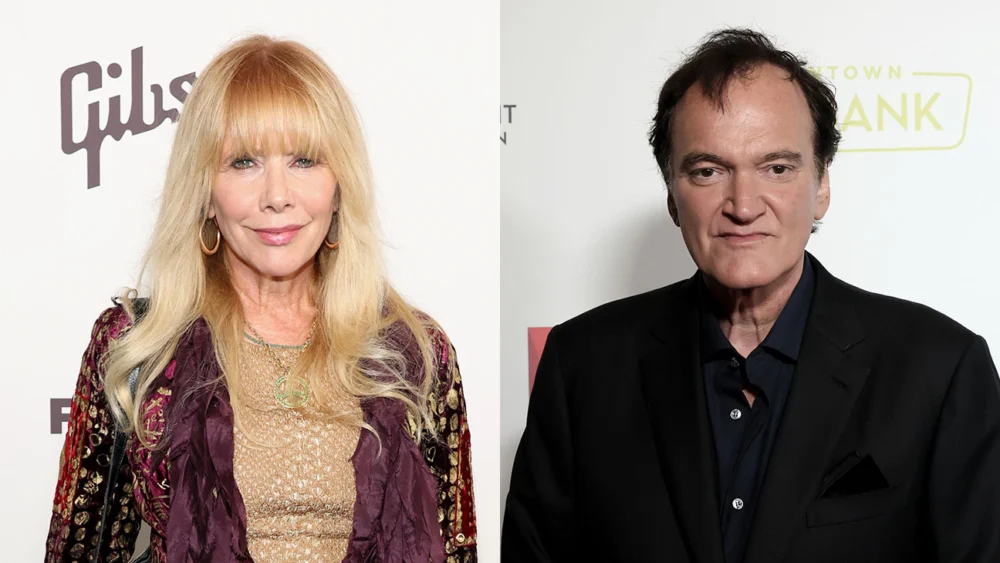
Veteran actress Rosanna Arquette has reignited a long-standing debate over Quentin Tarantino’s controversial use of the N-word in his filmography, asserting that the acclaimed director has been granted an unwarranted "hall pass" for its inclusion. Arquette, who famously appeared in Tarantino’s 1994 cinematic landmark Pulp Fiction, publicly condemned the practice, labeling it as "racist and creepy" rather than a legitimate artistic expression. Her comments have brought renewed scrutiny to a contentious aspect of Tarantino’s work that has drawn criticism from filmmakers and cultural commentators for decades.
The Origin of the "Hall Pass" Controversy
Arquette’s recent remarks emerged from an interview with The Times U.K., where she reflected on her involvement in Pulp Fiction. While acknowledging the film’s iconic status and overall quality, she specifically targeted Tarantino’s repeated deployment of the racial slur. "It’s iconic, a great film on a lot of levels," Arquette stated, "But personally I am over the use of the N-word — I hate it. I cannot stand that he [Tarantino] has been given a hall pass. It’s not art, it’s just racist and creepy." Her direct challenge to Tarantino’s perceived immunity from criticism highlights a persistent tension between artistic freedom and social responsibility in filmmaking.
The concept of a "hall pass" in this context refers to a perceived allowance given to certain artists, often due to their critical acclaim or perceived artistic genius, to transgress social norms or use sensitive language without facing the same level of condemnation as others. For a white director like Tarantino to be seen as having such a pass for the N-word, a term deeply rooted in American slavery and racial oppression, raises significant questions about power dynamics, racial sensitivity, and the limits of artistic expression within the entertainment industry. Arquette’s critique suggests that such an allowance is not only undeserved but actively harmful, normalizing language that perpetuates racism.
Quentin Tarantino’s Filmography and the N-Word
Quentin Tarantino has cultivated a distinctive cinematic style characterized by stylized violence, non-linear narratives, and sharp, often provocative dialogue. Across his celebrated filmography, from early works like Reservoir Dogs to later epics such as Django Unchained, the N-word has appeared with notable frequency, becoming a signature, albeit controversial, element of his screenplays. Critics and audiences have often been divided, with some defending its use as a reflection of historical accuracy or character authenticity, while others decry it as gratuitous, exploitative, or simply offensive.
In Pulp Fiction, where Arquette played Jody, the wife of drug dealer Lance, the N-word appears in various contexts, reflecting the gritty, often morally ambiguous world Tarantino depicted. However, the intensity of the debate significantly escalated with films that delved explicitly into historical racial themes. His 1997 film Jackie Brown, an adaptation of Elmore Leonard’s novel Rum Punch starring Pam Grier, drew early attention for its dialogue. But it was his 2012 Western Django Unchained, a revenge narrative set against the backdrop of American slavery, that truly ignited a firestorm of controversy due to its extensive and explicit use of the racial slur.
The Django Unchained Controversy and its Aftermath
Django Unchained tells the story of Django (Jamie Foxx), a freed slave who teams up with a German bounty hunter (Christoph Waltz) to rescue his wife from a brutal plantation owner (Leonardo DiCaprio). The film’s critical reception was largely positive, earning Tarantino an Academy Award for Best Original Screenplay and Waltz an Oscar for Best Supporting Actor. However, its portrayal of slavery and, more specifically, its liberal use of the N-word, overshadowed much of its artistic merit for many observers. Reports indicated that the word was used over 110 times throughout the film, both by white and Black characters, prompting a widespread ethical and artistic debate.
The film’s release prompted heated discussions about the authenticity of historical dialogue versus the potential for perpetuating harm. Proponents argued that the prolific use of the N-word was an accurate reflection of the brutal linguistic landscape of the antebellum South and was essential for conveying the dehumanizing reality of slavery. Opponents contended that its sheer volume moved beyond authenticity into sensationalism, potentially desensitizing audiences to the word’s painful historical weight or even providing a perverse form of entertainment.
Spike Lee’s Historic Opposition to Tarantino’s N-Word Use
Among the most vocal and consistent critics of Quentin Tarantino’s approach to the N-word has been acclaimed filmmaker Spike Lee. Lee, a director renowned for his unflinching examinations of race and identity in America, publicly expressed his disdain for Tarantino’s methods on multiple occasions, predating the Django Unchained uproar. Following the release of Jackie Brown in 1997, Lee specifically called out Tarantino’s "excessive use of the N-word," signaling a burgeoning discomfort within the filmmaking community.
In 2012, as the Django Unchained controversy peaked, Lee reiterated his strong opposition. Speaking to Vibe magazine, he stated, "it’s disrespectful to my ancestors. That’s just me. … I’m not speaking on behalf of anybody else." Lee emphasized that his criticism was personal and rooted in his own heritage and understanding of the word’s historical trauma. It is important to note that Lee himself has used the N-word in his own films, often within specific contexts to reflect realistic dialogue or to highlight racial injustice. However, his distinction between his own usage and Tarantino’s "excessive" deployment underscored a nuanced argument about intent, context, and impact. Lee’s critique was not a blanket ban on the word’s use in cinema but a specific challenge to what he perceived as a white director’s uncritical or even cavalier approach to such a potent racial slur.
Tarantino’s Defenses: Artistic Integrity vs. Social Criticism
Quentin Tarantino has consistently defended his creative choices regarding the N-word, often framing his stance as an unwavering commitment to artistic integrity and character authenticity. He has repeatedly rejected calls to temper his language or self-censor his scripts in response to public or critical outcry.
Following his win for Best Screenplay for Django Unchained at the 2013 Golden Globes, Tarantino addressed his critics backstage, notably using the N-word himself during his defense. He stated, "They think I should soften it, that I should lie, that I should massage. I would never do that when it comes to my characters." This response underscored his belief that altering dialogue for social appeasement would be a betrayal of his artistic vision and the integrity of the characters he creates.
Prior to the film’s December 2012 release, Tarantino had already articulated a similar position to The Hollywood Reporter. "Not one word of social criticism that’s been leveled my way has ever changed one word of any script or any story I tell," he declared. He further asserted his conviction in his work, adding, "I believe in what I’m doing wholeheartedly and passionately. It’s my job to ignore that." These statements reveal a director who prioritizes his singular artistic vision above external pressures, viewing critical feedback on his language use as an attempt to compromise his creative autonomy.
Broader Implications: Artistic Freedom, Authenticity, and Cultural Sensitivity
The ongoing debate surrounding Quentin Tarantino’s use of the N-word, now amplified by Rosanna Arquette’s recent comments, touches upon fundamental questions within artistic creation and cultural discourse. At its core lies the tension between artistic freedom and social responsibility. Filmmakers often argue for the right to depict reality, however harsh or offensive, to achieve authenticity and provoke thought. Conversely, critics and affected communities emphasize the ethical obligation of artists to consider the impact of their work, particularly when dealing with deeply sensitive and historically painful language.
The concept of "authenticity" itself becomes a point of contention. While historical accuracy might necessitate the inclusion of the N-word in certain period pieces, the frequency and manner of its use can differentiate between historical representation and what some perceive as exploitation or sensationalism. For many, particularly Black audiences, the repeated hearing of the N-word, even in a historical context, can be a deeply re-traumatizing experience, raising questions about whether the artistic intent justifies the potential harm.
Furthermore, the "hall pass" phenomenon that Arquette references speaks to broader power dynamics within Hollywood and society. Why are some artists seemingly given more leeway than others when it comes to controversial content? Is it a function of their commercial success, critical acclaim, or a perceived cultural authority that allows them to push boundaries without significant repercussions? This question is particularly acute when the artist is from a dominant cultural group and the controversial language targets a marginalized one, sparking discussions about who has the right to deploy such language, even in fictional narratives.
Impact on Industry and Culture
The persistent discussions around Tarantino’s N-word use have undoubtedly contributed to a larger cultural conversation about language, representation, and responsibility in media. While Tarantino has largely remained steadfast in his artistic philosophy, the critiques from figures like Spike Lee and now Rosanna Arquette reflect an evolving landscape of cultural sensitivity within the entertainment industry. Studios and filmmakers are increasingly aware of the need for diverse perspectives in storytelling and the potential for backlash when sensitive topics are handled without sufficient care or consultation.
These debates also highlight the divide between critical acclaim and ethical concerns. Django Unchained‘s dual Academy Award wins, despite the intense controversy, suggest that artistic excellence, as judged by industry peers, can sometimes be separated from or even overshadow ethical objections regarding content. This poses a challenge for those advocating for greater social responsibility in filmmaking, demonstrating that success and controversy are not mutually exclusive in Hollywood.
The legacy of these controversies will continue to shape how future generations of filmmakers approach historical narratives, racial themes, and the use of offensive language. As cultural norms shift and calls for greater inclusivity and accountability grow louder, the "hall pass" concept itself may become increasingly difficult to maintain. Rosanna Arquette’s recent intervention serves as a powerful reminder that for many, the debate over artistic freedom versus social impact remains far from settled, and the weight of words like the N-word continues to resonate deeply within the American cultural consciousness.
Moving Forward: An Unresolved Dialogue
Rosanna Arquette’s recent condemnation of Quentin Tarantino’s "hall pass" has once again brought to the forefront a complex and emotionally charged discussion that has long simmered in Hollywood. Her assertion that the use of the N-word in his films is "racist and creepy," rather than artistic, encapsulates the frustration felt by many who believe that the boundary between provocative art and offensive material has been repeatedly crossed. While Tarantino has consistently defended his creative choices, citing artistic integrity, the voices of critics like Arquette and Spike Lee underscore a fundamental disagreement about the ethical responsibilities of creators and the lasting impact of their work on society. This enduring dialogue reflects broader cultural shifts and an ongoing reevaluation of how powerful language, particularly that rooted in historical oppression, is depicted and consumed in popular media.