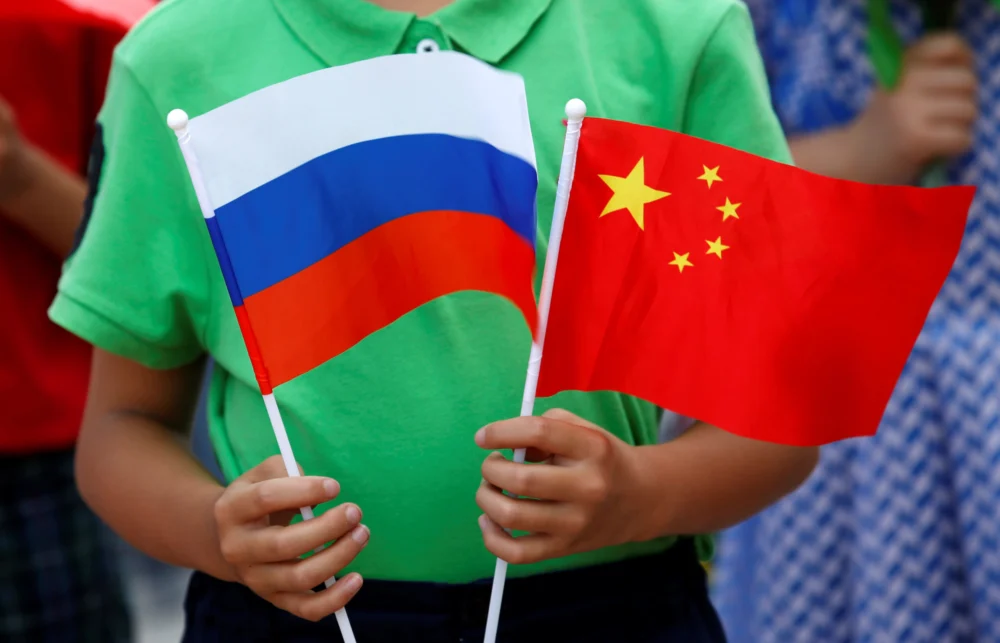
Global diplomatic tensions escalated sharply this week as Russia and China launched significant rhetorical assaults against the United States and Israel over their recent military actions targeting Iran, with both Moscow and Beijing demanding an immediate cessation of hostilities and raising alarms about regional instability and potential nuclear proliferation. Russian Foreign Minister Sergey Lavrov asserted that Moscow has seen no evidence of Iran pursuing nuclear weapons, a claim he used to underscore his criticism of the US and Israeli military operations. Meanwhile, China’s top diplomat, Wang Yi, directly urged Israel to end its attacks on Iran, emphasizing that such actions were disrupting critical diplomatic progress.
Diplomatic Fronts Open Against Military Strikes
The synchronized diplomatic pressure from Moscow and Beijing marks a significant moment in international relations, highlighting a deepening divide between these powers and the US-led coalition concerning the approach to Iran. China’s foreign minister, Wang Yi, conveyed a strong message to his Israeli counterpart, Gideon Saar, during a Tuesday phone call, stating that the military strikes on Iran had unfortunately interrupted what he described as “significant progress” in negotiations between Washington and Tehran. According to a statement from China’s Foreign Ministry, Wang emphasized that these talks had been addressing Israel’s security concerns.
“Regrettably, this process has been interrupted by military action,” Wang stated, as quoted by the ministry. He directly articulated China’s opposition, declaring, “China opposes any military strikes launched by Israel and the US against Iran.” The Chinese foreign minister’s call for de-escalation was forceful, urging, “China calls for an immediate cessation of military operations to prevent the further escalation and loss of control of the conflict.” Wang further elaborated on China’s stance, arguing that "Force cannot truly solve problems; instead, it will bring new problems and serious long-term consequences.”
Following this diplomatic exchange, the Chinese Foreign Ministry reported that Israeli Foreign Minister Saar had agreed to a request from Wang to implement "concrete measures to ensure the safety of Chinese personnel and institutions" within Iran. This outreach by Beijing to Israel, alongside parallel discussions with Iran, Oman, and France on Monday, signals a concerted effort by China to stabilize a rapidly deteriorating regional situation.
Russia Warns of Nuclear Proliferation Spiral
In parallel, Russian Foreign Minister Sergey Lavrov delivered a scathing critique of the US and Israeli actions, warning that their military campaign against Iran could inadvertently lead to the very outcome they claim to be preventing: nuclear proliferation. At a press conference on Tuesday, Lavrov posited that the logical consequence of US and Israeli military engagement could be the emergence of forces within Iran that would advocate for acquiring nuclear weapons.
Lavrov’s reasoning was stark: "Because the US doesn’t attack those who have nuclear bombs,” he stated, implying that a state possessing nuclear deterrents would be shielded from such attacks. This perspective suggests a cynical view of international security dynamics, where the possession of nuclear weapons acts as a shield against military intervention.
The Russian foreign minister extended his concerns to the broader Middle East, suggesting that Arab nations might also feel compelled to pursue nuclear weapons in the wake of recent events. He warned that the "nuclear proliferation problem will begin to spiral out of control," painting a grim picture of a region teetering on the brink of a dangerous arms race. Israel is widely understood to be the only state in the Middle East possessing nuclear weapons, a fact it neither confirms nor denies.
Lavrov characterized the stated objectives of preventing nuclear proliferation through military means as potentially paradoxical and counterproductive. "The seemingly paradoxical declared noble goal of starting a war to prevent the proliferation of nuclear weapons could stimulate completely opposite trends," he articulated. This statement directly challenges the stated justifications for the military actions against Iran.
Moscow’s Evidence-Free Claims and Accusations
Lavrov reiterated Russia’s position that it has observed no evidence of Iran developing nuclear weapons. He confirmed that he had spoken with his Iranian counterpart, Javad Zarif, on Tuesday and affirmed Russia’s readiness to assist in finding a diplomatic resolution to the conflict. However, he unequivocally rejected the US and Israeli approach, condemning their use of "unprovoked military aggression" in the region.
The Russian Foreign Ministry had previously issued a strong condemnation following the initial US and Israeli strikes on Iran on Saturday. The ministry accused the two nations of engaging in a "premeditated and unprovoked act of armed aggression against a sovereign and independent UN member state." Moscow alleged that the US and Israel had concealed their true objective of regime change in Tehran "under the cover" of diplomatic negotiations aimed at normalizing relations with Iran.
Furthermore, the Russian ministry issued a dire warning, stating that the US and Israel were "swiftly pushing the region toward a humanitarian, economic, and potentially even radiological disaster." They placed the full responsibility for any negative repercussions, including an unpredictable chain reaction and escalating violence, squarely on the shoulders of the US and Israel.
Contextualizing the Escalation: A Geopolitical Chessboard
The current diplomatic confrontation unfolds against a backdrop of protracted tensions and a complex geopolitical landscape. For years, Iran has been a focal point of international concern, primarily due to its nuclear program and its regional influence. The US and Israel have consistently voiced their determination to prevent Iran from acquiring nuclear weapons, citing potential threats to regional security and global stability.
Iran, on its part, has maintained that its nuclear program is for peaceful energy purposes and has repeatedly denied any intention to develop nuclear weapons. However, its ballistic missile program and support for regional proxy groups have been sources of significant friction with Western powers and some Arab states.
The diplomatic efforts to curb Iran’s nuclear ambitions have been a long and arduous process, marked by periods of intense negotiation and significant setbacks. The Joint Comprehensive Plan of Action (JCPOA), or Iran nuclear deal, reached in 2015, aimed to provide Iran with sanctions relief in exchange for limitations on its nuclear activities. However, the US withdrawal from the deal in 2018 and the subsequent re-imposition of stringent sanctions have complicated diplomatic pathways and fueled mutual distrust.
Implications of the Military Actions and Diplomatic Backlash
The military strikes on Iran, regardless of their scale or immediate objectives, carry profound implications for regional stability. Such actions risk igniting a wider conflict, potentially drawing in regional powers and exacerbating existing proxy wars. The humanitarian cost, economic disruption, and the potential for environmental damage are significant concerns.
The strong denunciation from Russia and China underscores a growing global sentiment that military intervention, particularly without clear international consensus or a direct, imminent threat, can be counterproductive and destabilizing. Their synchronized diplomatic offensive aims to isolate the US and Israel, challenge their unilateral actions, and bolster international norms against the use of force.
For Iran, these attacks, whether perceived as punitive or preemptive, could serve to galvanize domestic support for the current leadership and harden its stance in future negotiations. It could also push Iran to accelerate its nuclear activities, a scenario that would further escalate tensions.
Public Perception and the Shadow of War
The public impact of such escalating tensions and potential military conflicts is multifaceted. In the affected region, populations face increased insecurity, economic hardship, and the constant threat of violence. Globally, the specter of a wider conflict involving major powers raises concerns about international peace and security, as well as the potential for economic repercussions, including disruptions to global energy markets.
The rhetoric from Russia and China, particularly Lavrov’s warnings about nuclear proliferation, taps into deep-seated global anxieties about weapons of mass destruction. These concerns are amplified by the historical context of arms races and the devastating consequences of nuclear conflict.
Navigating a Perilous Path Forward
The current diplomatic standoff represents a critical juncture. While the US and Israel maintain their right to defend their interests and prevent what they perceive as an existential threat from Iran, the robust opposition from Russia and China necessitates careful consideration of alternative strategies. The path forward likely involves a complex interplay of diplomatic pressure, economic sanctions, and the potential for de-escalation through dialogue.
The coming days and weeks will be crucial in determining whether the region spirals further into conflict or if diplomatic channels can be reopened to manage these volatile tensions. The unified voice of Russia and China, though critical of US and Israeli actions, also signals a potential willingness to engage in diplomatic solutions, provided that military aggression is ceased. The challenge lies in finding common ground amidst deep-seated mistrust and competing strategic interests.