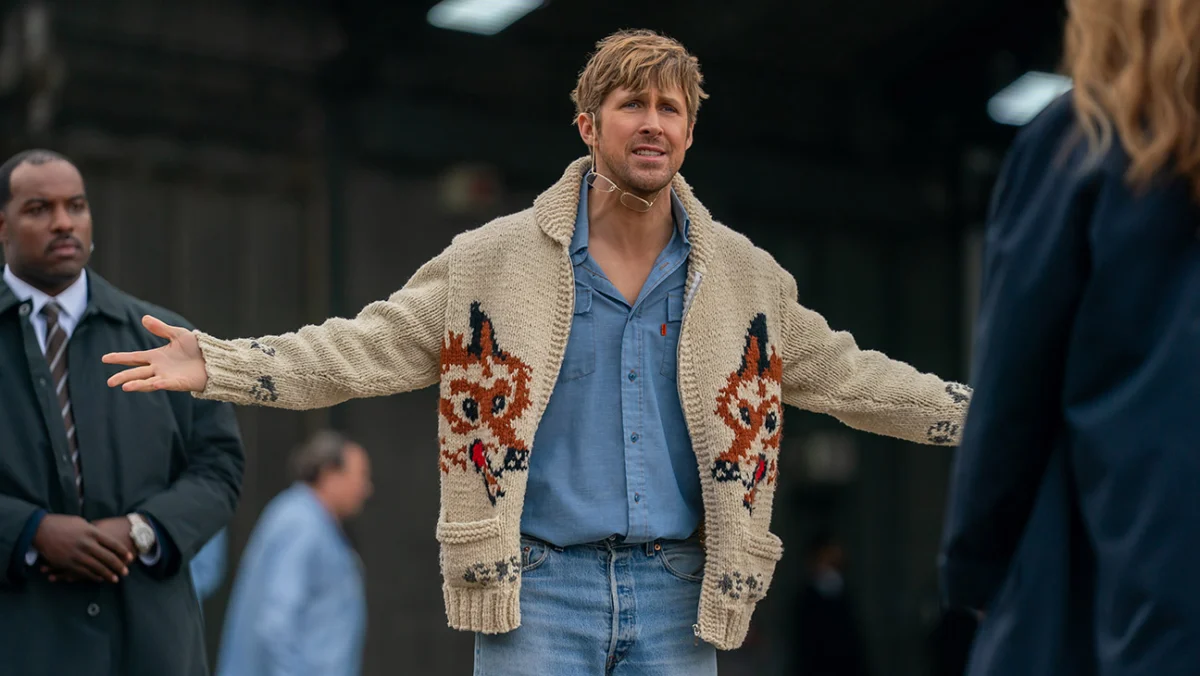
A seemingly unassuming fox-themed zip-up cardigan, prominently featured on actor Ryan Gosling in the upcoming Amazon MGM Studios film Project Hail Mary, has unexpectedly ignited a fervent online discussion and captivated social media users, becoming a viral fashion moment. The simple piece of knitwear, worn by Gosling’s character, Ryland Grace, has garnered widespread attention for its distinctive design and perceived comfort, prompting an immediate surge of interest in its origins and availability.
The Unassuming Knitwear that Captured the Internet
The specific garment in question is an oatmeal-cream colored zip-up cardigan, adorned with bold fox motifs. It features a ribbed, turned-down knit collar, cuffs, and hem, exuding a homespun, vintage aesthetic. Gosling’s character, Ryland Grace, is depicted wearing the cardigan in multiple scenes, including one where he stands with arms outstretched alongside co-star Lionel Boyce, and another alongside Sandra Hüller. Far from being a statement of high fashion, the cardigan initially appears to be a practical and humble item of clothing, aligning with the character’s earnest, down-to-earth persona. However, its understated charm, combined with Gosling’s undeniable star power, quickly transcended its functional purpose.
Social media platforms, particularly X (formerly Twitter), were inundated with posts over the weekend, with users expressing an overwhelming desire to acquire the "classic curling sweater." The term "curling sweater" itself, often associated with traditional Canadian knitwear patterns, added to the garment’s unique appeal and sparked a nostalgic connection for many. Memes featuring the cardigan rapidly proliferated, solidifying its status as an internet sensation and a surprising style icon.
Project Hail Mary: From Novel to Screen
Project Hail Mary is an adaptation of the highly successful 2022 novel of the same name by Andy Weir, renowned for his previous work, The Martian, which was also adapted into a critically acclaimed film. The narrative centers on Ryland Grace, a schoolteacher who awakens on a spaceship with no memory of how he got there or his mission. He soon discovers he is humanity’s last hope, sent light-years away on a perilous journey to save Earth from an extinction-level event. Gosling’s portrayal of Grace is expected to blend intellectual depth with a relatable vulnerability, a persona that the costume choices, including the now-famous cardigan, evidently aim to reinforce.
The film is directed by the duo Phil Lord and Chris Miller, known for their innovative and often quirky cinematic approach in projects like Spider-Man: Into the Spider-Verse and The Lego Movie. Their involvement suggests a film that balances scientific accuracy with humor and heart, elements that could further elevate the resonance of character details like Grace’s distinctive wardrobe. The decision to clothe a hero embarking on an interstellar mission in such a cozy, almost domestic garment speaks volumes about the character’s essence and the film’s tone.
Behind the Seams: The Creative Vision for Gosling’s Cardigan
The intentionality behind Gosling’s wardrobe choices for Project Hail Mary has been illuminated by the film’s creative team. Director Chris Miller previously disclosed to The Hollywood Reporter that the character’s clothing was a carefully curated blend of specific elements, heavily influenced by Ryan Gosling himself. "If you look at [Gosling’s character] Ryland Grace’s wardrobe, it’s a combination of these very specific things," Miller explained. "Ryan had experiences with a fox, and he wanted to have a cardigan that had foxes on it. He wore science T-shirts based on the joke science T-shirts that my son wears. Everything is a personal [detail]."
This insight reveals that the viral Ryan Gosling’s ‘Project Hail Mary’ curling cardigan was not merely a random costume piece but a deeply personal choice, rooted in the actor’s own experiences and designed to infuse Ryland Grace with authenticity and warmth. The emphasis on comfort and personal touches was paramount, reflecting the character’s internal state and his grounded nature despite his extraordinary circumstances. This approach to costume design, where an actor’s personal history or preferences inform the character’s look, often results in more believable and resonant portrayals, further enhancing the audience’s connection.
The "Curling Sweater" Phenomenon and Canadian Heritage
The immediate identification of the cardigan as a "curling sweater" by some, and its specific vintage aesthetic, points to a rich cultural heritage, particularly in Canada. Film writer and critic Tomris Laffly, in a post on her X account, expressed her strong desire for the garment, highlighting its appeal. Nathalie Atkinson, a writer for the Globe and Mail, also took to X, stating, "As a Canadian I clocked Ryan Gosling’s fox (wolf) sweater as a vintage Mary Maxim immediately, so it was fun to write about the meaning and history of the homespun cardigans."
Atkinson’s observation proved prescient. The cardigan bears a striking resemblance to classic patterns from Mary Maxim, a well-known Canadian company specializing in yarn and craft kits, particularly famous for its distinctive animal-themed sweaters. Indeed, a "wolf cardigan knit kit" available through Mary Maxim, which closely mirrors the film’s design, swiftly sold out following the online fervor. This rapid depletion of stock underscores the potent combination of celebrity endorsement and nostalgic appeal. Mary Maxim patterns, often featuring bold, graphic depictions of wildlife like wolves, bears, and, in this case, foxes, have been a staple of North American homespun fashion for decades, embodying a sense of rustic comfort and artisanal craftsmanship. The association with Gosling has now introduced this classic style to a new generation and a global audience.
Gosling’s Midas Touch: Turning Simple Style into Viral Fashion
Ryan Gosling has a proven track record of influencing fashion trends, transforming seemingly ordinary garments into coveted items. His ability to imbue characters with distinct, memorable styles has made him a sartorial force. From the iconic scorpion jacket in Drive to the array of vibrant, retro outfits in Barbie, Gosling’s on-screen wardrobe often transcends mere costume to become a cultural touchstone. The Ryan Gosling’s ‘Project Hail Mary’ curling cardigan is the latest example of this "Gosling effect."
His choices often lean into unexpected or overlooked aesthetics, elevating them through his unique blend of charm and understated cool. In the case of the Project Hail Mary cardigan, he takes a garment that might otherwise be considered "dad core" or simply functional and imbues it with an undeniable allure. This phenomenon highlights not just Gosling’s personal style influence but also a broader cultural shift towards valuing comfort, authenticity, and perhaps a touch of nostalgia in fashion. The viral success of the cardigan demonstrates how a single, well-chosen costume piece can unexpectedly become a powerful marketing tool for a film and spark a significant trend.
Beyond Project Hail Mary: Other Cinematic Wardrobe Moments
The phenomenon of a specific item of clothing from a film or television series going viral is not unique to Project Hail Mary. It reflects a growing trend where costume design plays an increasingly visible role in popular culture, often transcending the narrative to become a character in itself.
One notable example is the iconic Team Canada zip-up fleece jacket worn by Hudson Williams, who plays Shane Hollander in the breakout gay hockey drama Heated Rivalry. This fleece jacket also went viral on social media, prompting a playful competition among fans to create the most impressive knock-off copies. Costume designer Hanna Puley designed the fleece as a basic, cozy coat for Hollander’s understated character, aiming for something wearable and comfortable that would contrast with his co-star’s wardrobe. The popularity was so immense that Heated Rivalry producer Accent Aigu Entertainment partnered with Canadian apparel company Province of Canada to produce the now-iconic fleece jacket for purchase, initially within Canada. This swiftly moved from costume to merchandise, demonstrating the commercial power of viral wardrobe.
Similarly, Cynthia Erivo’s "sex cardigan" as Elphaba in Wicked: For Good during a love scene with Fiyero (Jonathan Bailey) garnered significant attention. Wicked costume designer Paul Tazewell explained to NPR that the choice was an organic one, stemming from practical considerations: "It came out of very literally an organic decision of what does Elphaba have access to? And living alone, what choice would she make when she’s looking for a robe, some way to be protective and warm? … It’s operating as her robe for that moment." These instances underscore that whether it’s a humble fleece, a practical robe, or a fox-themed Ryan Gosling’s ‘Project Hail Mary’ curling cardigan, the backstory, character connection, and designer’s intent are crucial in transforming simple attire into memorable, culturally impactful fashion statements.
The Enduring Power of Costume Design and Character Authenticity
The unexpected virality of the Ryan Gosling’s ‘Project Hail Mary’ curling cardigan serves as a compelling testament to the often-underestimated power of costume design in shaping cultural conversations and influencing consumer trends. It highlights how a carefully chosen garment can not only deepen a character’s authenticity but also resonate profoundly with audiences, sparking widespread engagement and even driving economic activity through merchandise and renewed interest in classic styles.
In an era dominated by social media, a single, distinctive costume piece can quickly transcend its narrative context, becoming a standalone phenomenon. The public’s enthusiastic embrace of Gosling’s cardigan, much like the Heated Rivalry fleece or the Wicked "sex cardigan," demonstrates a collective appreciation for clothing that feels real, comfortable, and imbued with personal meaning. This trend suggests that while high fashion continues to captivate, there is a growing appetite for accessible, character-driven style that reflects a sense of warmth, nostalgia, and genuine human experience, cementing the enduring impact of thoughtful wardrobe choices in film and television.