Spanish authorities have arrested a tractor driver, accusing him of igniting a wildfire that forced tens of thousands to evacuate their homes around the capital, Madrid, amid a worsening heatwave and escalating blazes across the Iberian Peninsula and in neighboring France. The arrest marks a significant development as the nation grapples with an unprecedented wildfire emergency, declared for the first time in Spain’s history. The fires, fueled by extreme temperatures and dry conditions, have now prompted more than 100,000 people to flee their homes across both countries, underscoring the severe threat posed by the current climate crisis.
Intensifying Wildfire Crisis in Spain
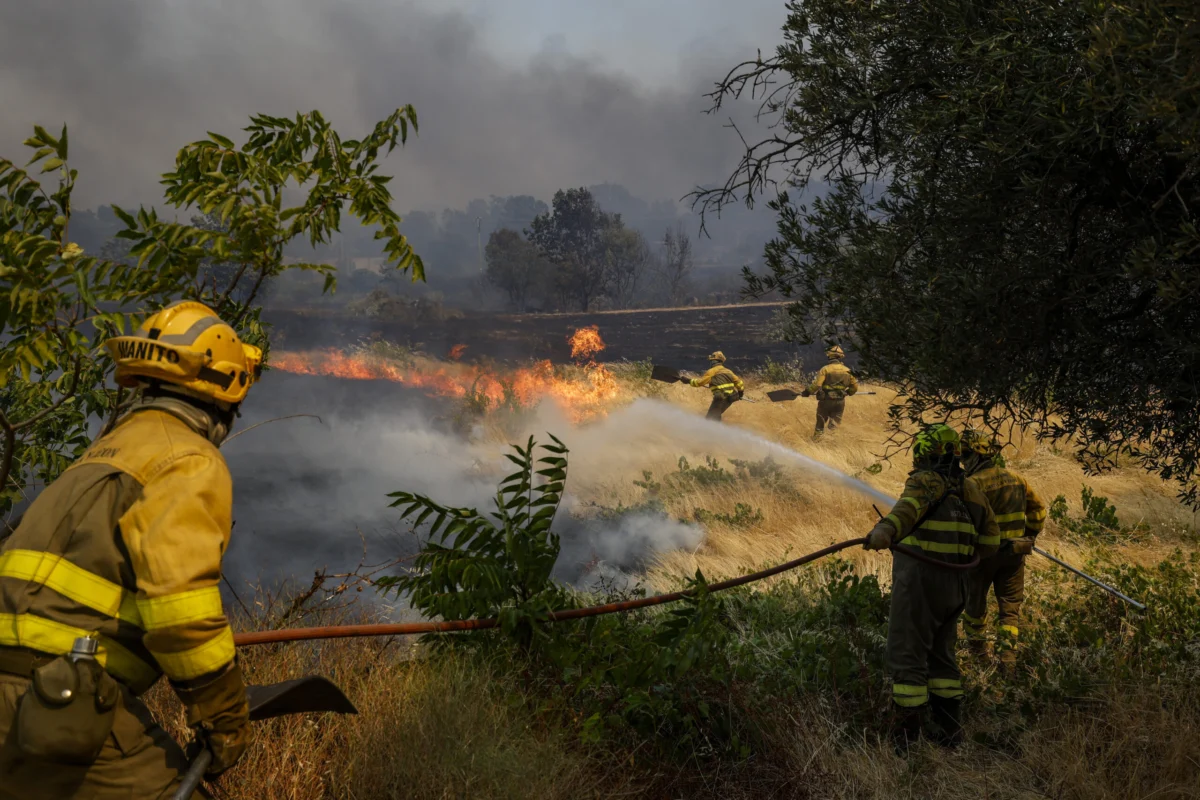
The wildfire linked to the arrested tractor driver has merged two separate blazes west of Madrid, creating a massive inferno that has consumed approximately 30 square kilometers (11.5 square miles) of land. Officials have described it as the most devastating fire in the region’s history. The rapidly spreading flames necessitated the evacuation of around 40,000 people from areas west of the capital, with others instructed to shelter in place as a precautionary measure. The situation is so dire that Madrid’s regional government chief for emergency management, Carlos Novillo, stated the wildfire is "at its peak and is currently beyond the capacity of firefighters to contain."
The alleged ignition by farm machinery highlights a critical vulnerability. Amid these tinderbox conditions, authorities had imposed a prohibition on the use of such equipment and other potentially hazardous activities. Despite these measures, the incident underscores the extreme ease with which fires can ignite and spread in the current climate. Spanish Prime Minister Pedro Sanchez acknowledged the gravity of the situation, tweeting that his government was deploying "all available resources" to combat what he termed a "dramatic situation" that is extending beyond Spain’s borders.
Broader Scope of the Spanish Fires
The inferno near Madrid is not an isolated incident. Another significant fire in the province of Avila, also part of the central Castilla y Leon region, has already scorched an estimated 90 square kilometers (35 square miles) and displaced approximately 1,500 residents. These fires are part of a broader pattern of escalating wildfire activity across Spain, driven by prolonged periods of intense heat and drought. The cumulative impact of these blazes is stretching emergency services to their limits and causing widespread disruption and fear.
The arrest of the tractor driver comes as police investigate a second suspect in a similar incident, suggesting a potential pattern of human-caused ignitions contributing to the crisis. The focus on agricultural machinery points to the challenges of balancing rural livelihoods with the imperative of fire prevention during extreme weather events. The prohibition on such activities, while necessary, can have economic consequences for farmers and land managers.
France Grapples with Its Own Inferno
The wildfire crisis is not confined to Spain; France is also battling devastating blazes, particularly in its southwestern regions. The Cap Ferret Peninsula has been ravaged by a significant fire that has burned an estimated 125 square kilometers (50 square miles) and forced the evacuation of roughly 44,000 people from the Gironde department. The scale of the evacuations in Gironde necessitated the use of boats to transport residents to safety, illustrating the urgency and complexity of the response.
A second major fire in the Landes region has further exacerbated the situation, displacing an additional approximately 23,000 people. French authorities have formally appealed to the European Union for reinforcements to bolster their firefighting efforts, which are struggling to contain fires raging on multiple fronts. Interior Minister Laurent Nunez reported that France is currently managing 32 active wildfires, with over 50,000 hectares (123,500 acres) burned since the beginning of the year. This figure represents nearly triple the total area burned in the entirety of the previous year, signaling a dramatic increase in fire intensity and frequency.
European and International Response
The escalating wildfire situation across Europe has triggered a coordinated international response. The European Union has dispatched critical resources, including four water-bombing aircraft to Spain and three to France, to aid in combating the blazes. Pledges of further assistance have also come from Italy, Greece, Croatia, Portugal, the Czech Republic, and Slovakia, demonstrating a unified effort to address the transboundary threat.

The World Health Organization’s European office has sounded an alarm, noting a significant surge in land burned by wildfires across the continent. Their data indicates a 57 percent increase in burned areas over the past four years. Specifically, fires in Spain and Portugal have more than doubled in intensity and frequency since last year, underscoring the intensifying impact of climate change on the region.
The Human and Environmental Toll
The immediate impact of these wildfires is the displacement of tens of thousands of people, forcing them to abandon their homes, livelihoods, and communities. Evacuees face uncertainty and potential long-term disruption, with many losing everything they own. The psychological toll of fleeing homes under the threat of flames is immense, and the recovery process for affected communities will be lengthy and challenging.
Beyond the immediate human displacement, the environmental consequences are profound. Vast tracts of forest and natural habitats are being destroyed, leading to significant biodiversity loss. The smoke plumes from these massive fires can travel hundreds of miles, impacting air quality and posing health risks to populations far from the fire lines. The carbon emissions released from burning vegetation also contribute to climate change, creating a dangerous feedback loop.
Economic Repercussions and Future Outlook
The economic impact of these wildfires is substantial, encompassing the costs of firefighting, emergency response, and the long-term rebuilding of devastated areas. Agricultural lands, vital for local economies, are also being destroyed, threatening food security and rural livelihoods. Tourism, a significant sector for many affected regions in both Spain and France, is likely to suffer as landscapes are scarred and access to popular destinations is restricted.
The declaration of a national wildfire emergency in Spain and France’s appeal for EU aid are stark indicators of the unprecedented nature of the current fire season. Experts warn that with climate change projections indicating more frequent and intense heatwaves, such extreme wildfire events are likely to become the new norm. This necessitates a fundamental reassessment of fire management strategies, land use policies, and investments in climate change adaptation and mitigation.
Underlying Causes and Prevention Challenges
The combination of a prolonged, intense heatwave, dry vegetation, and strong winds has created a perfect storm for widespread wildfires. While natural causes like lightning can ignite fires, the involvement of human activity, as in the alleged case of the tractor driver, adds another layer of complexity and frustration for authorities. The sheer scale of the blazes and the speed at which they spread are challenging even the most sophisticated firefighting techniques and resources.
The challenges in preventing such fires are multifaceted. They include educating the public about fire risks, enforcing bans on potentially hazardous activities, and managing landscapes to reduce fuel loads. However, the overwhelming environmental conditions driven by climate change often make prevention efforts a race against time and nature. The incidents underscore the urgent need for global action to address the root causes of climate change and for increased investment in climate resilience at local and regional levels.
Looking Ahead: A New Reality for Fire Season
The current wildfire season in Europe serves as a critical wake-up call, highlighting the escalating threat posed by climate change. The images of infernos engulfing landscapes and forcing mass evacuations are becoming increasingly common, signaling a fundamental shift in the fire season’s intensity and duration. The response from national governments and international bodies demonstrates a recognition of the crisis, but the long-term solutions will require sustained commitment to climate action and adaptive strategies.
As firefighters continue their arduous battle against these relentless blazes, the focus is also turning towards the future. The lessons learned from this devastating period will undoubtedly shape preparedness and response strategies for years to come. The accusation against the tractor driver serves as a stark reminder that while human actions can have catastrophic consequences, the underlying conditions that enable such rapid spread are largely driven by a warming planet. The path forward demands a comprehensive approach, addressing both immediate threats and the overarching challenge of climate change.