Hollywood’s elite, from Oscar-winning production designers to seasoned visual effects artists, are increasingly turning to specialized online academies to master artificial intelligence, recognizing AI as an indispensable tool for future filmmaking. This pivot reflects a significant shift within the entertainment industry, where the technology, once viewed with skepticism and fear of job displacement, is now seen as a critical skill for career longevity and competitive advantage. One such institution at the forefront of this educational wave is Curious Refuge, an online school that has rapidly become a go-to destination for professionals seeking to integrate AI into their creative processes.
The rapid evolution of AI tools has compelled even long-established figures to re-evaluate their professional skill sets. Rick Carter, a 73-year-old production designer with two Academy Awards and credits on iconic films like Forrest Gump and Star Wars: The Force Awakens, exemplifies this trend. Despite a decorated career, Carter made the conscious decision to enroll in AI filmmaking courses, driven by a personal philosophy of continuous evolution. He articulated his motivation by stating, "I’m just not a static person – I’m moving forward as long as I’m here and the artists I admire the most are those who’ve evolved throughout their lifetimes. So that’s why I picked going down this road."
Curious Refuge: A Hub for AI Filmmaking Education
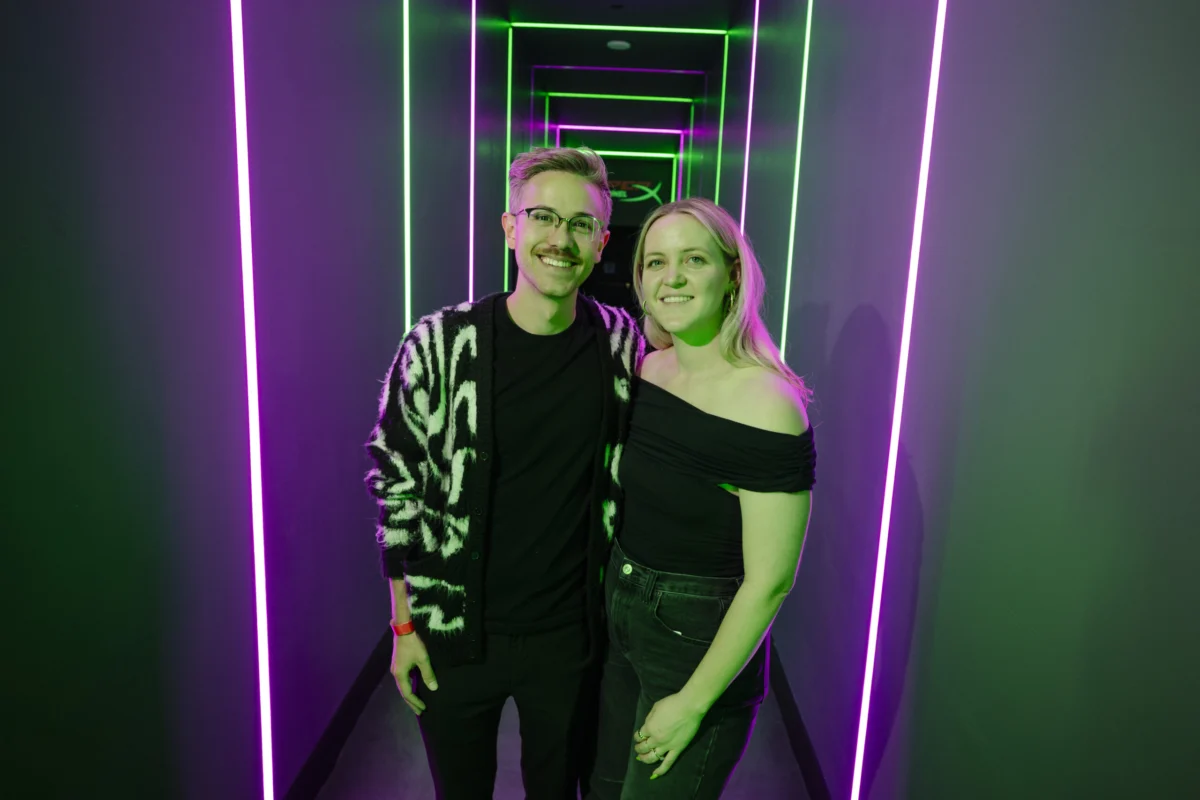
Curious Refuge, co-founded by Shelby and Caleb Ward, emerged three years ago with a mission to create a "safe space" for creators from diverse backgrounds to learn AI storytelling and production techniques. The online-only curriculum encompasses AI filmmaking, advertising, screenwriting, visual effects (VFX), and documentary production. Students engage with video tutorials, learn to utilize various AI tools, and complete assignments culminating in the creation of a short film predominantly using AI. The Wards report thousands of current students, with a striking 95 percent already employed in the entertainment or advertising sectors, signaling the industry’s urgent demand for these skills.
Initially, many professionals enrolling in Curious Refuge cohorts maintained a low profile, hesitant to openly discuss their pursuit of AI knowledge. Shelby Ward, the school’s COO, noted this early reticence, explaining, "We had a lot of professionals out here in Hollywood joining our cohorts and learning with us, but they stayed quietly in the background." This secrecy underscored the nascent, and somewhat controversial, nature of AI in Hollywood. However, Ward observes a significant shift in recent times: "Now they’re much more willing to say where they work, which studio they’re at." This growing openness indicates a broader industry acceptance, transforming Curious Refuge from a "shelter for the closeted AI-curious" into a recognized training ground for essential future skills.
Beyond the Prompt: The Artistry of AI Filmmaking
The concept of an "AI school" has met with some skepticism, often summarized by the dismissive query, "A school for typing prompts?" This perception is partly fueled by viral demonstrations of AI’s seemingly effortless capabilities, such as virtual Tom Cruise fighting Brad Pitt, created with minimal textual input. However, Caleb Ward, CEO of Curious Refuge, strongly refutes this oversimplification. He asserts, "The biggest misconception about AI filmmaking in general is you type in a prompt and get a film. It’s artistry. It takes work to tell a meaningful story that resonates with other people."
Ward emphasizes that creating a compelling AI-assisted film demands a deep understanding of storytelling principles, much like traditional filmmaking. The school’s curriculum, while incorporating modern tools like ChatGPT for brainstorming plot points, ensures students grasp foundational narrative techniques. Crucially, successful AI filmmaking involves far more than simple prompting. It requires extensive technical knowledge to navigate a diverse and rapidly evolving ecosystem of tools, each offering a myriad of creative choices. From emulating specific camera types and color grading styles to selecting from hundreds of royalty-free sound effects, the process is both more complex than commonly perceived and significantly more streamlined than conventional production methods.
The dynamic nature of AI tools presents a unique challenge, as software is constantly updated or replaced by newer offerings. Caleb Ward likens taking an AI film class to studying English where the rules of grammar and vocabulary are perpetually in flux. This constant change is precisely why Curious Refuge’s curated curriculum, despite the abundance of free online tutorials, offers substantial value. "Every single post out there says, ‘This new tool launched and it completely changes the way that we tell stories forever’ – it’s incredibly hyperbolic," Caleb says. "And part of the motivation in creating Curious Refuge is to give people a clear and objective path about what tools to use and what is actually helpful at the professional level."
Cost, Success Stories, and Industry Integration
Currently, a course at Curious Refuge costs $749, in addition to expenses for recommended online tools, which can range from $200 to $500 for a professional-quality 10-minute short film. The school plans to transition to a subscription model, offering access to its content library and more personalized feedback from experts. The efficacy of this training is evidenced by success stories like VFX artist Michael Eng, known for his work on Black Panther: Wakanda Forever. Eng reported to Reuters that he "started getting work immediately" after completing the courses. Shelby Ward highlights Eng’s unique position, stating, "He’s incredibly in demand because so many people want to use his existing experience in the visual effects industry in conjunction with the AI tools that he knows." This suggests that integrating AI skills with established professional expertise creates highly valuable talent. The adage "learn to code" for career anxiety is evolving into "learn to prompt."
The school-to-job pipeline is further bolstered by its parent company, Promise, an AI studio backed by major players like Google, Peter Chernin’s North Road, and Michael Ovitz’s Crossbeam. Promise acquired Curious Refuge last year and actively recruits its graduates, in addition to assisting students in securing positions elsewhere in the industry. Jamie Byrne, co-founder and President of Promise and a YouTube veteran, underscores the competitive landscape for AI talent. "When we were creating Promise, we realized that competition for talent for the best Gen-AI artists was going to become pretty fierce," Byrne stated. "I think that’s proving to be true. And we wanted to figure out how do we make sure that we always know who the best up-and-coming talent is."
Byrne confirms that studios’ attitudes toward AI have rapidly shifted. He reports daily inquiries from major studios and production companies worldwide seeking information on AI tools. Their interest, while not yet in the wholesale creation of AI films, centers on leveraging AI for specific tasks such as generating trailers for pitches, storyboard pre-visualization, and implementing hybrid production models. These hybrid models combine traditional filming on soundstages with generative AI for effects and backgrounds, offering significant cost efficiencies and accelerated timelines. Byrne notes that this integration is often seamless, allowing studios to "move a little bit faster and… achieve cost efficiencies, but you still have a cast and crew."
The Lingering Question of Job Security in Hollywood AI
Despite the enthusiasm for AI’s creative potential and efficiency gains, the ultimate impact on employment remains a contentious issue. Caleb Ward maintains an optimistic view, asserting in Curious Refuge training videos, "Is AI coming for your job? No. AI is not coming for your job. But AI will more than likely be required for your job, like a computer is required for most professions today." This perspective posits AI as an augmentative tool, not a replacement, that will supplement the creative process rather than supplant it. He draws parallels to past technological shifts in Hollywood, such as the advent of sound or digital cinematography, which ultimately led to more storytellers entering the entertainment ecosystem.
However, industry research and anecdotal evidence present a more nuanced, and at times, concerning picture. A study from last year, surveying 300 entertainment industry leaders, revealed that three-quarters of respondents anticipate AI tools will lead to job elimination or consolidation, potentially impacting approximately 200,000 positions. Beyond the statistics, reports of film and television artists losing their jobs amid the growing AI boom are becoming increasingly common.
Rick Carter’s decision to embrace AI was partly influenced by a pivotal moment in Hollywood history: Steven Spielberg’s choice to use nascent CGI over stop-motion animation for Jurassic Park. Carter recalled the reaction of legendary stop-motion animator Phil Tippett, who "of course, who is an incredible artist, just saw his whole way of doing things potentially evaporating." While Tippett’s expertise was still valued in modeling, the incident underscored how technological advancements could fundamentally alter creative roles. This historical parallel highlights the ongoing tension between adaptation and obsolescence in a rapidly changing industry.
Despite these concerns, the atmosphere within Curious Refuge, as described by the Wards and confirmed by students like Carter, is one of optimism and excitement for new creative frontiers. Carter articulates this enthusiasm: "I have nothing in this game other than my own enthusiasm for something that’s new. To just think about going from my age, to the end of my time, into a whole new era of how to express oneself." As Hollywood continues its integration of AI, the future of creative roles will likely depend on the industry’s ability to balance technological innovation with the enduring need for human artistry and storytelling.