Spanish cities and the enclave of Ceuta have become the scene of widespread public demonstrations, with thousands taking to the streets a month after a massive influx of migrants and asylum seekers overwhelmed the North African territory. The escalating crisis highlights deep societal divisions, strained resources, and a complex geopolitical standoff that continues to unfold along Europe’s southern border.
Ceuta Faces Unrest Amid Lingering Migrant Crisis
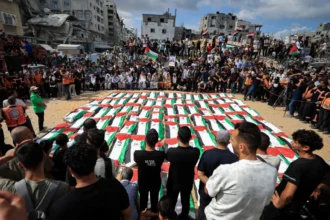
The gravity of the situation in Ceuta, a Spanish city geographically located on the African continent but politically part of Spain, was underscored by a significant wave of protests across the nation. In Madrid alone, an estimated 50,000 people gathered, their chants echoing sentiments of nationalistic pride and concern over border security. The demonstrations coincided with Ceuta Day, a local holiday commemorating the city’s historical capture by Portuguese forces in the 15th century, adding a layer of symbolic resonance to the public outcry.
In Ceuta itself, residents visibly expressed their solidarity and anxieties, draping themselves in Spanish and city flags. Slogans such as "Expel the invaders" and "Ceuta is not for sale, Ceuta must be defended" reverberated through the crowds, reflecting a palpable sense of unease and a demand for decisive action. These sentiments underscore the intense pressure on local authorities and the broader Spanish government to manage the fallout from the unprecedented arrival of thousands of individuals seeking refuge and opportunity.
The July Surge and Its Aftermath
The current unrest is a direct consequence of an extraordinary event that unfolded on July 30 and 31, when an estimated 70,000 migrants and asylum seekers surged across the border from neighboring Morocco into Ceuta. This mass crossing, a desperate attempt to reach European soil, resulted in a tragic loss of life, with at least 80 individuals perishing during the perilous journey. While many of the arrivals have since been repatriated to Africa, a significant number remain in Ceuta, their futures uncertain.
Estimates of the remaining population vary, with the Spanish government reporting approximately 5,000 individuals, including 1,200 minors. However, local figures suggest a higher number, indicating the ongoing challenge of accurately assessing and addressing the needs of those still present. The plight of these individuals, many of whom embarked on the dangerous journey in pursuit of better economic prospects and a chance for a secure future, remains a central humanitarian concern.

Voices from the Ground: Seeking Refuge and Opportunity
Among those stranded in Ceuta is Otman Ianaya, a 40-year-old father of two young daughters. He recounted his arduous swim to the Spanish territory with his family, driven by the stark reality of limited opportunities in Morocco. "There is no work in Morocco," he told the Agence France-Prespresse, his words conveying a deep-seated desire for a better life. "I want to build a future in my life." His narrative is emblematic of the thousands who risk everything in search of safety and prosperity, highlighting the push factors that drive irregular migration.
The daily struggle for survival for those who remain is evident. Many are forced to sleep on Ceuta’s beaches, facing precarious living conditions. The Spanish government has initiated measures to expand emergency housing and bolster social services, but these efforts have faced criticism for being insufficient to meet the overwhelming demand. The inadequate response has further exacerbated the humanitarian crisis, leaving vulnerable individuals in a state of prolonged uncertainty and distress.
Escalating Tensions and Social Friction
The sustained pressure of the migrant crisis has unfortunately fueled isolated incidents of violence and social friction within Ceuta. Reports have emerged of fights, the stoning of a military patrol, and disturbing allegations of sexual assault. Residents, overwhelmed and increasingly anxious, have also engaged in clashes with police and have been involved in the burning of belongings belonging to migrants and asylum seekers, a stark demonstration of their frustration and opposition to the ongoing influx.
"The situation has been chaotic, so much so that you can’t go out onto the street," lamented Gema Guillen, a protester, describing the pervasive atmosphere of unease that has gripped the city. This sentiment reflects a broader societal anxiety about security, resources, and the perceived impact of uncontrolled migration on local communities. The breakdown of order and the rise of xenophobic sentiments pose significant challenges to social cohesion and the effective management of the crisis.
Political Divisions Deepen Over Ceuta’s Future
The crisis has also exposed and exacerbated existing political schisms within Spain. Ceuta’s regional leader, Juan Jesus Vivas, a member of the conservative Popular Party, has characterized the situation as a "violation of Spain’s territorial integrity," framing it as a direct challenge to national sovereignty. This rhetoric underscores the highly politicized nature of migration issues in Spain, where border security and national identity are often central themes in political discourse.
In response, Spain’s territorial policy minister, Angel Victor Torres, has accused the conservative and far-right opposition of exploiting the crisis to "attack the government of Spain" rather than offering constructive solutions. This exchange highlights the partisan warfare that often surrounds migration policies, with political factions using the issue to score points against their rivals. Such infighting can hinder the development of unified and effective strategies to address the complex challenges at hand.

Prime Minister Pedro Sanchez has attributed the initial surge to a misinterpretation of a court ruling and a wave of online disinformation that he claims encouraged people to cross the border. He has further suggested that negative coverage of the crisis has been amplified by accounts linked to Russia and Israel, although he has not provided concrete proof, citing findings from Spain’s intelligence community. These allegations introduce a geopolitical dimension to the crisis, suggesting potential foreign interference in domestic affairs.
In an effort to mitigate the crisis, Madrid has pledged 309 million euros (approximately $357 million) in aid for Ceuta. This significant financial commitment aims to bolster humanitarian efforts, enhance security, and provide support for local infrastructure and services. However, the effectiveness and allocation of these funds remain critical questions in the ongoing response to the multifaceted challenges facing the enclave.
The Humanitarian Imperative: A Call for Empathy
Amidst the political maneuvering and public outcry, humanitarian organizations continue to work on the front lines, providing essential aid to those in need. Halima Ahmed of Luna Blanca, a non-governmental organization distributing food and assistance to migrants and asylum seekers, stressed the importance of compassion. "They are people in a vulnerable situation; we need to have a little bit of empathy," she urged.
Ahmed acknowledged the widespread frustration and exhaustion felt by both the local population and the migrants themselves. "People are tired, people are fed up… but that does not justify any type of violence," she stated, drawing a clear line between legitimate grievances and unacceptable acts of aggression. Her words serve as a poignant reminder of the human cost of such crises and the need for a balanced approach that addresses both security concerns and humanitarian obligations.
The ongoing situation in Ceuta remains a stark reminder of the complex interplay between global migration patterns, national border policies, and the profound human stories of individuals seeking a better life. As the crisis continues to evolve, its resolution will likely depend on a delicate balance of security measures, humanitarian aid, and collaborative political action, both within Spain and in its relations with neighboring countries. The long-term implications for regional stability and European migration policy are significant and will continue to be closely watched.