Donald Trump’s presidential transition team reportedly launched a sustained effort to prevent British Prime Minister Keir Starmer from appointing Peter Mandelson as the United Kingdom’s ambassador to the United States, citing long-standing personal animosity and political disagreements. According to documents and internal reports surfacing this week, high-ranking aides within the Trump administration repeatedly intervened during the selection process, urging the British government to retain Mandelson’s predecessor, Karen Pierce, rather than proceed with the controversial Labour peer.
The friction between the incoming U.S. administration and 10 Downing Street highlights a period of significant diplomatic tension as the two allies attempted to align their interests ahead of the 2025 inauguration. Sources familiar with the matter indicate that the message was first delivered during a high-stakes meeting in Palm Beach in December 2024. During these discussions, Trump’s advisors, including current Chief of Staff Susie Wiles, expressed deep-seated reservations about Mandelson’s suitability for the role, characterized by past public criticisms he had leveled against the American president.
The Backroom Campaign to Block the Mandelson Appointment
The effort to obstruct the appointment was not a singular event but a series of calculated diplomatic maneuvers. Reports suggest that Trump’s aides communicated directly with Morgan McSweeney, Starmer’s national security adviser and former chief of staff, on multiple occasions. The primary objective of these interventions was to advocate for the continuation of Karen Pierce’s tenure, a diplomat who had earned the respect of the Republican establishment during Trump’s first term.
Susie Wiles, a central figure in the administration’s personnel decisions, was reportedly among the most vocal opponents of the appointment. Internal accounts suggest Wiles viewed Mandelson as "arrogant" and noted reports of his allegedly dismissive attitude toward junior staff members. These personality clashes were compounded by Mandelson’s history of disparaging public remarks regarding Donald Trump’s policy platform and leadership style, which aides argued would make him an ineffective bridge between London and Washington.
Despite these warnings, the Starmer government moved forward with the appointment, a decision that would prove short-lived. Mandelson’s tenure lasted only nine months before he was dismissed following the emergence of new, damaging details regarding his historical ties to Jeffrey Epstein, the convicted sex offender. The subsequent release of federal files in February 2026 further tarnished his reputation, revealing that the peer had shared market-sensitive information with Epstein during his time as the UK’s Business Secretary.

Geopolitical Consequences of the Mandelson Diplomatic Friction
The instability within the UK’s diplomatic mission occurred against a backdrop of escalating global conflict, particularly in the Middle East. While the Trump administration was managing the fallout of the Mandelson appointment, it was simultaneously directing a massive military campaign against Iranian interests. During a presentation of the Commander in Chief Trophy at the White House on Friday, President Trump addressed the ongoing naval conflict, claiming that the United States had effectively neutralized the Iranian Navy.
"The difference between them and us is they had a navy two weeks ago; they have no navy anymore," the president stated, asserting that 58 Iranian ships had been destroyed in a span of just 48 hours. This aggressive military posture has been central to the administration’s strategy to force the reopening of the Strait of Hormuz, which has been largely blocked due to retaliatory attacks by Iranian forces. The administration’s focus on "peace through strength" has led to a dramatic increase in U.S. military presence in the region, including the deployment of thousands of additional Marines and sailors.
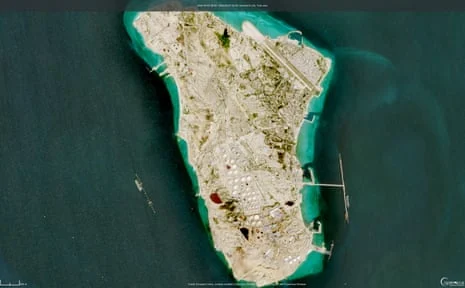
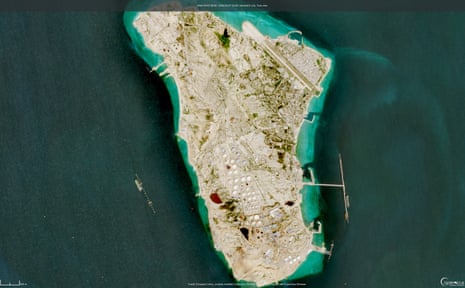
Pentagon officials confirmed on Friday that the USS Boxer and its associated marine expeditionary unit have departed the U.S. West Coast three weeks ahead of schedule. This surge is intended to provide the necessary hardware for a potential blockade or occupation of Kharg Island, a critical processing hub for 90% of Iran’s oil exports. While no final decision on a coastal invasion has been made, senior administration officials have emphasized that "all options remain on the table" to ensure the safe passage of global shipping.
Broader Administrative Overhauls and the Role of DOGE
While Trump aides tried to block appointment of Peter Mandelson as UK ambassador to US to ensure diplomatic loyalty, a parallel effort was underway to reshape the domestic and international architecture of the U.S. government. Under the guidance of Elon Musk and the Department of Government Efficiency (DOGE), the administration has executed a radical overhaul of foreign aid and institutional oversight.
The State Department announced on Friday the establishment of the Bureau of Disaster and Humanitarian Response, a new entity designed to replace the now-defunct U.S. Agency for International Development (USAID). The transition, which involved the termination of thousands of federal employees and the cancellation of numerous grants, represents a pivot toward "life-saving" aid and away from projects focused on climate change or social causes. The new bureau, staffed by approximately 200 officials across 12 global hubs, will operate with an annual budget of $5.4 billion, focusing strictly on disaster relief and global food security.
Judicial and Legislative Challenges to the Trump Agenda
The administration’s rapid-fire policy changes have faced significant pushback from both the judicial branch and members of Congress. In the legislative arena, Representative Lauren Boebert, a long-time supporter of the MAGA movement, publicly broke with the administration over a $200 billion war supplemental funding request. Boebert cited the economic struggles of her constituents in Colorado, arguing that the "industrial-war complex" should not receive priority over American taxpayers facing a rising cost of living.
"I am a ‘no’ on any war supplementals," Boebert told reporters, signaling a potential fracture within the Republican base regarding the cost of Operation Epic Fury. This legislative resistance comes at a time when the administration is also pressuring the Senate to pass the SAVE America Act, which would mandate strict voter ID and proof of citizenship for federal elections.
On the judicial front, the Supreme Court is currently weighing several landmark cases that could redefine executive power. Among these are Trump v. Cook and Trump v. Slaughter, which involve the president’s controversial firing of members of the Federal Reserve and the Federal Trade Commission. Additionally, the court is expected to rule on Louisiana v. Callais, a case that could significantly impact the remaining protections of the Voting Rights Act.
Institutional Glitches and International Investigations
The administration is also grappling with technical and legal hurdles that have hampered its transparency efforts. A significant glitch at the Internal Revenue Service (IRS)—which officials attribute to the agency being understaffed following recent budget cuts—has reportedly masked $51 million in campaign contributions. The Center for Political Accountability noted that donor lists for key gubernatorial and attorney general races remain blank, just weeks before a critical filing deadline.
Internationally, the administration’s law enforcement reach has expanded into South America. Federal prosecutors in New York have launched a criminal investigation into Colombian President Gustavo Petro. The probe, which involves the DEA and Homeland Security Investigations, is examining alleged ties between Petro’s administration and international drug trafficking organizations, specifically focusing on whether illicit donations were used to fund his presidential campaign.
The Future of US-UK Relations Post-Mandelson
As the dust settles on the Mandelson affair, the relationship between Washington and London remains in a state of recalibration. The Trump administration’s willingness to intervene in the UK’s diplomatic appointments set a precedent for a more assertive, and at times transactional, approach to the "Special Relationship." The eventual collapse of Mandelson’s appointment served as a vindication for the aides who had initially cautioned against him, though it left a void in British representation at a time of global crisis.
The administration’s focus remains squarely on its "America First" priorities, from securing the Strait of Hormuz to dismantling the "administrative state" through DOGE. However, the internal dissent from figures like Boebert and the ongoing legal battles in the Supreme Court suggest that the path forward will be defined by constant negotiation between the executive branch, a skeptical Congress, and an active judiciary. For now, the focus shifts to the upcoming 250th anniversary of the United States, marked by the release of a 24-karat gold commemorative coin bearing the president’s image, symbolizing the administration’s efforts to imprint its legacy on every facet of American life.