The escalating conflict with Iran, now entering its fourth week, has presented a complex and often contradictory picture of U.S. strategy, largely shaped by President Donald Trump’s evolving public statements and actions. What began as what the administration described as a decisive military operation appears to have devolved into a protracted engagement, marked by Tehran’s resilience and increasingly aggressive responses that have sent shockwaves through global energy markets and raised fears of a wider regional conflagration.
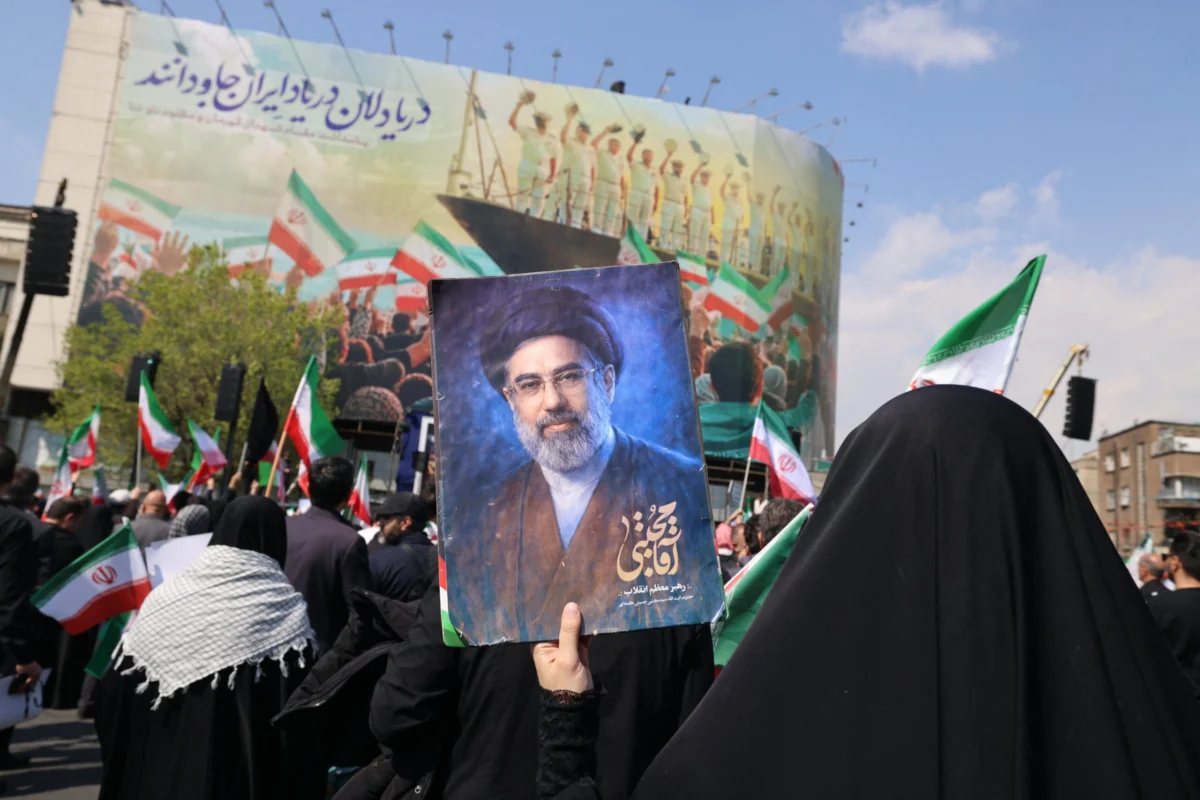
The Iranian government, despite significant initial strikes, has demonstrated an unexpected capacity to withstand the loss of key political and military figures. Furthermore, Tehran has successfully launched retaliatory attacks against Israel and several Gulf nations, underscoring the limitations of the U.S.-led campaign. This enduring resistance has directly impacted global energy supplies, with Iran imposing a de facto blockade on the Strait of Hormuz. This vital waterway, through which approximately one-fifth of the world’s oil and liquefied natural gas (LNG) passes, has seen oil prices surge dramatically.
Analysts have warned that the ongoing conflict poses a significant risk of triggering a global recession. The mounting economic pressure has evidently prompted a shift in the Trump administration’s approach, including a controversial decision to permit the sale of sanctioned Russian oil in an attempt to stabilize energy markets. Simultaneously, efforts to rally allies to police the Strait of Hormuz have, thus far, proven unsuccessful, adding another layer of complexity to the U.S. strategy.
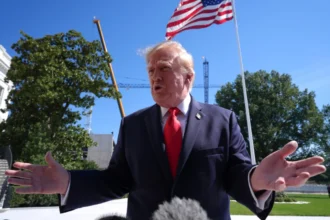
President Trump’s public pronouncements regarding the conflict have been characterized by a striking lack of coherence, oscillating between signals of de-escalation and aggressive threats. This ambiguity has left observers questioning the ultimate objectives and the long-term vision for U.S. policy in the region. The inherent contradictions in messaging have fueled speculation about whether the administration is seeking an exit from the conflict or is preparing to escalate further.
The Unfolding Narrative: A Shifting Landscape of U.S. Policy on Iran
The evolving rhetoric surrounding the Iran war reflects a strategic landscape in flux. On one hand, President Trump has indicated a potential winding down of military operations, while on the other, he has issued stark warnings of severe repercussions. This duality in communication has created a climate of uncertainty regarding the future trajectory of U.S. involvement.

Is the War Winding Down or Widening?
On a recent Saturday, President Trump declared on his social media platform that the United States was "very close to meeting our objectives as we consider winding down our great Military efforts in the Middle East with respect to the Terrorist Regime of Iran." He articulated the war’s stated goals as the complete degradation of Iran’s missile capabilities, the destruction of its defense industrial base, the elimination of its navy and air force, preventing Iran from ever developing nuclear weapons, protecting Middle Eastern allies, and securing the Strait of Hormuz.
Both President Trump and Israeli Prime Minister Benjamin Netanyahu have repeatedly asserted that Iran’s military capabilities have been "completely destroyed." However, these claims stand in stark contrast to Tehran’s continued retaliatory actions against Israel and its strikes on regional targets. U.S. military officials have acknowledged conducting extensive bombardments along Iran’s coast, including the use of bunker buster bombs, yet these efforts have not definitively curtailed Tehran’s ability to disrupt shipping in the Strait of Hormuz.
In a subsequent declaration, President Trump stated that the U.S. had "blown Iran off of the map" and had "met my own goals…and weeks ahead of schedule!" He further insisted that Iran’s "leadership is gone, their navy and air force are dead, they have absolutely no defense, and they want to make a deal." Iranian leaders have consistently denied any overtures for a ceasefire.
However, mere hours later, President Trump returned to his social media platform with a direct ultimatum for Iran. "If Iran doesn’t FULLY OPEN, WITHOUT THREAT, the Strait of Hormuz, within 48 HOURS from this exact point in time, the United States of America will hit and obliterate their various POWER PLANTS, STARTING WITH THE BIGGEST ONE FIRST!" This declaration was met with a firm response from Iran, which vowed to target energy sites across the Middle East if its power facilities were attacked. Iran had already launched hundreds of missiles and drones against Gulf countries, targeting both U.S. assets and energy infrastructure.
Amidst these conflicting messages of winding down operations and issuing escalating threats, the Trump administration announced the deployment of three additional warships to the Middle East, accompanied by approximately 2,500 U.S. Marines. This reinforcement adds to the estimated 50,000 military personnel already stationed in the region for the campaign against Iran.
When Will the War on Iran End?
The question of the war’s duration has been a persistent point of inquiry for U.S. officials, including President Trump, since the conflict commenced on February 28. Early statements from the President offered a range of projections. On February 29, he suggested the conflict would last "four weeks or so," describing it as a "four-week process." The following day, he stated at the White House that while "four to five weeks" had been projected, the U.S. possessed the "capability to go far longer than that."

Defense Secretary Pete Hegseth offered a more somber outlook on March 8, telling CBS’s "60 Minutes" that "This is only just the beginning." Conversely, on March 9, President Trump declared to the same network that he believed "the war is very complete, pretty much," and that U.S. military operations were "way ahead of schedule." Later that day, he offered a paradoxical assessment, stating the war could be described as "both complete and just beginning." He also asserted, "We’ve already won in many ways, but we haven’t won enough," and pledged to intensify actions against Iran. On March 11, President Trump reiterated the need for continued engagement, stating, "We don’t want to leave early, do we? We’ve got to finish the job."
Underlying Rationale for the U.S. and Israeli Strikes on Iran
The stated justifications for the initiation of hostilities provide significant insight into the evolving U.S. posture. On March 2, Secretary Hegseth articulated the attacks as an effort to end "47 long years" of conflict with "the expansionist and Islamist regime in Tehran," citing Iran’s refusal to negotiate with the U.S.
Hours later, Secretary of State Marco Rubio informed reporters that the U.S. was aware of Israel’s impending strike and that the Trump administration believed a preemptive U.S. strike was necessary to prevent Iran’s potential retaliation against American forces. Rubio stated, "We went proactively in a defensive way to prevent them from inflicting higher damage." This explanation triggered considerable debate in Washington, with critics arguing that Israel had effectively compelled the U.S. into war.
President Trump subsequently countered his own Secretary of State, asserting, "They [Iran] were going to attack. If we didn’t do it, they were going to attack first. … So if anything, I might have forced Israel’s hand." The following day, White House Press Secretary Karoline Leavitt concluded that President Trump acted based on a "good feeling" that Iran intended to strike, prompting the U.S. response.
The launch of the war occurred amidst scheduled talks between Washington and Tehran, which had commenced late the previous year. An Omani mediator had indicated prior to the conflict that a deal was "within reach." The assertions by the U.S. and Israel that Tehran was on the verge of developing a nuclear weapon have not been substantiated by the United Nations nuclear watchdog. Furthermore, U.S. Director of National Intelligence Tulsi Gabbard testified before Congress that Iran was not in a position to produce an atomic bomb.
Some analysts contend that the Trump administration was persuaded to engage in war by Prime Minister Netanyahu, who has long advocated for U.S. military intervention in Iran. These analysts suggest that President Trump, emboldened by a swift U.S. military operation in Venezuela earlier in the year, underestimated Iran’s capabilities. The operation in Venezuela involved the abduction of President Nicolas Maduro and concluded in two and a half hours.

The Strategic Implications of Shifting Messaging
The fluidity of objectives in the Iran war, as evidenced by the shifting goalposts in public statements, highlights the perceived policy limitations and strategic approach of the Trump administration. This approach appears to involve maintaining open avenues for de-escalation, while simultaneously employing aggressive rhetoric.
Zeidon Alkinani, a Middle East analyst at the Arab Perspectives Institute, observed that in the initial stages of the hostilities, the stated targets and objectives seemed clearer and more limited. "There now seems to be a more chaotic reaction," he commented, characterizing the exchanges as increasingly reciprocal and warning that strikes on oil or energy facilities could lead to further escalation. This was underscored by Iran’s attack on energy facilities in Qatar, which caused "significant damage" and disrupted 17 percent of Qatar’s LNG export capacity, a nation responsible for 20 percent of global LNG supplies. Iran stated this was retaliation for Israeli attacks on a gas plant.
Paolo von Schirach, president of the Global Policy Institute, noted President Trump’s tendency to change his mind "very quickly," making it difficult to predict his next move in the Iran conflict. Von Schirach expressed uncertainty about the specific "tools" available to President Trump to end the war. "We look at his message saying the war is winding down. OK, good. Things are quiet. Maybe there is an off-ramp somehow. But now he says that if the Iranians don’t open the Strait of Hormuz, then we [the U.S.] are going to unleash hell and what have you," von Schirach remarked. "It is not quite clear to me what he wants and what the tools are to accomplish this."
Von Schirach further suggested that achieving Iranian submission might prove challenging given the country’s size and population. Drawing a parallel to the Second Gulf War in Iraq, which involved approximately 150,000 American soldiers, he posited that President Trump might require as many as half a million soldiers if he intended to "take over Iran." This hypothetical scenario underscores the profound strategic questions surrounding the current U.S. policy and its potential long-term consequences. The conflicting messages and the escalating regional tensions continue to cast a long shadow over the stability of the Middle East and the global economy.