Prime Minister Keir Starmer declared Monday that the United Kingdom will maintain a disciplined military posture to ensure the nation is not drawn into a "wider war" in the Middle East, even as he unveiled a multimillion-pound domestic relief package to shield citizens from the economic fallout of the conflict. Speaking from a podium in Downing Street as the regional conflict entered its third week, Starmer outlined a precarious balancing act between fulfilling international defense obligations and addressing a burgeoning cost-of-living crisis fueled by energy market volatility. The Prime Minister’s address served as a direct response to escalating tensions in the Persian Gulf and a series of transactional demands from the White House regarding the protection of global shipping lanes.
The Prime Minister established three primary objectives for his administration’s involvement in the crisis: the protection of British nationals in the region, the avoidance of a broader military escalation, and a diplomatic push toward a resolution that neutralizes the Iranian threat to its neighbors. "While taking the necessary action to defend ourselves and our allies, we will not be drawn into the wider war," Starmer told reporters, emphasizing that the UK’s commitment to regional stability would not equate to an open-ended military entanglement.
Domestic Relief and the Heating Oil Crisis
As the conflict drives global energy prices upward, the Starmer administration is pivoting toward aggressive domestic intervention. The center-piece of Monday’s announcement is a £53 million ($67 million) support package specifically targeted at low-income households in rural communities. Unlike most urban residents who rely on the regulated gas and electricity grid, millions of rural families depend on heating oil, a market that has historically lacked the consumer protections provided by the energy regulator, Ofgem.

The Treasury confirmed that the funding will be distributed according to census data to ensure aid reaches the areas of greatest need. England is slated to receive £27 million, while £17 million has been earmarked for Northern Ireland, where nearly two-thirds of households rely on oil-fired central heating—the highest proportion in the UK. Scotland and Wales will receive £4.6 million and £3.8 million, respectively.
Beyond immediate financial aid, Starmer announced a "legal direction" to energy companies, requiring them to pass savings from the previous budget directly to consumers. The government also plans to overhaul the heating oil market by introducing a strengthened code of practice, improving price transparency, and formalizing a priority register for vulnerable customers. The Prime Minister noted that the Competition and Markets Authority (CMA) is investigating reports of suppliers cancelling orders to "jack up prices" as the conflict intensified, a practice he labeled "completely unacceptable."
Geopolitical Strains and the Trump Administration
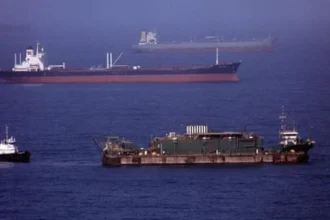
The press conference took place against a backdrop of increasingly strained relations between London and Washington. President Donald Trump has recently intensified his rhetoric regarding NATO, suggesting that U.S. support for the alliance could be contingent on European partners providing more military assets to the Persian Gulf. Specifically, the U.S. has requested that the UK send warships to help reopen the Strait of Hormuz, a vital maritime artery currently disrupted by Iranian activity.
Starmer confirmed he held a "good discussion" with President Trump on Sunday but remained non-committal regarding the deployment of heavy naval assets. Instead, the UK is exploring the use of autonomous mine-hunting systems and drones to assist in maritime security. "We want to make sure that involves as many partners as possible," Starmer said, noting that any mission to secure the Strait would likely be a coalition of "partner nations" rather than a formal NATO operation.

The Prime Minister’s refusal to unconditionally meet U.S. military requests has drawn sharp criticism from domestic opponents. Conservative Party leader Kemi Badenoch accused Starmer of being "slow" and "not deep enough in conversations with the U.S.," suggesting that the UK’s hesitation is alienating its most important ally. Meanwhile, Reform UK leader Nigel Farage, who previously advocated for strong support of the Trump administration, has recently pivoted, stating he would not support the U.S. militarily in a full-blown war with Iran.
Security Concerns and the Role of U.S. Assets in Britain
Domestic pressure is also mounting regarding the use of British soil for offensive operations. Zack Polanski, leader of the Green Party, challenged the government on Monday to clarify the role of U.S. B-52 bombers currently operating out of RAF Fairfield in Gloucestershire. Polanski questioned whether these aircraft, part of a U.S. mission dubbed "Operation Epic Fury," are being used for offensive raids against Iranian infrastructure.
"The Prime Minister needs to explain clearly how planes loaded up with missiles, taking off from a UK base, are being used for defensive rather than offensive raids," Polanski said. The government has maintained that all U.S. operations from British bases are conducted in accordance with international law and defensive objectives, but officials have declined to provide specific operational details, citing national security.
The conflict’s impact on other theaters of war was also a key theme of the Downing Street briefing. Starmer warned that the volatility in the Gulf must not be allowed to become a "windfall for Putin." He announced an upcoming meeting with Ukrainian President Volodymyr Zelenskyy to ensure that Western attention and resources remain committed to countering Russian aggression in Europe despite the escalating crisis in the Middle East.

Internal Political Friction and Ethical Debates
While the Prime Minister focused on the war and the economy, he was forced to address a series of internal political scandals. Chief among them is the controversial appointment of Peter Mandelson as the UK’s Ambassador to the United States. Recent reports suggest that the U.S. administration had expressed a preference for the previous ambassador, Karen Pierce, to remain in her post. Starmer admitted on Monday that the vetting process for the appointment was "not strong enough" and had been a "process failure," though he denied misleading Parliament regarding the timeline of the decision.
Simultaneously, the administration is facing a scathing report from a tribunal led by former Labour leader Jeremy Corbyn. The "Gaza Tribunal" report alleges that the British government has been complicit in war crimes and failed in its legal duty to prevent genocide in Gaza. The 112-page document claims that UK intelligence exchanges and arms transfers have directly supported actions that led to a death toll exceeding 73,000 people. The report’s publication adds significant pressure on the Starmer government from the left wing of British politics, which demands an immediate cessation of all military ties with Israel.
Economic Outlook and Market Volatility
The economic stakes of the "wider war" are felt most acutely in the energy sector. Liberal Democrat leader Ed Davey argued Monday that the government’s £53 million support package is a "temporary sticking plaster" that fails to address the structural issues of the energy market. Davey called for an immediate three-month VAT holiday on heating oil and the implementation of a strict price cap similar to those governing the electricity grid.
Starmer acknowledged the anxiety of working-class families, referencing his own upbringing in the 1970s. "I remember how it feels when you’re struggling to make ends meet. It’s a knot in your stomach," he said. While he refused to rule out further energy bailouts later this year, he emphasized that the most effective way to lower the cost of living is through regional de-escalation.
The Prime Minister’s strategy appears to be one of cautious containment. By offering targeted financial aid, he hopes to quiet domestic unrest, while his diplomatic "options" in the Gulf are designed to satisfy Washington without committing the UK to a conflict that could spiral out of control. However, with the Strait of Hormuz remaining a flashpoint and the U.S. presidency adopting a transactional approach to traditional alliances, the "wider war" Starmer seeks to avoid may yet prove difficult to escape.
As the House of Commons prepares for a series of urgent questions on Monday afternoon, the administration faces a multi-front battle: maintaining a special relationship with a volatile U.S. president, managing a fragile domestic economy, and defending its ethical standing on the global stage. The coming weeks will determine if Starmer’s "British interest first" policy can survive the intensifying pressures of a world at war.