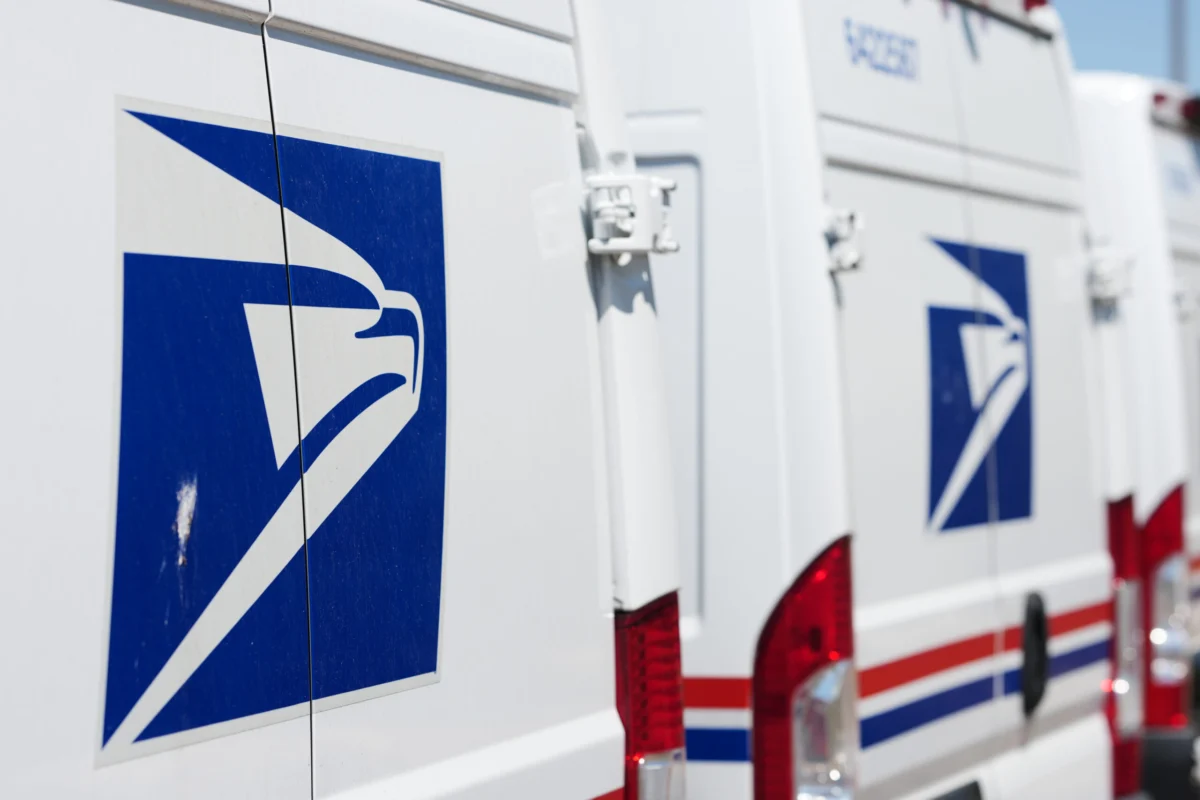
The United States Postal Service (USPS) has advanced a proposed rule change that could impose significant restrictions on mail-in ballot delivery, even as federal courts have previously blocked such measures. This latest development, detailed in a 95-page update released Friday, aims to lay the groundwork for these rules to take immediate effect should any existing court injunctions be reversed. The move signals a continued effort by the Trump administration to assert federal oversight over election administration, a responsibility traditionally held by individual states.
The proposed regulations would mandate that the Postal Service cease distributing mail-in ballots in states that do not comply with federal requirements regarding voter records. Under the new framework, states would be compelled to identify to the USPS all voters who have requested absentee ballots. Furthermore, state election officials would need to redesign ballot envelopes to incorporate barcodes, enabling the Postal Service to track and identify voting materials with greater precision.
In its lengthy document, the USPS contended that these changes are essential for ensuring adherence to federal law. The agency stated that these requirements "do not amount to election administration, nor do they usurp state resources." Instead, the USPS framed the proposed rules as measures to "regulate the use of the mail to improve operational efficiency and support the faithful execution of federal law."
However, critics argue that these proposals represent an unprecedented federal intrusion into election administration, a domain constitutionally delegated to the states. Concerns have been raised that the Postal Service could leverage these rules to collect sensitive voter information and, in effect, reject ballots from states that do not align with the administration’s directives.
This latest push follows a pattern of actions by President Donald Trump aimed at placing additional restrictions on voting processes, often citing unsubstantiated claims of widespread election fraud. Since his return to office for a second term in 2025, Trump has consistently alleged that the 2020 presidential election was illegitimate, despite losing the race. He has frequently employed rhetoric about "rigged" elections to cast doubt on electoral outcomes that have not favored him.
Earlier this year, Trump publicly accused California of electoral misconduct in its primary races after several Republican candidates failed to meet his expectations. These accusations, leveled on social media, highlighted his ongoing scrutiny of election integrity, particularly in states where results have been unfavorable.
Mail-in ballots have been a particular focal point of Trump’s efforts to exert greater control over the electoral system. Despite his public criticism of mail-in voting as susceptible to fraud—a claim unsupported by evidence—Trump himself has utilized mail-in ballots on multiple occasions, including for recent primary elections in Florida.
Extensive research and numerous studies have consistently demonstrated that election fraud is exceedingly rare in the United States. Every state has laws in place to prevent noncitizen voting and to penalize fraudulent ballot casting. Nevertheless, the administration’s focus on mail-in voting restrictions persists.
In March, President Trump issued an executive order directing the Postal Service to implement new rules concerning mail-in ballots. The 95-page document released Friday is a direct response to that directive, outlining the specific operational changes the USPS intends to enact.
The timing of these proposed rules is particularly significant, with control of both the US Senate and House of Representatives on the ballot in the upcoming November elections. Democrats are actively campaigning to regain control of one or both chambers of Congress.
The administration’s initiative to impose new rules on mail-in voting faced swift and substantial opposition. Leaders from 23 states, along with the District of Columbia, jointly challenged the Trump administration’s plans, filing a lawsuit to block the proposed federal mandates. This broad coalition underscored the perceived overreach of the federal government into state-level election administration.
In parallel, a consortium of voting rights organizations initiated their own legal action with the same objective: to prevent the implementation of the USPS’s new regulations. This dual legal front highlighted the widespread concern among various stakeholders regarding the potential impact of the proposed rules on voter access and election integrity.
The legal challenges quickly bore fruit. In June, US District Judge Indira Talwani issued a preliminary injunction, halting the implementation of the proposed rules. Judge Talwani ruled that while states could voluntarily adopt such measures, the federal government could not unilaterally impose policies like mandatory barcoding on ballot envelopes.
Talwani reinforced her earlier decision on August 11, addressing the case brought by the voting rights groups. She issued a second preliminary injunction, further preventing the rules from taking effect. In her ruling, she emphasized the proximity of the midterm elections, noting that fewer than 90 days remained before voters would head to the polls.
The judge’s written opinion strongly criticized the executive order’s potential to create confusion and erode public trust in the democratic process. She stated, "Where [Trump’s executive order] is presently causing confusion and threatening both increasing chaos and an erosion of trust in our democracy, the court finds that enfranchisement heavily outweighs the executive’s attempt to unconstitutionally insert itself into the domain of election regulation."
Despite the judicial setbacks, Postmaster General David Steiner has publicly defended the administration’s plan. In June, Steiner argued that the proposed rules were intended to ensure that postal officials could accurately "match the ballots that a state believes they’re sending out to what actually gets sent out." This defense framed the initiative as a measure to enhance accuracy and accountability within the postal system.
Following the publication of the proposed rules online Friday night, critics wasted no time in condemning the USPS’s decision to move forward. Marc Elias, a prominent voting rights advocate and vocal critic of President Trump, expressed his dismay on social media. "Late tonight, USPS caved [in] to Trump," Elias wrote on Saturday, characterizing the move as a capitulation to presidential pressure.
Democratic lawmakers echoed these sentiments, arguing that the Postal Service is attempting to reshape election rules just months before critical midterm elections. Their statements suggest a belief that the USPS is acting at the behest of the administration to alter the electoral landscape in a manner that could benefit Republican candidates.
The debate over mail-in ballot restrictions touches upon fundamental questions of federalism, election integrity, and voter access. As the USPS presses forward with its proposed rules, the legal battles and political rhetoric surrounding these measures are likely to intensify, potentially influencing public perception and participation in the upcoming elections. The ultimate impact of these regulations, should they ever be fully enacted, remains a significant concern for election officials, voting rights advocates, and the electorate at large.
The ongoing saga highlights the complex interplay between federal agencies, state election laws, and the courts, particularly in the sensitive area of election administration. The USPS’s decision to publish the final draft of its proposed rules, despite ongoing legal challenges, underscores the administration’s persistent commitment to enacting stricter oversight of mail-in voting procedures. The next steps in this evolving situation will likely involve further court action and continued public scrutiny as the nation approaches critical electoral milestones. The USPS’s assertion of operational efficiency and adherence to federal law stands in stark contrast to critics’ accusations of political interference and an attempt to disenfranchise voters.